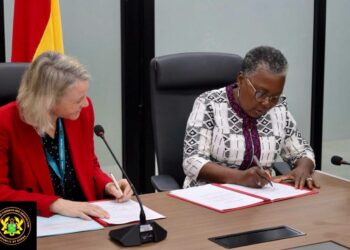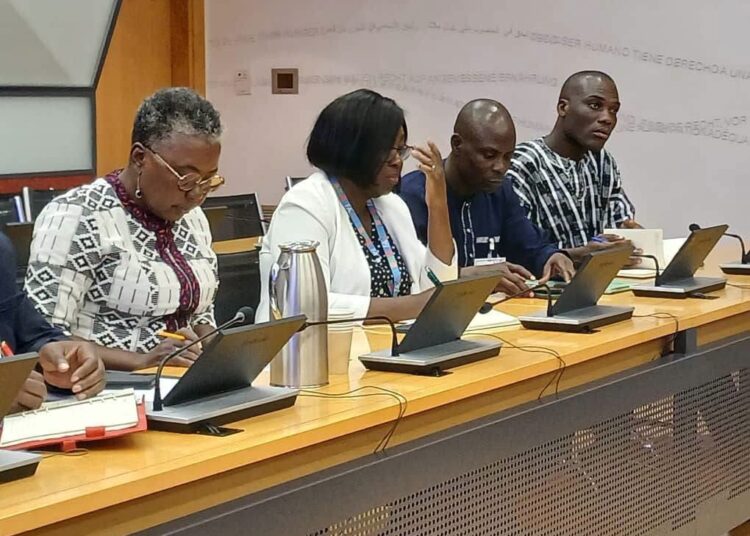
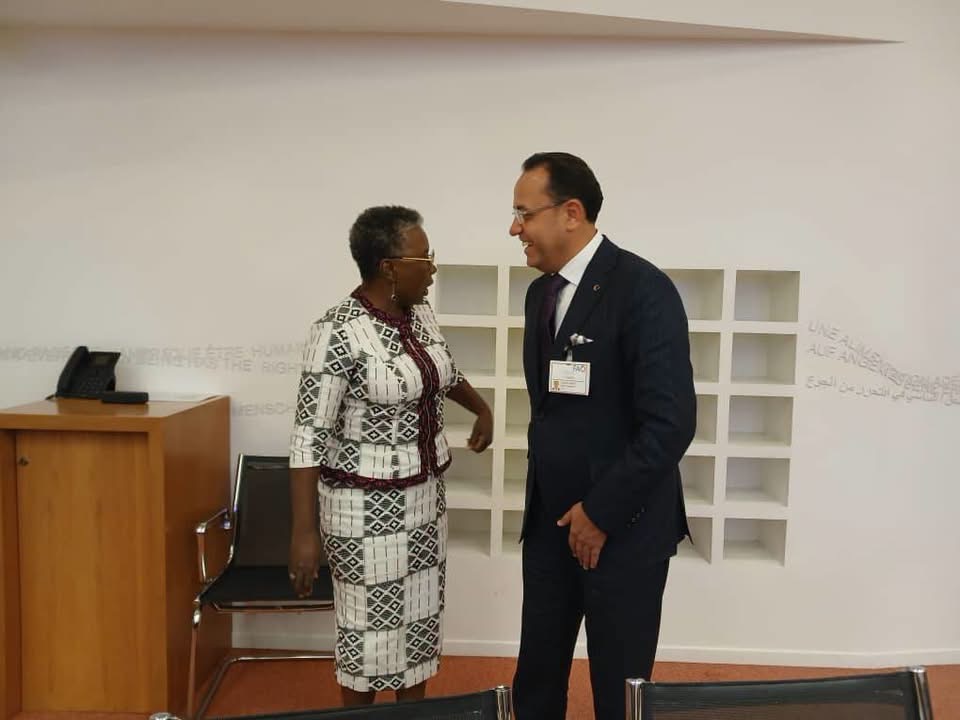
Ghana and Türkiye are set to open a vital new chapter in their economic alliance as Ghana’s Hon. Minister for Fisheries and Aquaculture Madam Emelia Arthur convenes a high level bilateral meeting with H.E. Ebubekir Gizligider, Deputy Minister for Agriculture and Forestry of the Republic of Türkiye.
The diplomatic session, hosted at the Food and Agriculture Organization (FAO) Headquarters in Rome, aims to anchor fisheries and aquaculture as a core pillar of the expanding Ghana–Türkiye bilateral partnership.
The meeting, taking place on the side-lines of global fisheries engagements at the FAO, comes at a time when both nations are seeking to diversify their economic cooperation beyond traditional trade and diplomacy into high growth, food security driven sectors.
While diplomatic ties between Accra and Ankara date back to 1958, strengthened over decades through high-level state visits and flourishing bilateral trade projected to cross US$1 billion by 2027, formal cooperation in fisheries and aquaculture has remained largely untapped.
Trade between the two countries has grown steadily, covering construction, textiles, defence, and machinery, but the blue economy despite its huge potential for jobs, protein supply and export earnings has not received the same structured attention.
Today’s meeting seeks to bridge that gap by tapping into Türkiye’s advanced industrial capacity. Following Türkiye’s hosting of its 11th Aquaculture Workshop and inaugural Aquaculture Fair earlier this year, the nation has emerged as a regional powerhouse in sustainable production, fish health, and cutting-edge marine technologies.
Turkiye 500,000 Tonne Aquaculture Success Model Offer Blueprint for Ghana
Türkiye is currently one of the top aquaculture producers in Europe, with production exceeding 500,000 metric tonnes annually, driven by investments in sea bass and sea bream farming, trout production, feed technology and Recirculating Aquaculture Systems (RAS).
The success story is built on strong private sector participation, research driven innovation and robust cold chain logistics a model Ghana is keen to adapt.
For Ghana, the collaboration offers a direct catalyst to scale up domestic aquaculture, enhance food security, generate youth employment, and boost foreign exchange earnings through value added seafood exports.
Ghana’s fisheries sector contributes about 4.5 percent to GDP and supports the livelihoods of over 3 million people along the value chain. However, domestic fish demand of about 1.2 million metric tonnes far outstrips local production of around 500,000 metric tonnes, leaving a deficit of over 600,000 metric tonnes that is covered by imports costing over $200 million annually.
The government has identified aquaculture as the fastest route to closing that gap and reducing import dependency under its Aquaculture for Food and Jobs programme.
The bilateral talks in Rome focus on turning shared diplomatic goodwill into practical, commercial and technical outcomes, structured around five key pillars. First is Aquaculture Investment and Technology Transfer.
Ghana Opens Aquaculture Sector to Turkish Capital
Ghana is inviting Turkish businesses and financial institutions to invest directly in its aquaculture value chain with emphasis on commercial cage culture on Lake Volta, modern hatcheries, local fish feed mills to reduce the cost of feed which accounts for 70 percent of production costs, and Recirculating Aquaculture Systems (RAS) that allow year-round production with minimal water use.
Ghana offers vast water resources, including Lake Volta, one of the largest man-made lakes in the world, and a growing domestic market. Second is Research and Scientific Cooperation.
The two sides are exploring joint research linkages between Ghanaian institutions such as the Water Research Institute and Fisheries Commission, and Turkish scientific bodies including the Central Fisheries Research Institute.
Priority areas include fish stock assessments in the Gulf of Guinea, early disease detection and prevention, genetic improvement of tilapia and catfish, and climate-resilient farming techniques to withstand rising water temperatures and changing rainfall patterns.
Third is Cold Chain and Market Access. A major constraint for Ghanaian fish farmers and artisanal fishers is post-harvest loss due to inadequate cold storage and processing. Leveraging Turkish expertise in processing, packaging and cold-chain infrastructure, Ghana aims to significantly reduce losses and add value to its catch.
In return, the partnership will position Ghanaian seafood, particularly premium tilapia and tuna, to access the Turkish market while opening doors for Turkish seafood ventures to use Ghana as a hub for expansion under the African Continental Free Trade Area (AfCFTA).
Fourth is Fisheries Management and IUU Prevention. Illegal, Unreported and Unregulated (IUU) fishing costs Ghana an estimated $50 million annually and threatens the sustainability of small pelagic stocks vital for food security.
Türkiye has made significant strides in vessel monitoring systems, satellite tracking and data driven enforcement. Sharing technical capabilities, monitoring technologies and best practices will help Ghana strengthen surveillance and compliance in its Exclusive Economic Zone.
Fifth is Capacity Strengthening and Field Exchanges. The talks will launch targeted technical training and exchange programmes for Ghanaian scientists, extension officers and private fish farmers.
The programmes will include hands-on training in Turkish fish farms, hatcheries and feed production facilities, as well as deployment of Turkish experts to support Ghanaian institutions.
Moving Toward a Joint Action Plan
Delegates from both nations are expected to agree in principle on establishing a Ghana–Türkiye Fisheries and Aquaculture Technical Cooperation Framework to institutionalize the partnership.
Under the proposed framework, a joint working group comprising officials from both ministries, researchers and private sector representatives will be tasked with identifying immediate priority actions and drafting a formal Memorandum of Understanding (MoU) to guide private-sector partnerships and institutional exchanges moving forward.
The MoU is expected to outline investment incentives, joint venture models, technology licensing arrangements and timelines for implementation, with a review mechanism to track progress.
Officials close to the meeting say the atmosphere in Rome is one of optimism, with both sides seeing the fisheries partnership as a model of South-South cooperation that is commercially driven, technically sound and mutually beneficial.
For Türkiye, the alliance offers a strategic entry point into West Africa’s growing blue economy and a foothold in the AfCFTA market of 1.4 billion people. For Ghana, it provides access to proven technology, affordable capital and technical know-how to transform a sector long characterized by low productivity and high imports.
By harnessing Türkiye’s technical excellence and Ghana’s rich aquatic potential, both nations are taking a bold step toward a more resilient, diversified and commercially driven South-South partnership, one that promises not just more fish on Ghanaian tables, but more jobs for youth, more income for farmers and fisher folk, and stronger food sovereignty for the nation.
READ ALSO:Sophia Akuffo Urges ‘Non-Partisan Wisdom’ in Managing National Gold