The Resource Foundation Ghana (TRF Ghana) has intensified efforts to translate community resource management plans into practical conservation actions across the Lake Bosomtwe and Bosome Freho landscapes in the Ashanti Region.
The interventions form part of the ongoing project titled “Strengthening CREMAs for Sustainable Resource Management and Community Resilience,” which seeks to empower Community Resource Management Areas (CREMAs) to lead sustainable resource governance and build resilient local ecosystems.
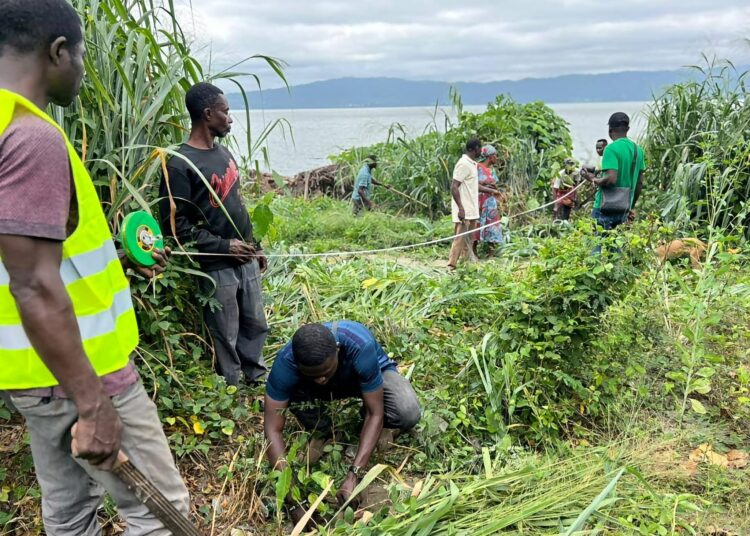
As part of the project, TRF Ghana worked with CREMA members in the Adwarfo and Abaase communities to undertake targeted watershed restoration planting along vulnerable and degraded areas of Lake Bosomtwe.
The exercise saw the planting of over 2,000 watershed trees aimed at restoring degraded riparian zones, strengthening protection of the lake banks, and contributing to the long-term ecological health of the Lake Bosomtwe landscape Ghana’s only natural lake and a UNESCO Biosphere Reserve under increasing environmental pressure.
According to TRF Ghana, the restoration planting is a critical response to the growing threats of encroachment, unsustainable farming practices along buffer zones, and sedimentation which continue to affect water quality and biodiversity in the landscape.
Beyond Planting, Building Community Capacity
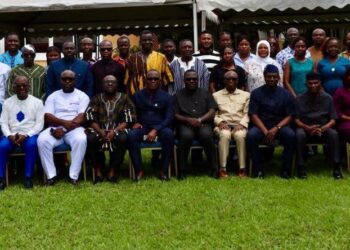
Beyond restoration planting, the Foundation complemented the exercise with comprehensive Community Scout Training, Patrol Operations and Compliance Monitoring activities.
The capacity building programme equipped CREMA members with practical skills in environmental monitoring, restoration site monitoring, identification and reporting of environmental threats, and community based compliance monitoring.
The training is designed to ensure that restoration gains are sustained, with community scouts acting as frontline stewards capable of detecting and reporting infractions such as illegal farming within buffer zones, bushfires and indiscriminate tree felling.
As part of efforts to modernize local monitoring systems, TRF Ghana also introduced CREMA members to Global Forest Watch and Forest Watcher tools.
‘’The digital platforms are expected to strengthen evidence based environmental monitoring and reporting, allowing community scouts to track deforestation alerts, monitor forest cover change and generate real-time data to support enforcement and decision making.’’
TRF
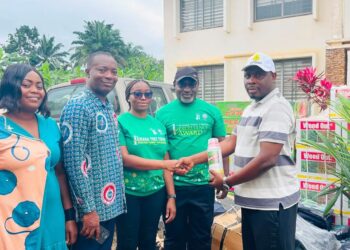
To support safe and effective field operations, TRF Ghana further provided essential Personal Protective Equipment (PPE) including Wellington boots and cutlasses to community scouts. The support addresses a key logistical challenge often faced by community volunteers in executing patrol and restoration activities.
Integrated Approach to Conservation
Speaking on the integrated approach, TRF Ghana noted that combining community capacity building, active restoration, participatory monitoring and local stewardship is proving effective in strengthening CREMA led natural resource governance.
The approach, the organization said, not only restores degraded ecosystems but also builds local ownership, enhances community resilience to climate and environmental shocks, and promotes sustainable livelihoods linked to healthy ecosystems.
The Foundation commended the CREMA members and the communities of Adwarfo and Abaase for their commitment and active participation in protecting the Lake Bosomtwe landscape, describing their role as central to the success and sustainability of the project.
The Lake Bosomtwe landscape, which spans several communities in the Bosome Freho District and Bosomtwe District, remains a critical biodiversity hotspot and water resource, supporting thousands of livelihoods through fishing, farming and tourism.
However, in recent years it has faced significant threats from unsustainable land-use practices and climate variability, necessitating community led interventions.
Partnership for Community Led Conservation
The activities are being implemented with support from A Rocha Ghana, the Nature & Development Foundation (NDF), and the European Union in Ghana through the Building Resilient and Active Communities in Ghana (BRACE) Project.
The BRACE Project seeks to strengthen the role of civil society and community structures in natural resource management, climate change adaptation and environmental governance.
TRF Ghana expressed appreciation to its partners for supporting community led natural resource management, emphasizing that sustained collaboration between communities, civil society and development partners remains key to achieving lasting conservation outcomes.
With sustained restoration efforts, enhanced monitoring capacity and strengthened local governance structures, the project is expected to make a significant and lasting contribution to the protection of Lake Bosomtwe and the resilience of communities that depend on it for their livelihoods.
The initiative goes beyond short term restoration by building strong community institutions capable of managing natural resources sustainably. Through continuous watershed planting, regular patrol operations and improved capacity to detect and report environmental threats using modern tools such as Global Forest Watch, the landscape stands a better chance of recovering from degradation.
More importantly, the strengthened CREMA governance system empowers local people to take ownership of conservation actions, enforce community by-laws and promote sustainable land use practices.
This integrated approach is anticipated to safeguard water quality, protect biodiversity, reduce vulnerability to climate impacts and ensure that the ecological and economic benefits of Lake Bosomtwe are preserved for present and future generations.