

Deputy Chief of Staff Stan Xoese Dogbe has rejected the characterisation of Sunday morning’s operation at Laboma Beach as a demolition of the entire enclave, saying the Post Flood Mitigation Task Force pulled down only structures previously marked within the Kpeshie Lagoon’s water retention basin.
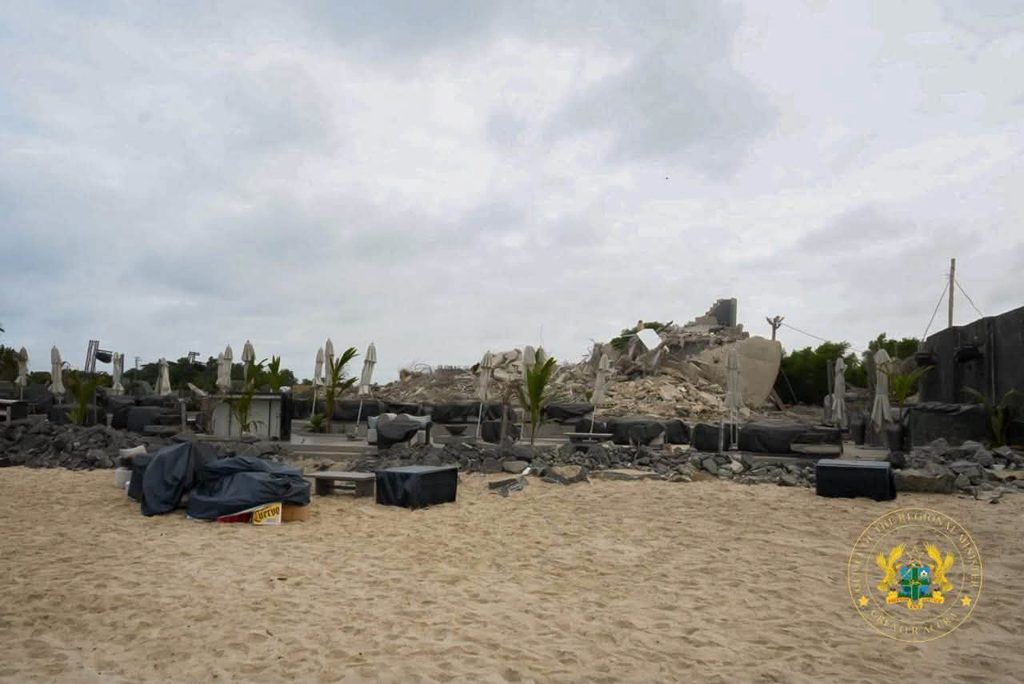
He issued the clarification as images of flattened beachfront establishments, including the well-known Pink Flamingo Lounge, circulated widely.
Mr Dogbe, who sits on the Task Force, argued that the exercise had a narrow, technical purpose: clearing silted portions of the basin so dredging could proceed. Structures outside that footprint were left standing, he said, because removing them falls outside the Task Force’s mandate.
What the basin was meant to do
The retention basin at Laboma once held water flowing downstream toward the sea. Mr Dogbe said it has since been attacked, with vegetation destroyed and the area filled with solid materials, including boulders laid as foundations for physical structures.
Two consequences followed. Water moving from upstream toward the sea now meets obstruction, and the basin itself holds far less than it once did. Both effects push floodwater into surrounding communities rather than out to the ocean.
That reasoning explains why the Kpeshie Lagoon sits among the most critical intervention points under the post-flood mitigation programme.
Years of illegal reclamation, sand filling and uncontrolled development have steadily eroded its capacity to absorb rainfall, and portions of the lagoon were sold off for private development after trees were cleared and the wetland filled with sand, construction debris and solid waste.
The notice period
Mr Dogbe stressed that nothing on Sunday arrived without warning. Owners of the affected structures were alerted by the Greater Accra Regional Security Council more than a month ago.
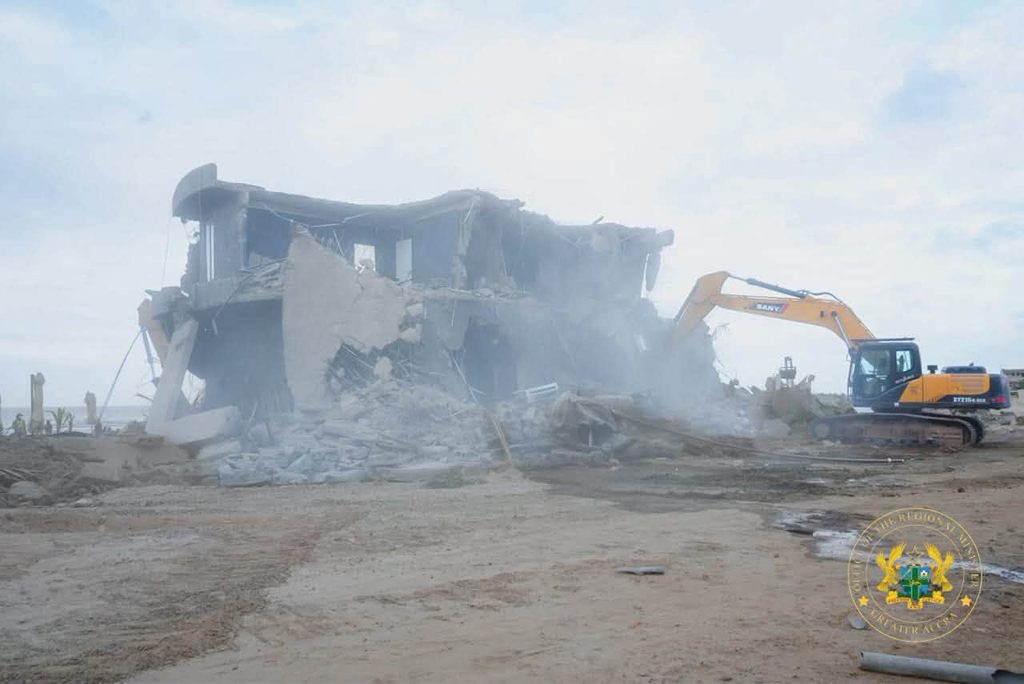
The operation follows a REGSEC directive issued in early August, after an inspection of the Laboma Beach enclave, giving occupants of what used to be a protected lagoon buffer zone 21 days to vacate.
Regional Minister Linda Ohenewaa Akweley Ocloo said at the time that authorities had intended to begin immediately, but granted the grace period after hearing that residents had not received adequate notice, urging those within the buffer to take their own structures down first.
The demolition team also removed a freshly built wall along the Labadi to Teshie road, erected to screen off an area where vegetation had been cleared and filling with solid materials was still underway.
What the Regional Minister said at the site
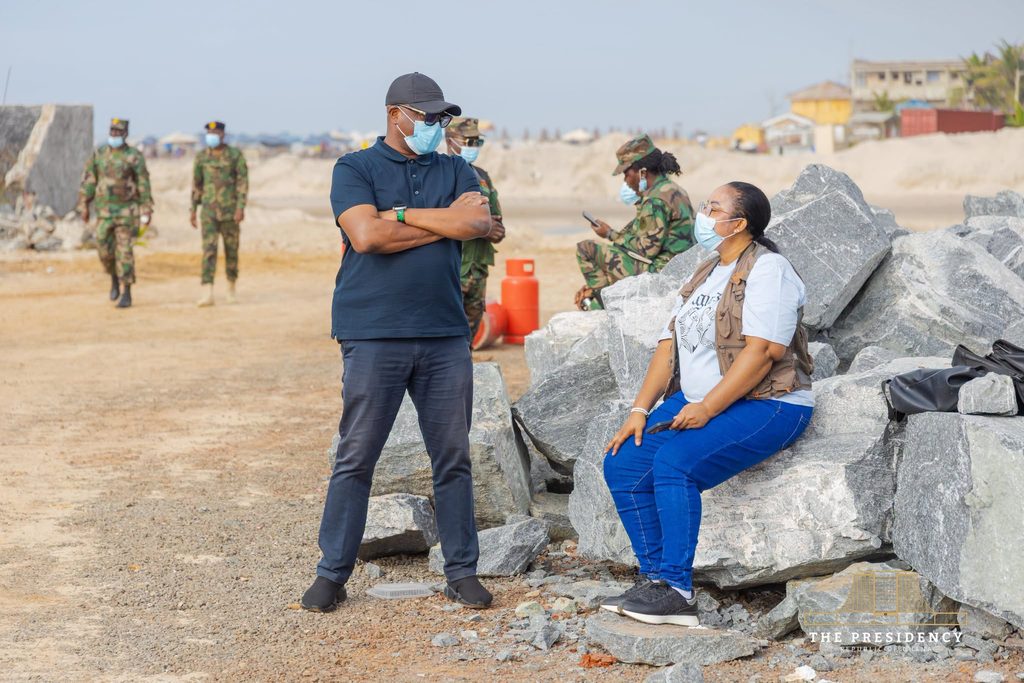
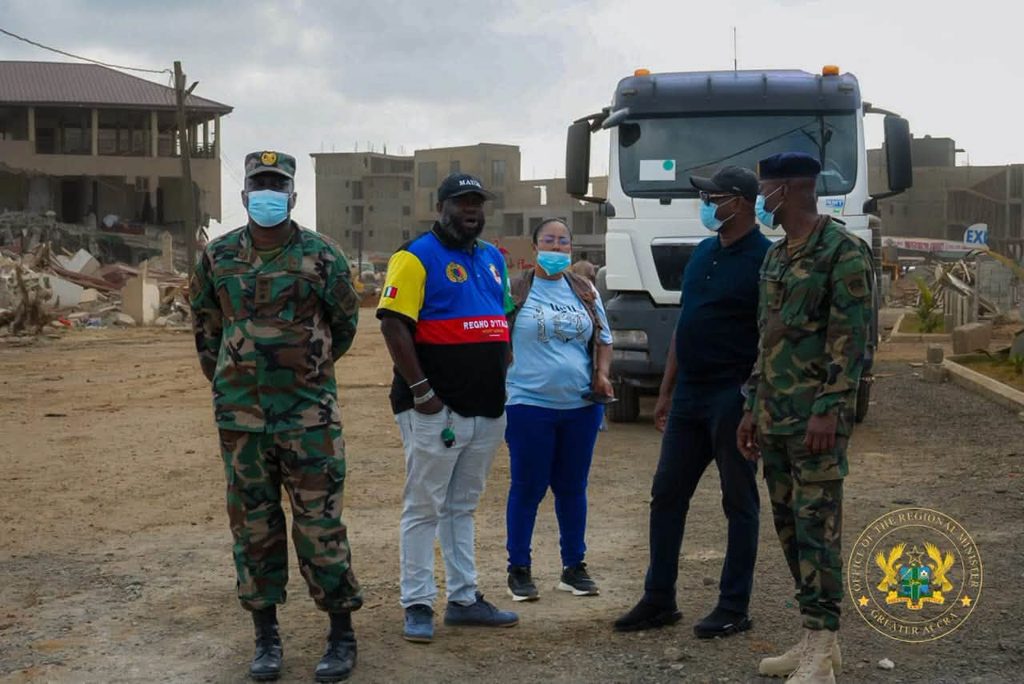
Speaking at Laboma on Sunday, Ocloo described the operation as peaceful and part of a broader effort to restore the region’s waterways. She said developers used heavy boulders as foundation material to reclaim portions of the lagoon, and traced the site’s history plainly.
The area was mangrove and wetland before the trees came down, after which the land was filled and sold to developers who built hotels and other businesses on it. Her justification rested on a specific finding.
“We did a risk assessment and we realised that for the first time there was flooding at Tse Addo,” she said, attributing that flooding to the illegal structures and confirming that the exercise had met no resistance.
The wider operation
The Laboma clearing forms one element of a programme responding to the floods of 29 June. The 48 Engineer Regiment of the Ghana Armed Forces is leading the works, with dredging following demolition to restore storage capacity at the site.
The team subsequently moved to the Lafa Water Retention Basin at Mallam, where heavy equipment was deployed to remove compacted solid waste that had significantly reduced that basin’s capacity.
Authorities have signalled that the exercise will continue as other developments occupying protected zones are identified.
What remains contested
Mr Dogbe’s account and the visible outcome sit in some tension. His position is that the Post-Flood Task Force touched only marked structures inside the basin, while reporting from the site describes nightclubs, eateries and hospitality facilities coming down, Pink Flamingo among them.
Both descriptions can hold if those establishments stood inside the basin, which is precisely the question affected operators will press. Several hold no permits from the La Dade-Kotopon Municipal Assembly, according to the assembly’s own earlier statements about the area, though that has not previously stopped businesses there from trading openly for years.
The harder question the exercise raises concerns how the land reached private hands at all. Ocloo’s account describes a wetland cleared, filled and sold on to developers, which means someone issued approvals, someone collected payment, and someone watched boulders go into a retention basin without intervening.
Clearing the structures addresses the flooding. It does not address that.
READ ALSO: UK National Security Adviser Urges Europe to Prepare for Real Hardship Amid Russia Pressure