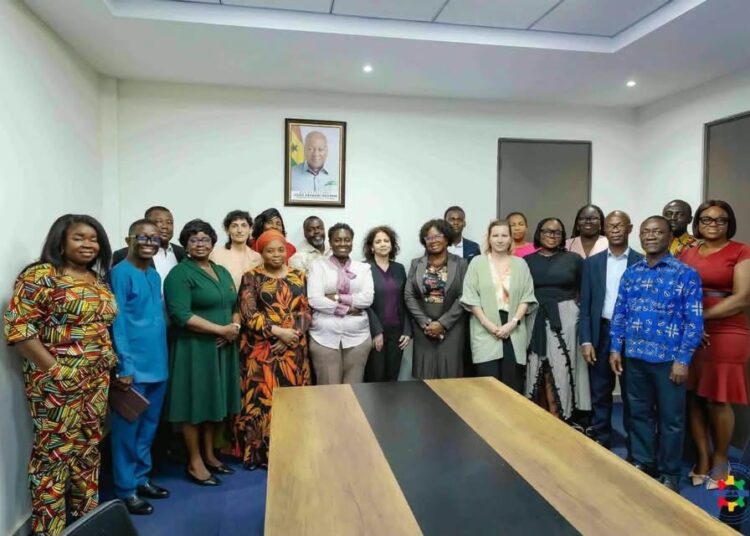
The Chief Executive Officer of the Ghana Enterprises Agency (GEA), Ms. Margaret Ansei, meets with a delegation from the Agence Française de Développement (AFD) for early stage discussions on a joint initiative aimed at expanding economic opportunities for women in business across targeted regions of Ghana.
The meeting, held at the GEA headquarters in Accra, marks the beginning of what both institutions describe as a strategic partnership to tackle structural barriers that limit the growth and competitiveness of women led Micro, Small and Medium Enterprises (MSMEs).
The discussions focus on addressing persistent gaps in access to capital, training and markets that continue to constrain the growth of women-owned enterprises. Both parties explore how a coordinated approach, drawing on GEA’s extensive local reach and AFD’s global development expertise, can strengthen and scale support for women entrepreneurs where it is needed most.
According to officials at the meeting, women entrepreneurs in Ghana continue to face disproportionate challenges despite playing a critical role in the economy. Limited access to affordable finance, inadequate business development services, low levels of financial literacy, and difficulties in accessing high value markets remain major obstacles.
Ms. Ansei notes that while Ghanaian women are highly entrepreneurial and dominate key sectors such as agribusiness, trade, services and manufacturing, many of their businesses remain at the micro level and struggle to scale into sustainable, job creating enterprises.
‘’The Agency is committed to changing that narrative through targeted interventions that are practical, inclusive and results driven. This is a long term vision that inclusive enterprise development is not a side project, but a driver of national economic growth.’’
Ms. Ansei
Investing in women entrepreneurs strengthens the broader business ecosystem, expands economic participation and contributes to Ghana’s wider economic development. The GEA, as the apex body mandated to promote and develop MSMEs in Ghana, says empowering women is central to its mandate.
The Agency currently operates through over 200 Business Advisory Centres and Business Resource Centres nationwide, providing business development support, training and linkages to finance for thousands of entrepreneurs.
Supporting Women with New Tools, New Financing for Women Entrepreneurs
Ms. Ansei explains that the proposed collaboration with AFD will build on this existing infrastructure while introducing innovative tools and financing models that respond specifically to the needs of women entrepreneurs.
For its part, the AFD delegation reaffirms the Agency’s commitment to supporting inclusive and sustainable economic growth in Ghana. AFD, which is France’s development finance institution, has been active in Ghana for decades, supporting projects in agriculture, energy, urban development, education and private sector growth.
The delegation indicates that gender equality and women’s economic empowerment are key pillars of AFD’s strategy in Africa, and Ghana presents a strong opportunity to demonstrate how targeted support for women in business can deliver measurable impact.
Both sides agree that the initiative will go beyond traditional training programmes. It will focus on creating a holistic ecosystem of support that includes capacity building in business management, digital literacy and financial management, improved access to affordable credit and grants, mentorship and networking opportunities, and linkages to domestic and export markets.
The Agency, in collaboration with other state institutions, will work to build the capacity of women in these areas, increase access to finance and opportunities, and create an environment where women led businesses can grow and succeed.
Targeting Underserved Regions Beyond Accra
The discussions also touch on the need to target regions where women entrepreneurs face the greatest constraints, including the northern regions and other underserved areas. The Agency notes that regional disparities in enterprise support remain a challenge and any joint initiative must ensure that women outside Accra and other major cities benefit equally.
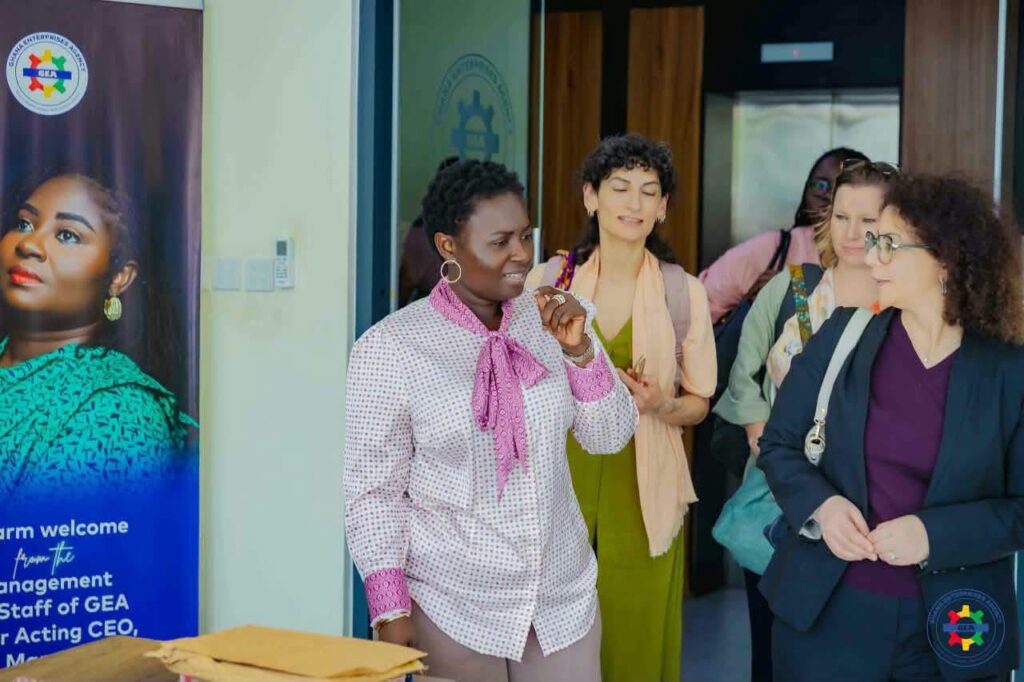
Ms. Ansei stresses that the Government’s industrial transformation agenda, led by the Ministry of Trade, Agribusiness and Industry, places strong emphasis on inclusion and job creation. She says supporting women entrepreneurs is not only a social imperative but also an economic one, as evidence shows that investing in women leads to higher household incomes, better community outcomes and stronger national productivity.
Officials from both institutions discuss the importance of data and monitoring to ensure that interventions are impactful. They agree to explore mechanisms for tracking the progress of beneficiary businesses, measuring improvements in income, employment and business sustainability.
Using Technology to Reach More Women
The meeting also explores how the partnership can leverage technology to reach more women, including digital platforms for training, e-commerce and access to finance. The Agency notes that digital transformation presents a major opportunity to overcome geographical barriers and connect women entrepreneurs to new customers and markets.
Empowering women entrepreneurs goes beyond supporting individual businesses. It is about unlocking their contribution to Ghana’s wider economic transformation and creating more opportunities for women to participate meaningfully in the economy.
Both parties agree to continue technical engagements in the coming weeks to define the scope, target regions and implementation framework for the initiative. The engagements will also involve consultations with relevant stakeholders, including financial institutions, business associations and development partners.
The GEA expresses optimism that the early-stage discussions with AFD will lead to a concrete, bankable programme that delivers real change for women in business. The Agency says it remains committed to working with all partners who share its vision of building a resilient, inclusive and competitive private sector.
For the thousands of women entrepreneurs across Ghana who continue to navigate challenges in their quest to build successful businesses, the partnership signals hope and a renewed commitment to ensuring that they have the tools, resources and opportunities to thrive.
READ ALSO:Barker-Vormawor Rejects Single Referendum Question On Ghana’s Constitutional Amendments