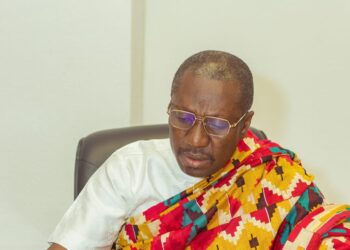
Former CEO of KPMG, Joseph Winful, has stressed the need for Ghana to distinguish between financial audits and detailed investigations when examining public expenditure. He argued that the distinction is important in determining whether public institutions have properly accounted for the use of state resources.
Mr Winful explained that a conventional financial audit primarily examines financial records and whether transactions have been properly captured. A forensic investigation, however, goes further by examining specific transactions, their rationale and the circumstances surrounding decisions.
His comments follow questions about the scope of public audits and investigations into government expenditure. He noted that investigations such as those undertaken by investigative journalists can sometimes expose details that may not emerge from a standard financial audit.

According to the Former CEO of KPMG, the Auditor-General’s work has largely focused on financial auditing, although procurement decisions and possible abuses can also emerge during the process. He therefore called for greater clarity about what public accountability should achieve.
Mr Winful also questioned whether Ghana’s frequent references to transparency, accountability and value for money are supported by systems capable of properly testing those principles. He explained that examining figures alone may not sufficiently establish whether a government decision delivered the intended benefit.
“Are we even targeting obtaining any value for our actions?” he asked, stressing that value for money should be assessed against the purpose and outcome of public expenditure.
Furthermore, he suggested that the scope and duration of an audit must be carefully determined before the exercise begins. Such planning, he noted, should help auditors establish what they are expected to examine and whether the work provides a meaningful assessment of public spending.
The former KPMG executive also linked the issue to Ghana’s wider financial management challenges. He maintained that the country’s development ambitions and democratic processes cannot be sustained without effective management of public finances.
Winful pointed to the consequences of weak financial management, including severe expenditure cuts and other difficult economic measures. He argued that the problems can be traced to the budget process itself, where government must first establish clearly what it intends to achieve.
Consequently, he urged public institutions to move beyond the routine use of accountability terminology and focus on systems that can demonstrate how resources are used. In his view, stronger financial management should provide the foundation for achieving national development objectives.
Manasseh Finds COVID Fumigation Costs Missing From Audit
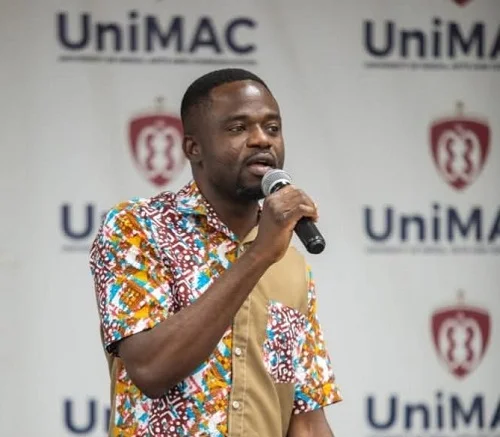
Investigative journalist Manasseh Azure Awuni has uncovered significant discrepancies between the COVID-19 fumigation expenditure recorded by the Auditor-General and spending documented by several government institutions. His investigation indicates that hundreds of millions of cedis spent on fumigation were not included in the special audit’s reported figure.
The Auditor-General’s special audit recorded GH¢96.3 million as the cost of fumigation under COVID-19 expenditure. However, Mr Awuni’s investigation found that the Ministry of Education alone spent about GH¢316.1 million across three separate fumigation phases between 2020 and 2021.
The investigation further established that the Ministry of Local Government spent approximately GH¢299 million on three phases of market fumigation in 2020. None of that expenditure was included in the Auditor-General’s stated fumigation cost despite the ministry having submitted the expenditure for auditing.
Additionally, the Ministry of Transport spent about GH¢159.9 million on fumigation between 2020 and 2022. The expenditure included GH¢31.98 million in each of the first two years before spending rose to about GH¢95.9 million in 2022.
Mr Awuni’s findings therefore place the recorded GH¢96.3 million figure under significant scrutiny. The investigation was supported by contract documents, procurement approvals, government budget documents and responses obtained through Right to Information requests.
The Ghana Audit Service acknowledged that it had audited the Local Government Ministry’s fumigation expenditure. It nevertheless did not explain why the expenditure was excluded from the figure presented under the cost of fumigation in the special audit.
Similarly, the Audit Service confirmed that it examined phases one and two of the Ministry of Education’s COVID-19 expenditure. However, only the second phase, valued at about GH¢96 million, appeared in the special audit’s fumigation figure.
Meanwhile, former Auditor-General Daniel Domelevo questioned the circumstances surrounding the special audit. He argued that an exercise of that nature should have captured the full expenditure associated with the COVID-19 funds.
Beyond the financial discrepancies, the investigation also questioned the effectiveness of the nationwide fumigation programme.
READ ALSO: Rhythms On Da Runway Returns Bigger With Unbound Theme