The Institute for Economic Research and Public Policy (IERPP) has urged Parliament to reconsider provisions of the National Petroleum Authority (NPA) Bill, 2026, warning that the proposed changes could weaken the operational independence and financial sustainability of Bulk Oil Storage and Transportation Company (BOST) Energies.
The institute’s concern is centred on a potential mismatch between BOST’s responsibilities and the authority it would have to execute them, particularly in managing strategic fuel reserves and maintaining Ghana’s petroleum storage and transportation infrastructure.
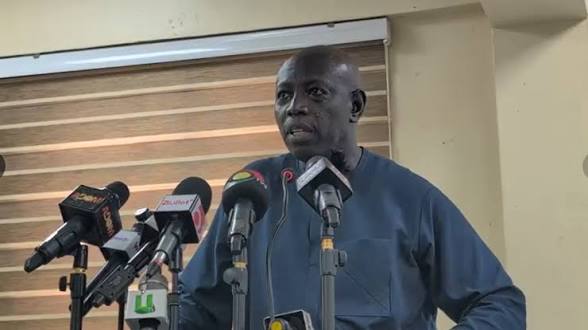
Speaking at a press conference in Accra, IERPP Executive Director Prof. Isaac Boadi said stronger regulation of the downstream petroleum industry was necessary, but argued that regulatory reforms should not undermine the state-owned company responsible for critical fuel-security infrastructure.
“Therefore, we cannot create a situation where a government gives BOST the responsibility for national fuel security, but takes away the tools and authority required for BOST to fulfil its responsibilities.”
Prof. Isaac Boadi, Executive Director, IERPP
BOST’s Financial Performance Raises Stakes
IERPP’s argument comes against the backdrop of what it describes as a significant improvement in BOST’s recent financial performance.
Citing figures from the 2025 State Ownership Report, the institute said BOST’s total revenue increased from GH¢1.33 billion in 2024 to GH¢3.84 billion in 2025, representing an increase of about 189%.

Operating revenue reportedly rose from GH¢1.29 billion to GH¢3.81 billion over the same period, while net profit increased from GH¢398.4 million to GH¢683.96 million, a 72% rise.
The institute, however, noted that BOST’s operating margin declined from 31% to 19%, attributing the compression to higher direct trading costs.
That distinction is important for the proposed regulatory framework. Rising revenue and profit do not necessarily mean that the company has unlimited capacity to absorb additional infrastructure, reserve-management and regulatory obligations.
BOST’s financial sustainability matters because its operations extend beyond ordinary commercial fuel trading.
Its network of depots, pipelines and associated infrastructure provides part of the physical backbone through which petroleum products can be stored and moved around the country.
Strategic Reserves At The Centre Of Dispute
IERPP argues that the proposed legislation needs to provide greater clarity over who ultimately controls decisions affecting Ghana’s strategic petroleum reserves.
The institute questioned how BOST can remain accountable for national fuel security if decisions concerning reserve financing, inventory levels and the release of stocks are substantially controlled elsewhere.
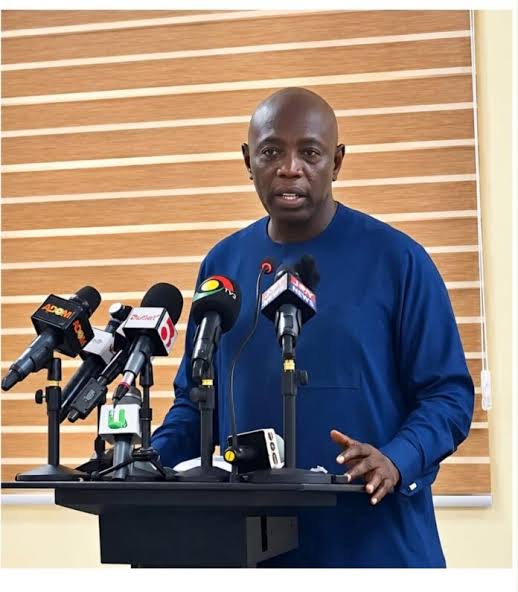
“BOST Energies is not an ordinary company. It is a state-owned entity responsible for holding Ghana’s strategic fuel reserves and maintaining the national network of depots and pipelines.”
Prof. Isaac Boadi, Executive Director, IERPP
The issue has wider implications for Ghana’s downstream security.
Strategic petroleum reserves are valuable precisely because they provide a buffer when commercial supply chains are disrupted. But maintaining that buffer carries a cost: products have to be purchased, stored, rotated and managed, while storage infrastructure and pipelines require continuous investment and maintenance.
If the entity carrying those responsibilities does not have a predictable revenue stream to fund them, the reserve system can become dependent on periodic government intervention.
Competition And BOST’s Revenue Model
IERPP has also raised concerns about competition between BOST infrastructure and privately operated bulk distribution facilities.
The institute argues that allowing competing inland depots to capture commercially attractive business could weaken BOST’s revenue base while leaving the state-owned company responsible for infrastructure with high strategic value but potentially lower commercial returns.
This creates a regulatory question that extends beyond BOST: how should Ghana balance competition in petroleum logistics with the need to preserve nationally important infrastructure?
IERPP is consequently calling for a transparent and cost-reflective mechanism for charges associated with BOST’s infrastructure, alongside measures to ensure that the company can generate sufficient revenue to maintain and expand strategic facilities.
The institute wants BOST’s mandate to explicitly include the ability to sell directly to Oil Marketing Companies (OMCs), while also calling for dedicated funding arrangements for strategic reserves and infrastructure development.
Jobs Add Political Pressure
IERPP has further warned that weakening BOST’s financial position could have employment consequences.
The institute estimates that nearly half of BOST’s 658 employees could be at risk if the company’s finances deteriorate significantly.
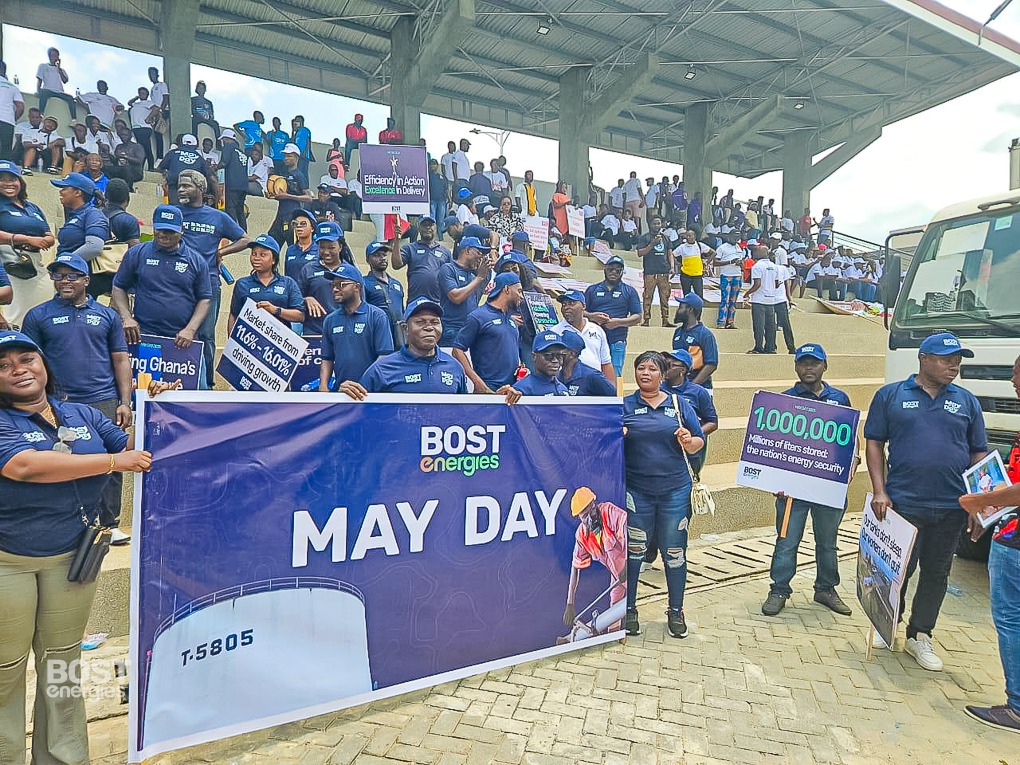
“You cannot promise an economy where one job creates opportunities for three people across three shifts while allowing hundreds of existing jobs at BOST to be put at risk.”
IERPP
The argument connects the petroleum-sector reform debate with the government’s broader 24-hour economy agenda, although the employment projection remains an assessment attributed to IERPP rather than an established outcome of the Bill.
The institute has therefore made seven principal demands: withdrawal and fundamental review of the Bill; clearer protection of BOST’s mandate; continued national control of strategic reserves; dedicated funding for reserves and infrastructure; a transparent tariff framework; safeguards against infrastructure competition that could undermine BOST; and a clear separation between the NPA’s regulatory role and commercial participation.
The underlying policy issue is not whether Ghana needs stronger downstream regulation.
It is whether regulatory reform can introduce greater market discipline without weakening the institution carrying a strategic national-security function.
If Parliament proceeds with the Bill, the treatment of BOST’s commercial independence, infrastructure financing and strategic-reserve responsibilities will therefore be critical.
Any framework that assigns responsibility without providing the authority and revenue required to discharge it could leave Ghana with a regulatory structure that is stronger on paper but less resilient in practice.
READ ALSO: Yemen’s Humanitarian Crisis Worsens Amid Rising Displacement