The U.S. Ambassador to NATO, Matthew Whitaker, has renewed Washington’s criticism of the Czech Republic over its defence spending, warning that Prague is falling behind other members of the alliance in meeting its agreed commitments.
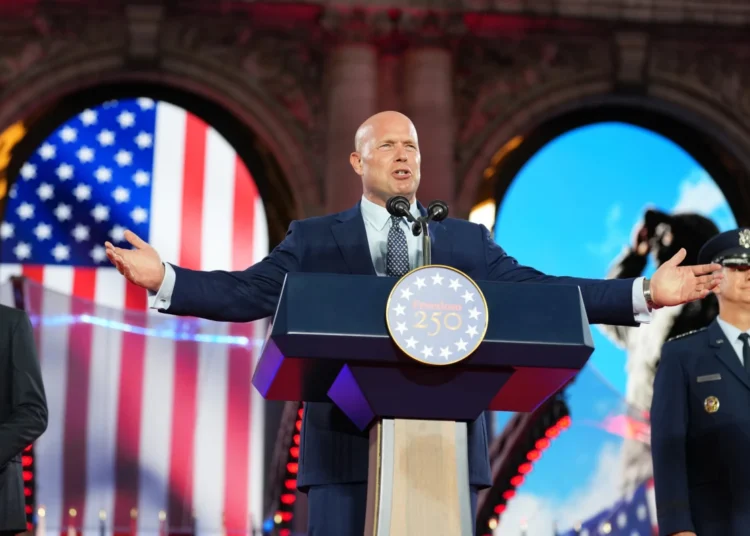
Speaking at a defence conference in Prague on Friday, Whitaker said that the Czech Republic had not made sufficient progress toward fulfilling the Hague Defence Commitment. “It is disappointing to see that it has not made more progress towards meeting the Hague Defense Commitment,” Whitaker said.
He argued that the Czech Republic was increasingly positioned toward the lower end of NATO members in terms of defence expenditure, despite some progress. “Unfortunately, the Czech Republic is trending towards the bottom of the alliance when it comes to defense spending,” Whitaker said.
“There have been small successes, but more certainly needs to be done, and this has been a message I delivered yesterday and today in person to our friends here in the Czech Republic.”
Matthew Whitaker
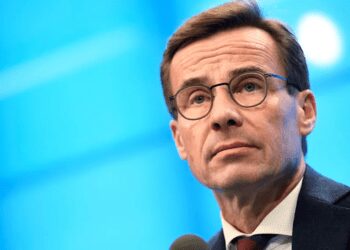
Whitaker’s remarks came after he met with Czech Prime Minister, Andrej Babiš, whose government has faced competing demands over defence spending and other domestic priorities.
Czech lawmakers aligned with Babiš’ government approved a budget in March allocating less than 1.8% of the country’s gross domestic product to defence for the year. The decision came despite President Petr Pavel, a retired Army General, calling for increased defence spending to meet the country’s NATO commitments.
Whitaker had previously criticised the Czech spending plans, warning in a post on X that all NATO allies needed to contribute adequately to the alliance. “All Allies must pull their weight and honor The Hague Defense Commitment,” Whitaker wrote at the time.
“These numbers are not arbitrary. They are about meeting the moment — and the moment requires 5% as the standard. No excuses, no opt-outs.”
Matthew Whitaker
Today, Whitaker reiterated that Washington remained committed to NATO and collective defence while calling on other members to increase their contributions.
“The United States remains committed to NATO and defending every inch of allied territory, and the United States is not stepping back. But we expect our allies to step up and join us and equalize with the United States.”
Matthew Whitaker
The comments reflect continued pressure from the United States for European NATO members to increase defence expenditure as the alliance adjusts to a more demanding security environment.
NATO members initially agreed in 2014 to spend at least 2% of GDP on defence. The alliance expected all members, including the Czech Republic, to reach that benchmark last year.
At a NATO summit in The Hague last year, members agreed to a significantly expanded spending framework. Under the commitment, countries are expected to invest 3.5% of GDP in core defence requirements and an additional 1.5% in defence- and security-related spending by 2035.
The agreement was reached amid strong pressure from the Trump administration for European allies to assume a greater share of the financial burden of collective defence.
Babiš Pledges 2% Defence Spending Next Year
Responding to Whitaker’s criticism, Babiš said that his government would raise defence spending to 2% of GDP next year.
The pledge would bring Czech defence expenditure to the minimum level that NATO members agreed to target in 2014, although it would remain below the newer 2035 commitment agreed in The Hague.
The pledge comes as Babiš’ governing coalition faces differing views over how much the country should allocate to defence.
Babiš returned to power after his ANO, or YES, movement won a decisive victory in an October election. His party subsequently formed a governing coalition with two smaller political groups whose positions include reducing support for Ukraine and opposing some European Union policies.
One of the coalition partners, the Freedom and Direct Democracy party, which is anti-immigrant, has called for a reduction in next year’s defence budget.
Finance Minister Alena Schillerová has also questioned the feasibility of the broader NATO target. She recently said she considered the 5% target “unrealistic.”
The disagreement highlights the political and financial challenges facing Prague as it seeks to balance NATO commitments with domestic budget priorities and differing views within the governing coalition.
For Washington, however, the issue remains part of a wider effort to persuade European allies to increase their defence contributions. Whitaker’s latest comments indicate that the United States expects the Czech Republic to make faster progress toward the commitments agreed by NATO members.
The Czech government’s pledge to reach 2% next year provides a specific target, but the country will still face decisions over how quickly and by how much to increase spending as NATO’s longer-term 5% framework approaches.
The debate also comes as European countries continue to reassess their defence policies amid the war in Ukraine and broader concerns about European security.
For Prague, meeting NATO’s spending commitments will therefore require not only additional financial resources but also political agreement within the governing coalition over the country’s defence priorities and its approach to supporting Ukraine.
READ ALSO: 24-Hour Economy Unveils Six Strategic Industrial Projects for Private Investors in Ghana