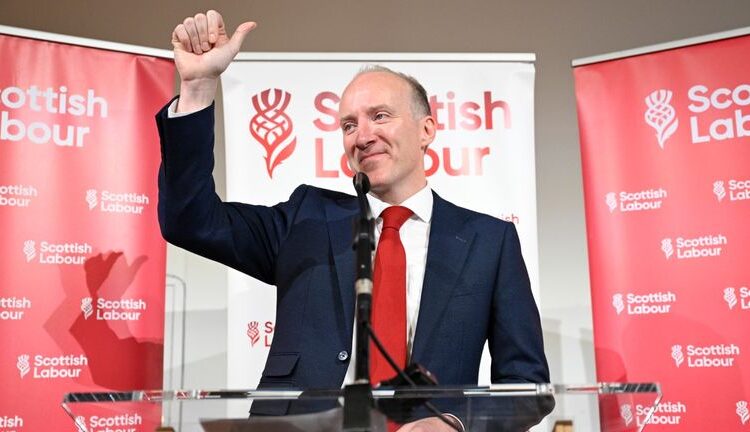
Michael Marra has been elected leader of the Scottish Labour Party, taking charge of a party facing a prolonged decline in support and a difficult task of rebuilding its position in Scottish politics.
Michael Marra, the MSP for North East Scotland, won 4,266 votes in the leadership contest, defeating his main rival Joe Fagan, who received 2,485 votes. A total of 6,751 votes were cast, representing 49.43% of Scottish Labour’s membership.
The result makes Marra the 11th leader of Scottish Labour and follows the resignation of Anas Sarwar in July, when Sarwar left the leadership to join Andy Burnham’s government as a trade minister.
Marra takes over at a critical point for Labour in Scotland, where the party has struggled to translate its Westminster strength into sustained electoral support at Holyrood. Although Scottish Labour has 37 MPs in the UK Parliament, its representation at the Scottish Parliament has declined across successive elections since devolution in 1999.
The scale of that challenge was exposed at the May 2026 Holyrood election, when Labour secured only 17 seats, its worst result since the Scottish Parliament was established.
The SNP retained power, while Labour ended the election with the same number of seats as Reform UK, two more than the Scottish Greens and five more than the Conservatives.
In his acceptance speech, he framed his leadership around rebuilding the party’s relationship with Scottish voters rather than simply attacking its political opponents.
“May hurt so much because we know the SNP didn’t deserve a fifth term in power. But the truth is Scotland didn’t think we would be much better. Scots know what we are against. They can’t tell you what we are for. And that vacuum was filled by the poison, racism and bigotry of Reform. We must be clear in our values. We must lead with our values.”
Michael Marra
He added, “for a decade now, Scotland has gotten weaker. We must reconnect with the country if we are ever to form a government in Holyrood to face these historic challenges.”
The question of independence has remained a major dividing line in Scottish elections. In contrast, Labour’s position on whether and under what circumstances another independence referendum should be held remains an important issue for voters and opponents.
During the leadership campaign, both Marra and Fagan faced criticism for failing to clearly define the circumstances under which Scotland should be allowed another independence referendum. The subdued nature of the contest, alongside relatively limited policy differences between the candidates, placed greater emphasis on Labour’s broader strategic direction.
Marra has nevertheless sought to establish positions on issues with direct economic significance to Scotland.
He has expressed support for drilling at the Rosebank oilfield and Jackdaw gasfield, arguing that domestic production could provide jobs in Scotland and represent a cleaner alternative to imported energy sources.
Marra Faces Labour’s Long Road Back in Scotland
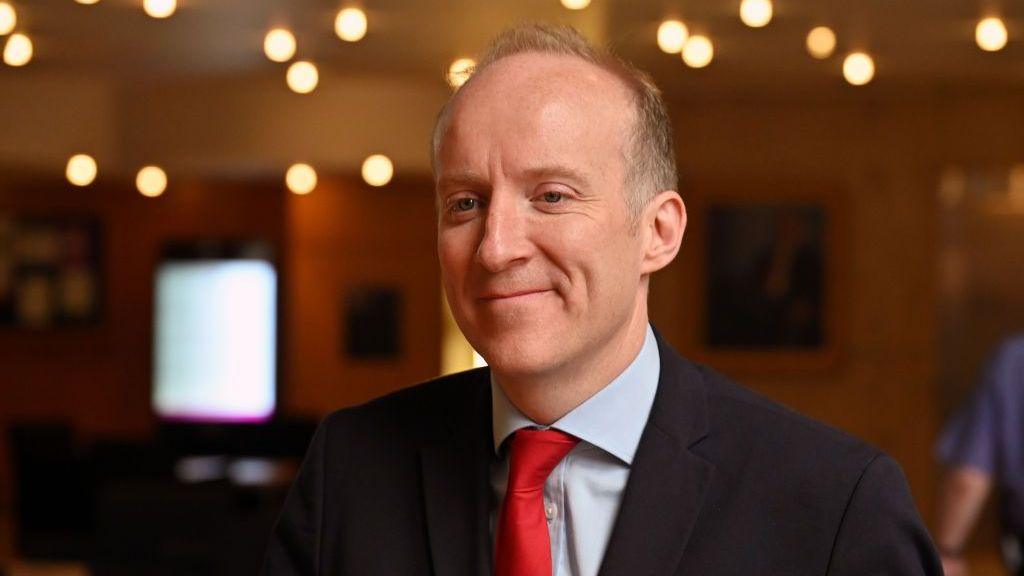
Marra’s election does not immediately resolve the structural problems that have weakened Scottish Labour over the past two decades.
Since devolution in 1999, Labour has experienced a sustained erosion of its position at Holyrood. The party was once the dominant force in Scottish politics, but the rise of the SNP transformed the political landscape and increasingly displaced Labour as the principal alternative to Conservative governments at Westminster.
Dr Eric Shaw, a research fellow at the University of Stirling and co-author of The Strange Death of Labour in Scotland, noted that Labour needed to rebuild its relationship with working-class voters.
“The party is facing three main issues: the continued salience of independence, the association between Scottish Labour and Labour in Westminster, and the erosion of Labour’s historic base in Scotland. The plight of the party is reflected in the fact that Labour did better amongst the professional middle class than it did in the working class in the most recent election.”
Dr Eric Shaw
The observation points to a wider electoral challenge for Marra. Labour’s historic identity in Scotland was closely associated with working-class communities, particularly in industrial and urban areas. The erosion of that base has left the party attempting to rebuild support among voters who have increasingly shifted towards other political parties.
Meanwhile, Marra directly referenced Reform in his acceptance speech, arguing that the party had benefited from a political vacuum created by Labour’s failure to clearly communicate what it stands for.
But Labour must simultaneously contend with the SNP, which remains a central force in Holyrood politics and has continued to make independence a defining element of its political agenda.
That leaves Marra facing a difficult strategic balance. Labour must present itself as a credible alternative to the SNP while appealing to voters who are concerned about public services, economic conditions and inequality, without allowing the independence question to dominate its political identity.
READ ALSO: Ghana Engages US Embassy On Mineral Value Creation