Ghana and Trinidad and Tobago have signed an Air Services Agreement intended to open direct aviation links between West Africa and the Caribbean.
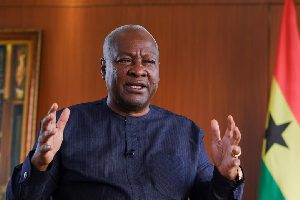
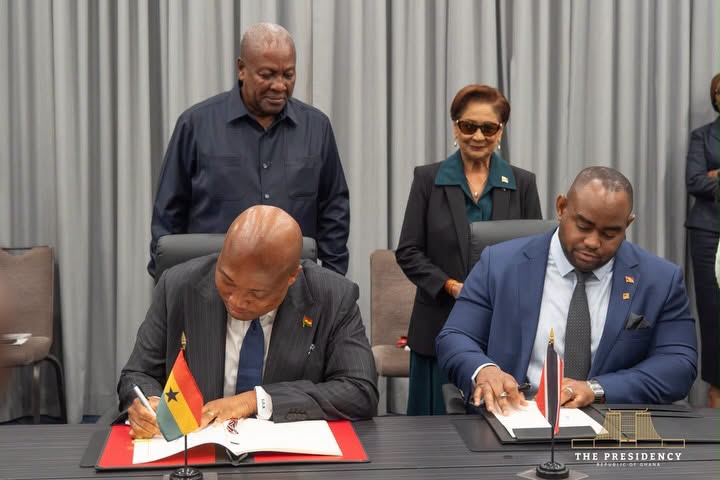
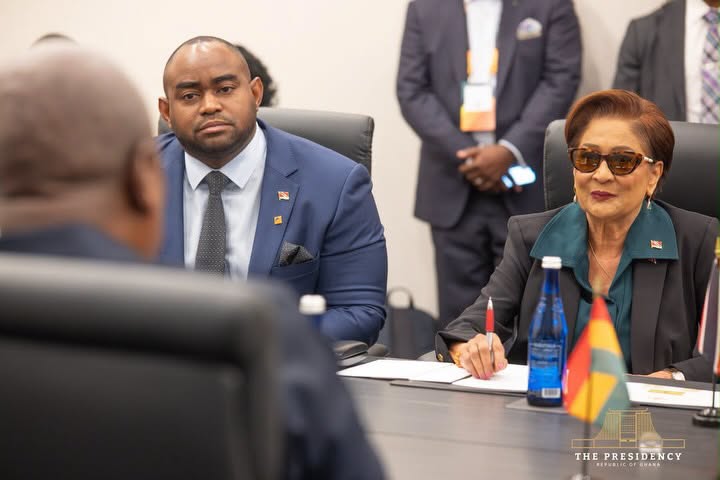
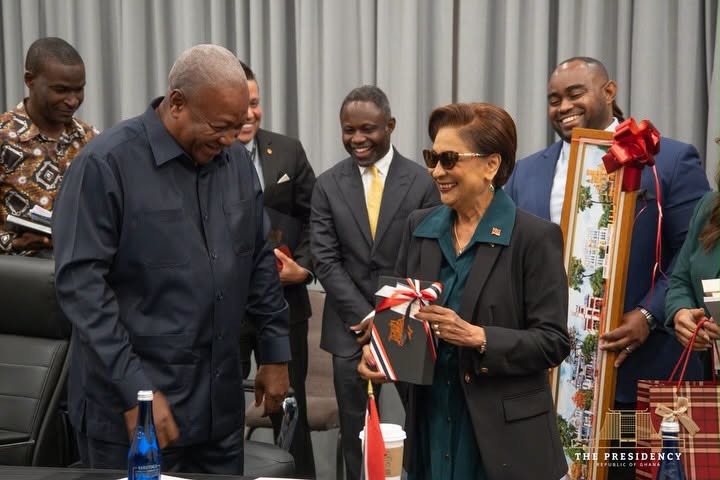
Foreign Minister Samuel Okudzeto Ablakwa and his Trinidadian counterpart, Foreign and CARICOM Affairs Minister Sean Sobers, signed the document on Tuesday, 22 September 2026, witnessed by President John Dramani Mahama and Prime Minister Kamla Persad-Bissessar during bilateral talks in New York on the sidelines of the 81st United Nations General Assembly.
The agreement establishes the legal framework within which airlines from either country may operate services between them, a step both governments present as the basis for deeper commercial and people-to-people ties. The two leaders also used the meeting to review progress on the reparations agenda and to discuss trade and investment.
What The Agreement Actually Does
An air services agreement is an enabling instrument rather than a flight schedule. It sets out which airlines each country may designate, the routes they may fly, the capacity they may offer and the commercial rights attached, including whether carriers can pick up passengers at intermediate points.
What it does not do is put an aircraft in the air. Neither government has announced which airlines might operate the route, what city pairs would be served or when services could begin, and the agreement’s practical value depends entirely on an airline concluding that the traffic justifies the cost.
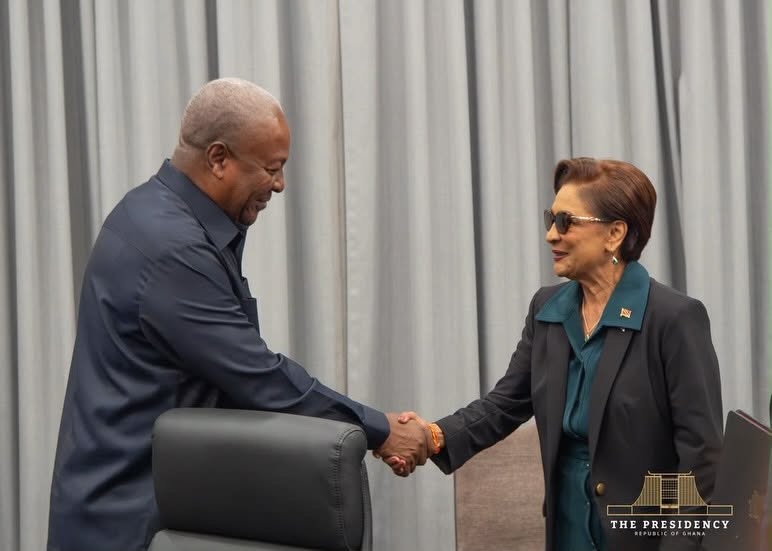
President Mahama described the deal in terms of what it enables rather than what it delivers immediately. The agreement, he said, strengthens air connectivity and creates new opportunities for cooperation between the two countries.
Reparations On The Same Table
The aviation deal arrived alongside a conversation that has become central to Ghana’s foreign policy. President Mahama said the two leaders discussed updates to the reparations agenda, an issue that links African and Caribbean governments through parallel campaigns for redress for slavery and colonialism.
The timing is deliberate. President Mahama serves as the African Union’s Champion for Reparations, and Ghana is scheduled to host a high-level side event in New York on 23 September to receive progress reports from the panels established to advance that work.
Trinidad and Tobago belongs to the Caribbean Community, whose reparations commission has pursued the claim against European states for more than a decade. Aligning the African Union and CARICOM positions has become a stated objective on both sides, and bilateral meetings of this kind are where that coordination is built.
Trinidad’s Wider Aviation Push
For Trinidad and Tobago, the Ghana agreement forms part of a broader effort to expand its air services network. Sobers also signed an Air Services Agreement with Panama in New York during the same period, on behalf of his government.
Transport and Civil Aviation Minister Eli Zakour welcomed both agreements as part of a strategy to strengthen the country’s position as a Caribbean aviation hub. The Panama deal reaches Tocumen International Airport, one of the busiest connecting points in the Americas, while the Ghana agreement opens the framework for links to the African continent.
That pairing suggests Port of Spain is positioning itself as a transfer point between Africa and the Americas rather than simply adding a destination.
Why Connectivity Matters To Ghana
Ghana’s interest runs through heritage, trade and the diaspora. Travel between Accra and the Caribbean currently requires connections through Europe or North America, adding hours and cost to a journey between two regions bound by history.
Cutting that routing would matter for the heritage tourism Ghana has cultivated since the Year of Return, for Caribbean visitors to Cape Coast and Elmina, and for the trade flows both governments say they want to build. Trinidad and Tobago’s own population carries deep West African ancestry, which gives the connection a constituency on both sides of the Atlantic.
The constraint is commercial. Ghana has no national flag carrier operating long-haul services, and successive governments have pursued plans to establish one without reaching an operating airline. That leaves the route’s fate with foreign carriers weighing demand on a thin market.
Air services agreements are cheap to sign and hard to fill. Several that Ghana has concluded over the years have never produced a scheduled service, because the framework creates permission rather than passengers.
The measure of this one will be whether a carrier files a schedule, and whether the reparations and trade conversations that accompanied it produce enough movement of people and goods to make that schedule viable. Until then, the agreement sits in the category of diplomatic groundwork, useful if something is built on it and forgotten if nothing is.
READ ALSO: 8% Fare Hike Adds Pressure to Ghana’s Inflation Gains