The Ashanti Regional Minister, Dr Frank Amoakohene, has called for stronger public support for environmental enforcement in urban communities as part of efforts to tackle illegal mining and other activities degrading the environment.
Speaking at the Climate Talks held at the Miklin Hotel in Kumasi, Dr Amoakohene noted that the fight against environmental degradation cannot be limited to mining communities, stressing that activities in urban areas also require firm action and public cooperation.

According to the Regional Minister, government has introduced several measures to regulate mining while providing alternatives for people whose livelihoods depend on the sector.
One of the interventions, he explained, is the Responsible Cooperative Mining Programme, known as rCOMSDEP, which seeks to identify miners and communities, locate suitable mineral deposits and provide technical guidance to ensure mining takes place within designated areas.
The approach, he indicated, also allows miners to be registered and monitored, creating a system through which individuals can be held accountable when mining activities breach environmental requirements.
Additionally, Dr Amoakohene outlined the National Apprenticeship Programme and the Adwumawura Programme as pathways for young people seeking to move away from mining.
He explained that the apprenticeship initiative provides free training and equipment support, while the Adwumawura Programme provides entrepreneurial assistance and start-up support to enable beneficiaries to establish businesses after acquiring skills.
Beyond these interventions, the Regional Minister pointed to measures including restrictions on excavator imports, the ban on changfan operations, the establishment of NAIMOS and the deployment of Blue Water Guards.
He further referenced reclamation programmes and efforts to establish permanent camps for forestry personnel as part of measures aimed at protecting forests and restoring degraded areas.
Turning to urban communities, Dr Amoakohene urged the public and the media to support enforcement against structures located on river paths and wetlands, noting that such actions can become politically sensitive despite their environmental implications.
“They are bold, painful actions that need to be taken to protect the environment. As we do this in the urban areas, we will not also leave out the issue of sanitation, which we are also equally struggling to have a foot or a hold on it in our urban areas.”
Dr Frank Amoakohene
He therefore called for collective responsibility in addressing environmental degradation, stressing that urban sanitation and illegal development should receive the same seriousness as the fight against illegal mining.

The Regional Minister also referenced sanitation enforcement teams established by the Kumasi Metropolitan Assembly and other assemblies to monitor conditions within communities. He urged environmental advocates, residents and the media to support such interventions as government works to strengthen environmental protection across both urban and rural areas.
Enforcement Gaps Undermine Efforts To Control Illegal Mining
The Ashanti Regional Minister, Dr Frank Amoakohene, also acknowledged gaps in the enforcement of environmental laws and called for stronger collaboration among government, traditional authorities and communities to address illegal mining. Dr Amoakohene explained that legislation alone cannot resolve the problem when those responsible for implementing the rules encounter practical challenges in enforcing them.
The Regional Minister pointed to human intervention as one of the areas where weaknesses can emerge, noting that enforcement depends on individuals who may not always implement existing laws as intended. Against this backdrop, he invited stakeholders at the forum to examine how existing legislation can be applied more effectively to strengthen the fight against illegal mining.
Dr Amoakohene also directed attention to the role of landowners and traditional authorities, observing that government does not own a significant portion of the land being exploited by illegal miners. He explained that some landowners and traditional leaders make lands available for mining, after which public resources are required to restore areas damaged through such activities.
Referencing a proposal from the Lands Minister that is yet to be incorporated into law, the Ashanti Regional Minister indicated that ownership consequences could be attached to land that becomes so degraded that government must intervene with public funds to reclaim it.
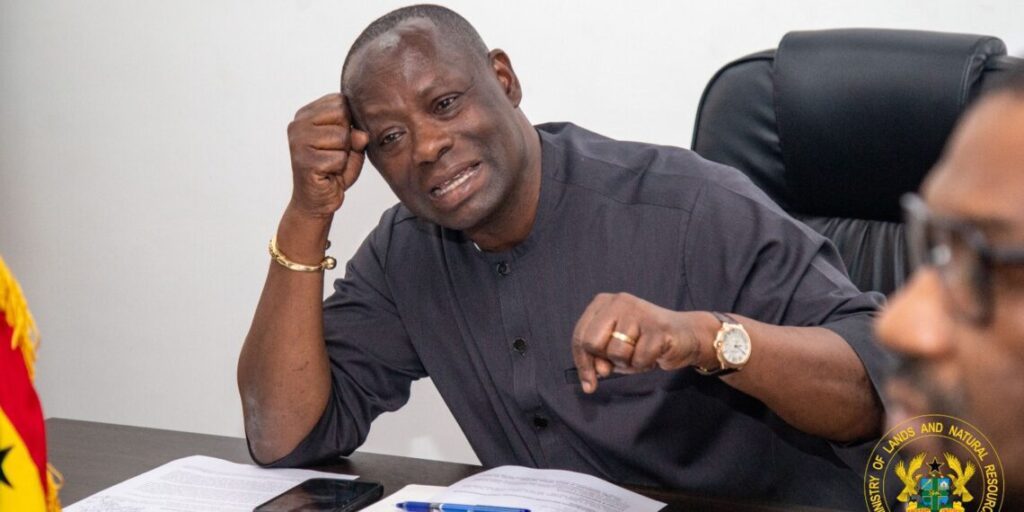
“If that land is reclaimed by government, then the ownership of that land should revert to government. So that you wouldn’t go, allow your land to be destroyed, expect government to come and reclaim same, and still have it back as a landowner.”
Dr Frank Amoakohene
Such a framework, he noted, would create an additional incentive for landowners to prevent destructive activities on their properties and strengthen accountability beyond those physically undertaking mining.
Furthermore, Dr Amoakohene called for collaboration between government institutions and traditional authorities to establish practical mechanisms for protecting lands before degradation occurs.
READ ALSO: Transport Fare Hike To Raise Pressure On Ghana’s Fuel-Driven Economy