Majority in Parliament has attributed a sharp increase in recent narcotics arrests and seizures to strategic measures introduced by the Narcotics Control Commission (NACOC) and other security agencies under the National Democratic Congress (NDC) administration.
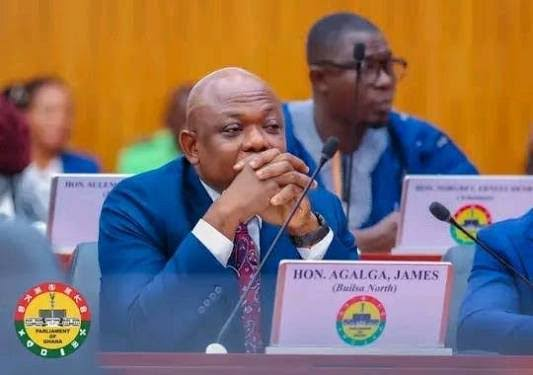
Addressing the Media, the Majority Leader and Member of Parliament for Builsa North, Hon. James Agalga, said NACOC recorded a significant rise in enforcement activities in 2025 compared with the previous year, describing the increase as a direct result of deliberate institutional reforms rather than coincidence.
According to Hon. Agalga, NACOC recorded 73 arrests nationwide in 2024, which stood as its highest annual enforcement figure at the time. However, this number rose sharply to 217 arrests across 165 cases in 2025, representing what he described as a 197 percent increase in enforcement activity within a single year.
He explained that this surge reflected stronger enforcement operations, improved inter-agency collaboration, and the expansion of NACOC’s operational presence across the country, rather than simply an increase in drug-related activity.
Seizures Climb Across Multiple Categories
Hon. Agalga said narcotics seizures also rose significantly in 2025, with 1,497.75 kilogrammes of narcotic substances seized nationwide, carrying an estimated street value of US$5.24 million.
He added that enforcement operations also intercepted 61,974 units of controlled substances, including pharmaceutical opiates and new psychoactive substances circulating within the country.
Beyond drug seizures, Hon. Agalga highlighted the impact of asset-based enforcement operations targeting the financial infrastructure behind trafficking networks. He disclosed that these operations resulted in the seizure of GH¢6.93 million and US$440,382 in cash, along with 19.72 kilogrammes of gold allegedly linked to suspected drug-money laundering activities.
“The 2025 performance was due to the concrete institutional changes this government has put in place.”
Hon. James Agalga
Hon. Agalga further reported that NACOC had significantly expanded its operational infrastructure, increasing its District Commands from fewer than ten to 77, a development that extended the Commission’s presence to all 16 regions of the country for the first time.
He said this expansion allowed NACOC to move enforcement and intelligence operations closer to communities where trafficking and substance abuse are most prevalent, rather than remaining concentrated at the national headquarters level.
Strengthened Inter-Agency Collaboration
According to Hon. Agalga, stronger collaboration between NACOC and other security institutions, including the Ghana Police Service, the National Intelligence Bureau, the Ghana Immigration Service, and the Economic and Organised Crime Office, had significantly supported intelligence-led operations throughout the year.

He said this coordinated approach enabled agencies to share intelligence more effectively and mount joint operations that produced the enforcement outcomes recorded in 2025.
Dedicated Court for Narcotics Cases
Hon. Agalga also disclosed that government had established a dedicated narcotics court to address what he described as fragmentation in the prosecution of drug-related cases.
He explained that this measure was intended to close the gap between the number of arrests made and the number of convictions ultimately secured, a persistent challenge in narcotics enforcement.
“This shift closes the gap between arrests and convictions.”
Hon. James Agalga
He said the establishment of a specialised court reflected government’s recognition that enforcement gains alone are insufficient without a correspondingly efficient judicial process capable of translating arrests into successful prosecutions.
Framing The Numbers as Institutional Success
Throughout his address, Hon. Agalga positioned the 2025 enforcement figures as evidence of deliberate policy choices rather than incidental outcomes, crediting the NDC administration’s institutional reforms for the marked improvement in NACOC’s operational capacity and results.
By pairing the rise in arrests and seizures with structural changes, including expanded district commands, stronger inter-agency partnerships, and a dedicated judicial mechanism, Mr Agalga sought to present a comprehensive narrative of institutional strengthening within the country’s narcotics control architecture.

As government continues to publicise these enforcement figures, attention will likely turn to whether the newly established narcotics court begins to demonstrably improve conviction rates, and whether the expanded district command structure can be sustained and further built upon in subsequent years.
The figures presented by Mr Agalga are expected to feature prominently in ongoing political and policy discussions around Ghana’s response to narcotics trafficking.
READ MORE: The Arrest, Troubling Giving The Premises — Kyei-Mensah Bonsu