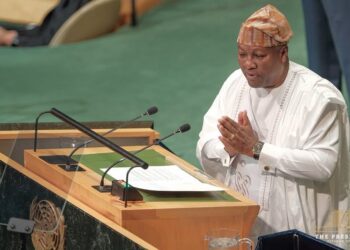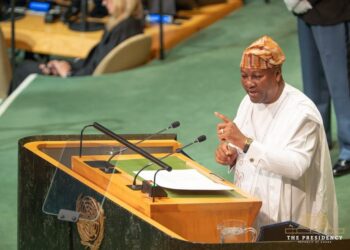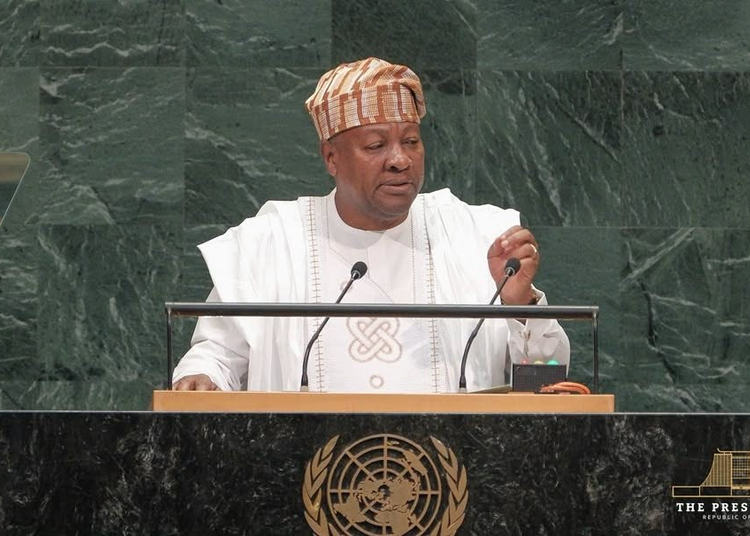
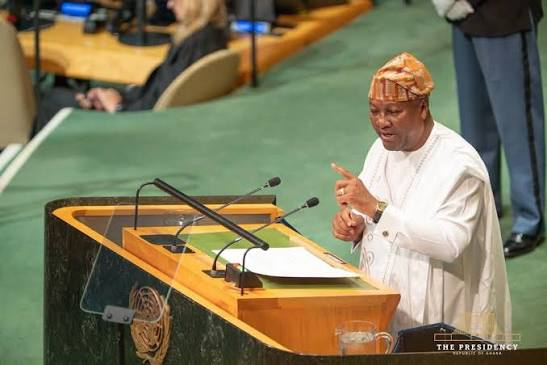
President John Dramani Mahama has told the 81st United Nations General Assembly that Ghana has launched a historic free primary healthcare programme, describing it as central to the country’s broader national reset and a direct contribution toward achieving key Sustainable Development Goals.
Addressing world leaders at the 81st UN General Assembly, President Mahama outlined a sweeping expansion of social protection measures under his administration, framing universal healthcare access as both a moral obligation and a practical demonstration of democratic governance delivering tangible benefits to citizens.
President Mahama described the healthcare initiative as central to Ghana’s national reset agenda, explicitly linking it to three Sustainable Development Goals: SDG 1 on poverty eradication, SDG 3 on good health and well-being, and SDG 10 on reduced inequalities.
He explained that the programme reflects a deliberate effort to align domestic policy with global development priorities, rather than treating healthcare reform as an isolated national initiative.
According to President Mahama, Ghana has officially launched a free primary healthcare programme designed to ensure that every Ghanaian can access essential primary health services at the community level at zero cost.
He positioned this as a transformative shift in how the country delivers basic healthcare, removing financial barriers that have historically prevented many citizens from seeking timely medical attention.
International Recognition
President Mahama told the Assembly that the programme has already attracted significant international attention, noting that it has been hailed by both the World Health Organisation and the United Nations as a benchmark paradigm shift for the Global South.
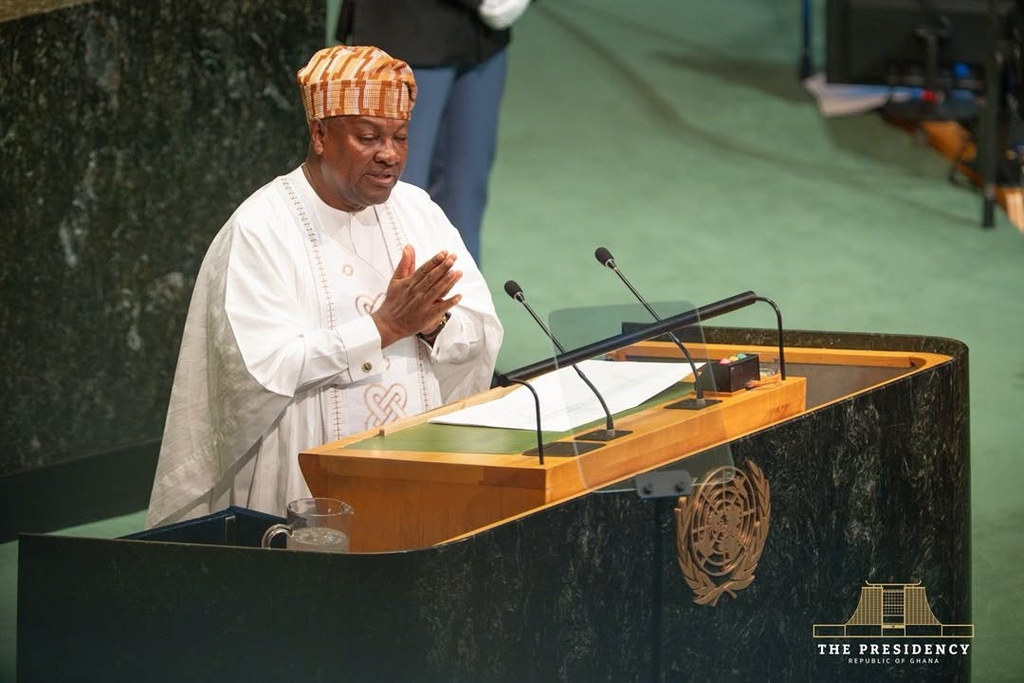
“This model is currently being studied by other nations that are seeking to achieve true universal health coverage.”
President John Dramani Mahama
He suggested that Ghana’s approach to primary healthcare delivery could serve as a reference point for other developing nations grappling with similar challenges in extending affordable healthcare access to their populations, positioning the country as a potential model within international health policy circles.
Expanding Coverage for Chronic Illness
Beyond primary healthcare, President Mahama highlighted complementary reforms to Ghana’s broader health financing architecture, particularly in relation to the National Health Insurance Scheme.
He announced the introduction of a Specialist Fund, officially named the Ghana Medical Trust Fund but widely known by its popular name, Mahama Care.
President Mahama explained that this fund guarantees subsidised, affordable and life-saving care for Ghanaians suffering from non-communicable diseases, specifically naming renal failure, cancers, cardiovascular diseases and diabetes as conditions covered under the scheme.
He framed this as a critical complement to the free primary healthcare programme, addressing a category of illness that often imposes catastrophic financial burdens on affected families.
By pairing primary healthcare access with targeted support for chronic and non-communicable diseases, President Mahama presented Ghana’s health reforms as a comprehensive strategy spanning both preventive and specialist care needs.
Democracy Measured by Tangible Benefits
Turning to the broader philosophy underpinning his administration’s policies, President Mahama argued that democratic governance must be judged by the concrete improvements it delivers to citizens’ daily lives, not merely by the conduct of periodic elections.
“Citizens must experience democracy, not only through the ballot box every four years, but through improved access to food, quality education, decent housing, accessible health care and economic development.”
President John Dramani Mahama
This framing positioned healthcare reform as part of a wider governance philosophy in which democratic legitimacy is reinforced through measurable social outcomes, rather than being confined to electoral processes alone.
President Mahama’s remarks suggested that his administration views sustained investment in social protection as essential to strengthening public trust in democratic institutions more broadly.
Positioning Ghana on The Global Stage
By addressing healthcare reform directly at the 81st UN General Assembly, President Mahama used the international platform to showcase Ghana’s domestic policy achievements while situating them within the broader global development agenda represented by the Sustainable Development Goals.
His remarks reflect an effort to position Ghana not only as a beneficiary of international development frameworks but as an active contributor of policy innovation that other nations in the Global South might draw upon in their own efforts to expand healthcare access.
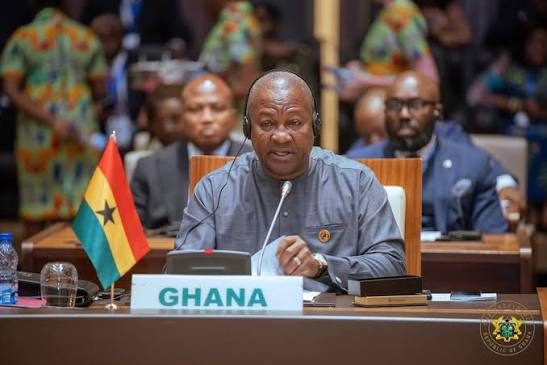
As Ghana’s free primary healthcare programme and the Ghana Medical Trust Fund continue to be implemented domestically, international observers, including the World Health Organisation and other UN agencies, are likely to monitor outcomes closely, given the global attention already directed toward the initiative.
The extent to which other nations adopt elements of Ghana’s model may serve as one measure of the programme’s broader impact beyond its immediate national context.
READ MORE: Narcotics Busts Surge Due To NDC’s Strategic Measures – Hon. Agalga