The Ghana Education Service (GES) has appealed to pre-tertiary teacher unions to call off their ongoing nationwide strike, warning that the industrial action risks undermining hard-won progress in stabilising the country’s academic calendar.
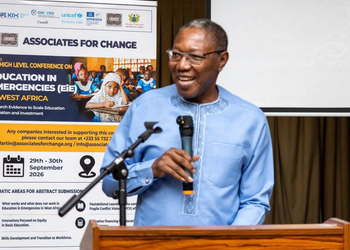
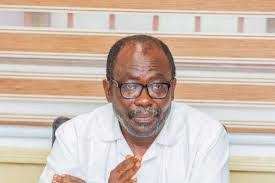
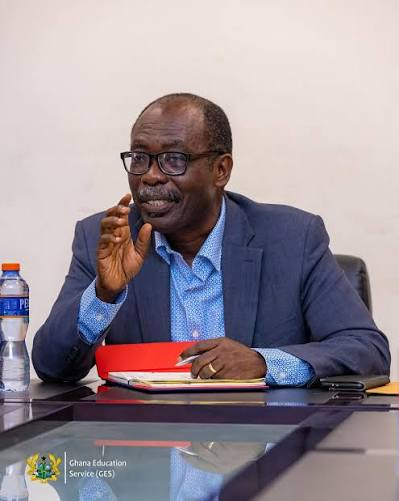
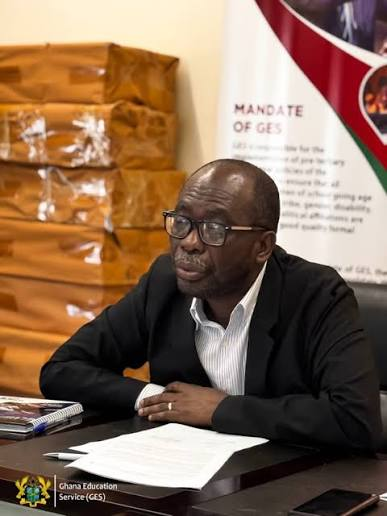
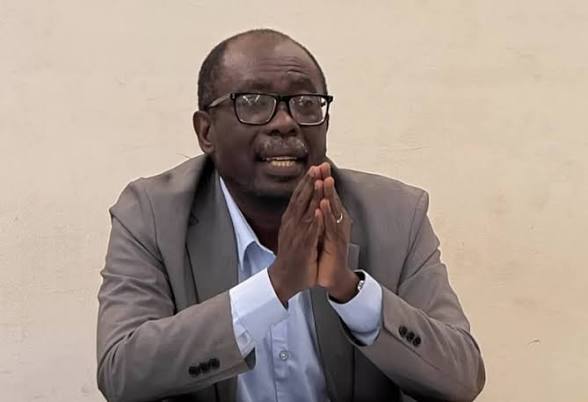
The appeal was made by the Director-General of GES, Professor Ernest Kofi Davis, who assured teachers that government is actively working with the Ministry of Education, the Ministry of Labour, the Controller and Accountant-General’s Department (CAGD) and other stakeholders to address the concerns behind the strike.
Addressing the press, Professor Davis described the recent stabilisation of Ghana’s academic calendar as a milestone achievement, noting that students across various levels of the education system reported to school within September for what he said was the first time in approximately six years.
“This did not happen by accident. It was achieved through hard work.”
Professor Ernest Kofi Davis,
He explained that this development has produced a more predictable and synchronised academic calendar, giving parents and other stakeholders greater ability to plan around the school year. He commended all stakeholders who contributed to this progress, singling out teachers and school heads for recognition.
Call to Rescind the Strike Decision
Professor Davis said GES wished to associate itself with the Ministry of Education’s appeal to teachers to reconsider their decision to strike, stressing that engagements to resolve the outstanding concerns are continuing.

He framed the appeal as part of a broader effort to protect the stability achieved in the academic calendar, describing this stability as essential to effective teaching and learning going forward.
He noted that the strike came barely two weeks into the new academic year, a timing he suggested placed the recent gains in jeopardy just as the school year was getting under way smoothly.
Citing Past Delivery on Promotions
To reassure teachers that their concerns would ultimately be addressed, Professor Davis pointed to the GES’s efforts to mechanise promotions last year, presenting this as evidence of the Service’s capacity to deliver on its obligations despite current challenges.
“We worked hard to mechanise promotions last year, and you can trust us to deliver this year as well despite the problems.”
Professor Ernest Kofi Davis
He acknowledged that the strike, declared by teacher unions roughly two weeks into the academic year, was based on a number of issues that GES, alongside the Ministry of Education, the Ministry of Labour and the CAGD, is seriously working to address.
Throughout his remarks, Professor Davis returned repeatedly to the theme of preserving the academic calendar’s newfound predictability.
He stressed that the objective going forward must be to maintain this stability and ensure that future academic years begin and proceed according to a predictable schedule, rather than reverting to the disruptions that characterised previous years.
He called on all stakeholders, including the teacher unions, to work together to ensure the school year proceeds without further interruption, framing the current strike as a direct threat to gains that took considerable effort to achieve.
A Strike Rooted in Multiple Grievances
The strike being addressed by Professor Davis was declared by the Ghana National Association of Teachers (GNAT), the National Association of Graduate Teachers (NAGRAT) and the Pre-Tertiary Teachers Association of Ghana (PRETAG) over unresolved concerns relating to the expired Collective Agreement, delayed placement of promoted teachers on appropriate salary scales, and the unimplemented Deprived Area Allowance for teachers serving in hard-to-reach communities.
These grievances have already prompted separate engagements involving the Minister of Education, the CAGD and GES, including a meeting on 31 August 2026 at which stakeholders agreed on a process for placing promoted teachers on their new salary structures. Professor Davis’s appeal comes against this backdrop of ongoing, multi-agency efforts to resolve the dispute.
Multi-Stakeholder Response
By explicitly naming the Ministry of Education, the Ministry of Labour and the CAGD as partners in addressing the unions’ concerns, Professor Davis reinforced the inter-agency nature of the issues at stake, echoing similar acknowledgements made by other officials involved in the dispute.
This coordinated framing suggests GES is seeking to present a united government front committed to resolving the underlying grievances rather than leaving the matter solely in the hands of any single institution.
As the strike continues to keep teachers out of classrooms nationwide, attention remains focused on whether the assurances offered by Professor Davis and other government officials translate into concrete progress on the outstanding promotion placements, the Deprived Area Allowance, and the renewal of the Collective Agreement.
The extent to which these commitments are honoured within the newly set timelines is likely to determine how quickly the current disruption to the academic calendar can be resolved.
READ MORE: NAGRAT Questions GES’ Ability to Complete Teacher Validation Document in One Week