The Ghana Investment Promotion Authority (GIPA) is seeking technical support from the United Nations Industrial Development Organization (UNIDO) to develop a comprehensive national Foreign Direct Investment (FDI) strategy aimed at strengthening Ghana’s investment environment and accelerating industrial transformation.
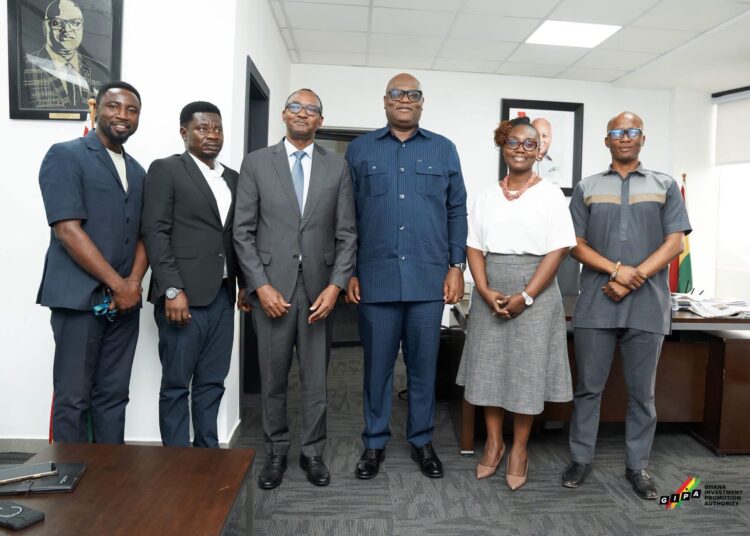
The call is being made by GIPA Chief Executive Officer, Mr Simon Madjie, during a working visit by the UNIDO Ghana and Liberia Representative, Dr Emmanuel Kalenzi. The engagement focuses on deepening collaboration between the two institutions and aligning investment promotion with Ghana’s broader economic development priorities.
Mr Madjie stresses that Ghana requires a clear and coordinated FDI framework that provides strategic direction for attracting, retaining and expanding foreign investment.
He indicates that the strategy should be closely aligned with national development objectives and should position FDI as an important instrument for industrialisation, technology transfer, job creation and sustainable economic growth.
“Ghana Needs a Clear FDI Framework that is Aligned with Our National Development Priorities,” Mr Madjie says.
He explains that a national FDI strategy can provide a structured approach to identifying investment opportunities, targeting strategic investors and strengthening linkages between foreign companies and the domestic economy.
‘’This framework can also help ensure that investment promotion efforts are coordinated across relevant government institutions and focused on sectors with strong potential for value addition and economic transformation.’’
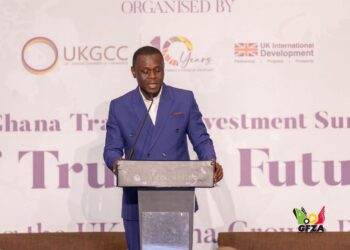
GIPA CEO, Mr. Simon Madjie
For GIPA, the objective is not only to attract investment but also to ensure that foreign capital contributes meaningfully to Ghana’s productive capacity. This includes promoting investments that create employment, develop local supply chains, support small and medium sized enterprises and enhance Ghana’s participation in regional and global value chains.
Highlight on Digital Transformation
The discussions with UNIDO also highlight the importance of digital transformation in improving the investment facilitation process. Mr Madjie outlines GIPA’s plans to establish a digital one stop investment platform that allows investors to access investment opportunities, submit applications and track regulatory processes online.
The proposed platform is expected to reduce administrative delays and make investment-related procedures more efficient and transparent. It is also intended to strengthen accountability by giving investors greater visibility over the progress of their applications and interactions with regulatory institutions.
Mr Madjie says the digital platform will “Enable Investors to Identify Opportunities, Submit Applications and Track Regulatory Processes Online,” creating a more seamless investment experience.
The initiative reflects a broader shift towards technology-driven investment facilitation, where investors can access information and government services through a central digital platform rather than navigating multiple institutions separately.
For Ghana, such a system can support a more predictable investment environment while helping public institutions improve coordination and service delivery.
The engagement further explores potential areas of cooperation between GIPA and UNIDO, including investment opportunity mapping, investor outreach, SME development, industrial development and investment linkages.
Investment opportunity mapping is particularly relevant as Ghana seeks to communicate bankable projects and sector specific opportunities more effectively to both domestic and international investors.
By identifying opportunities across regions and sectors, GIPA can strengthen its capacity to match investors with projects that correspond with national development priorities.
The collaboration also places emphasis on strengthening linkages between foreign investors and local businesses. Such linkages can help domestic enterprises participate in supply chains, access new markets, improve technical capacity and benefit from technology and knowledge transfer.
SMEs an Important Component
SMEs remain an important component of this agenda because their participation in investment driven economic activity can broaden the benefits of FDI.

Stronger connections between multinational companies and local enterprises can create opportunities for domestic firms to supply goods and services, form partnerships and improve their competitiveness.
Industrial development is another key area under discussion. UNIDO’s mandate and expertise in industrial development provide an opportunity for Ghana to strengthen the productive sectors of the economy while promoting investment that supports manufacturing, value addition and technological advancement.
Dr Emmanuel Kalenzi reaffirms UNIDO’s commitment to supporting Ghana’s industrialisation agenda and indicates that the organisation will explore opportunities to support preliminary work on the proposed FDI strategy.
“UNIDO is committed to supporting Ghana’s industrialisation agenda,” Dr Kalenzi states, signalling the organisation’s interest in contributing technical expertise to Ghana’s investment and industrial development efforts.
The proposed partnership comes at a time when investment promotion is increasingly focused on the quality, sustainability and economic impact of investment rather than investment volumes alone.
A well designed FDI strategy can provide a basis for determining priority sectors, defining investor-targeting approaches and strengthening policies that encourage reinvestment and long-term business expansion.
For GIPA, the engagement with UNIDO therefore provides an opportunity to strengthen the institutional foundations of Ghana’s investment promotion architecture.
Technical assistance can support research, policy analysis, stakeholder consultations and the development of an evidence-based framework for attracting investment that complements national industrialisation objectives.
The digital one-stop platform can also complement the proposed FDI strategy by providing the operational infrastructure through which investors access information and services. Together, the policy framework and digital system can contribute to improving Ghana’s investment facilitation processes and enhancing the country’s competitiveness as an investment destination.
Mr Madjie’s call for UNIDO support therefore places emphasis on building a coordinated investment ecosystem in which government agencies, development partners, investors and local businesses work towards shared economic objectives.
The discussions between GIPA and UNIDO demonstrate a growing focus on using investment as a tool for structural economic transformation. By developing a national FDI strategy, strengthening digital investment facilitation and expanding cooperation in industrial development and SME support, Ghana seeks to create stronger conditions for productive investment.
The proposed collaboration also highlights the importance of ensuring that investment promotion remains connected to domestic economic priorities. For Ghana, the expected outcome is an investment environment that attracts capital while simultaneously supporting industrial growth, local enterprise development, employment creation and stronger participation in global value chains.
READ ALSO:Ghana’s Population Figures Differ by 1.6 Million, Former Census Chief Warns