Broadway has long celebrated stories from around the world, yet until now no play set entirely in Ghana had claimed a stage on the Great White Way. That milestone arrived this week with the official opening of Jocelyn Bioh’s sharp, buoyant comedy School Girls; Or, The African Mean Girls Play at Manhattan Theatre Club’s Samuel J. Friedman Theatre.
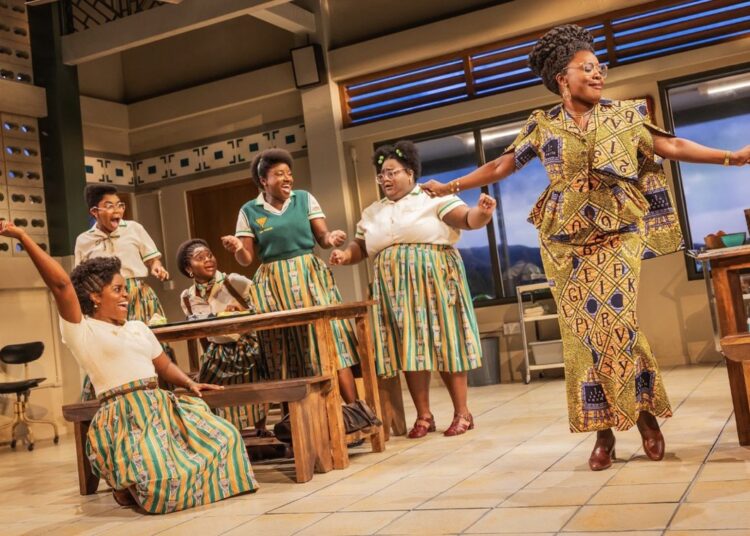
First production photos released by accounts tracking Ghanaian cultural activity capture the vibrant energy of the limited engagement, which began previews on September 8 and opened September 28. The production is currently scheduled to run through early November.
Set in 1986 at the exclusive Aburi Girls’ Boarding School in Ghana’s Eastern Region, the 75-minute one-act follows a clique of teenage students obsessed with the Miss Ghana pageant. At the center stands Paulina Sarpong, the school’s reigning queen bee, who sees the competition as her ticket to fame, fortune and a shot at Miss Universe. Her carefully ordered world is upended by the mid-year arrival of Ericka Boafo, a light-skinned transfer student from Ohio whose Ghanaian father owns a local cocoa factory.
The newcomer’s talent, beauty and American polish immediately disrupt the social hierarchy and draw the attention of the pageant recruiter.
Bioh, a Ghanaian-American playwright and actor, draws on personal and familial history for the piece. Her mother attended Aburi Girls’ Senior High School in the 1980s, and the playwright has spoken of how private family stories of teenage cruelty and aspiration informed the script. Colorism sits at the heart of the comedy. The girls police one another’s skin tone, hair and bodies with ruthless precision, reflecting both local beauty standards and the lingering influence of Western ideals.
A real-life controversy surrounding the 2011 Miss Universe Ghana selection, in which a biracial American-born contestant was chosen over darker-skinned Ghanaian models, helped crystallize Bioh’s themes.
The Broadway cast is stacked with powerhouse performers. Tony Award nominee Denée Benton (Natasha, Pierre & the Great Comet of 1812, HBO’s The Gilded Age) leads as the charismatic yet vicious Paulina. Tony nominee Jasmine Amy Rogers, fresh from her breakout in Boop!, plays Ericka. Tony winner Patina Miller (Pippin) appears as Eloise Amponsah, the glamorous former Miss Ghana turned pageant recruiter.
Heather Alicia Simms portrays the formidable Headmistress Francis, while Lucia Aremu, Erin Morton, Nia Otchere-Sarfo and Jordan Rice complete the ensemble of schoolgirls. Director Whitney White, who previously collaborated with Bioh on the Tony-nominated Jaja’s African Hair Braiding, stages the production with kinetic energy and visual flair.
The creative team brings additional star power. Tony winner Qween Jean designed the costumes, which lean into vibrant 1980s Ghanaian school uniforms and pageant glamour. Scenic designer Teresa L. Williams, lighting designer Stacey Derosier, sound designer Cody Spencer and hair and makeup designer Nikiya Mathis round out the roster. The production is presented by Manhattan Theatre Club in association with Chase This Productions and Susan Kelechi Watson.
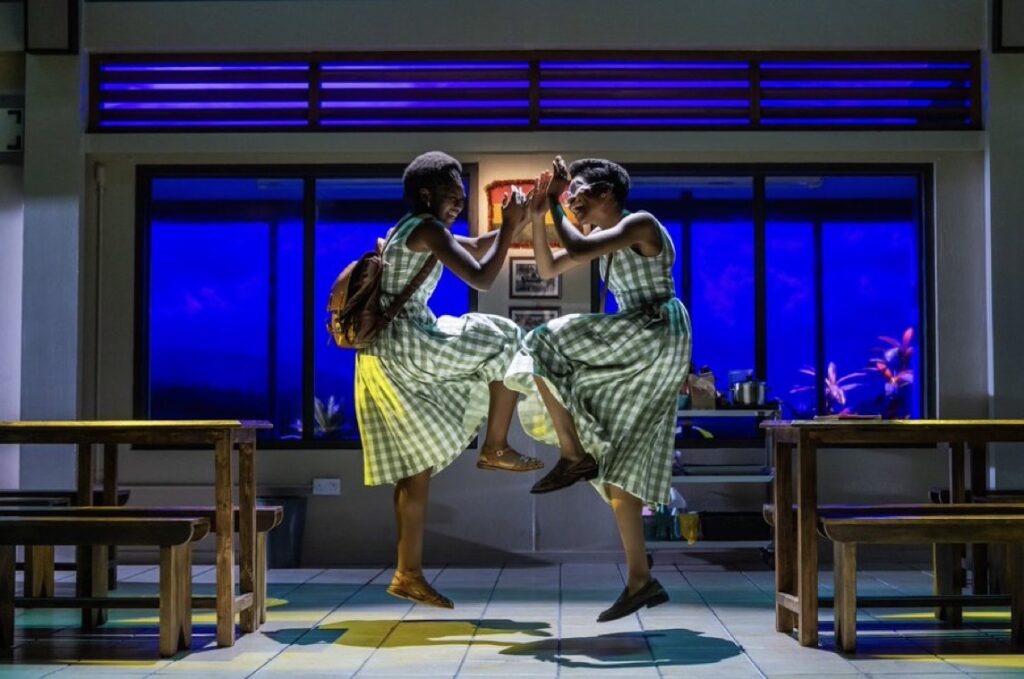
School Girls premiered Off-Broadway at MCC Theater in 2017 and quickly became a regional theater favorite, with more than 75 productions across the United States and a successful London run. Critics at the time praised Bioh’s ability to refresh the “mean girls” genre by immersing it in a specific African cultural context. Early Broadway reviews have been similarly enthusiastic, noting that the play has only grown sharper and funnier in its Main Stem incarnation.
Public Reaction
Reviewers highlight the ensemble’s chemistry, the precision of White’s direction, and Bioh’s skill at balancing riotous comedy with pointed observations about colonialism’s aftereffects, anti-Blackness and the particular pressures placed on Black girlhood.
The show’s arrival carries cultural weight beyond the theater district. For the Ghanaian diaspora and audiences across the African continent, seeing an entirely Ghana-set story occupy a Broadway house represents a long-overdue recognition. The Aburi setting, the use of Ghanaian names and social dynamics, and the focus on colorism within African communities offer a rare degree of specificity.
At the same time, the universal experiences of adolescent rivalry, insecurity and ambition make the piece accessible to broader audiences.
Bioh herself will briefly join the cast in early October, stepping into the role of Eloise for four performances while Miller fulfills a prior commitment. The playwright has described the experience as a full-circle moment: she began writing the play while appearing as an actor in The Curious Incident of the Dog in the Night-Time just a few doors down from the Friedman Theatre.
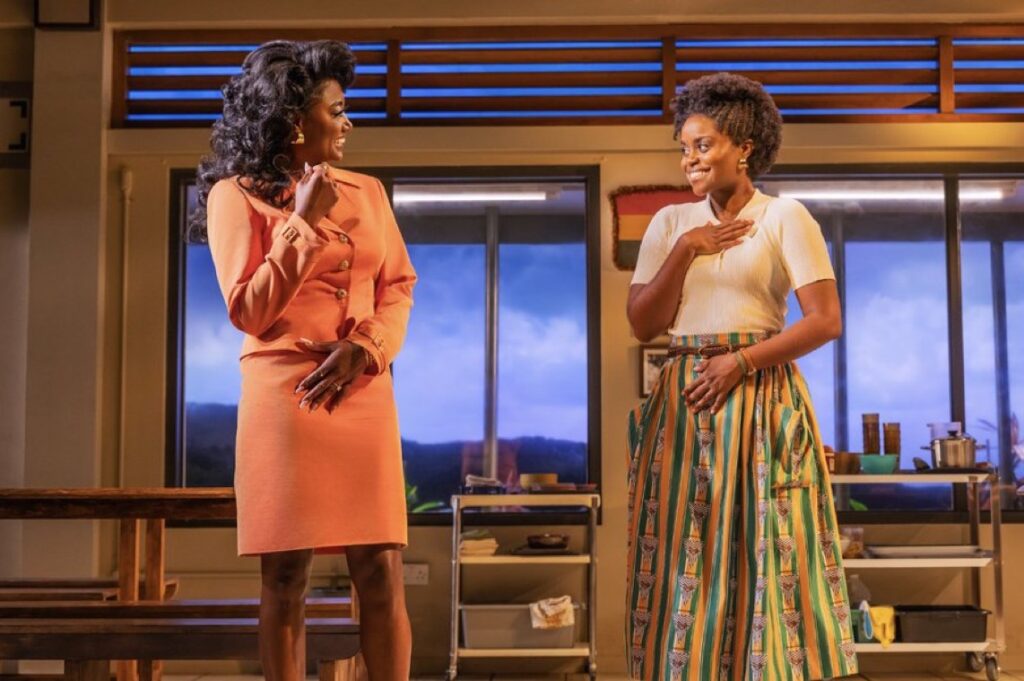
Tickets remain available for the limited engagement. In an industry still expanding its definition of whose stories belong on its biggest stages, Bioh’s comedy asserts that a boarding school in the Aburi hills has every right to claim the spotlight.
READ ALSO:Two-Year Health Data Lag Fails Africa’s Policymakers, Former Government Statistician Warns