
The Ministry of Trade, Agribusiness and Industry (MoTAI) is stepping up efforts to improve private sector compliance with international trade standards, as Ghanaian exporters and importers navigate regulatory requirements governing access to foreign markets.
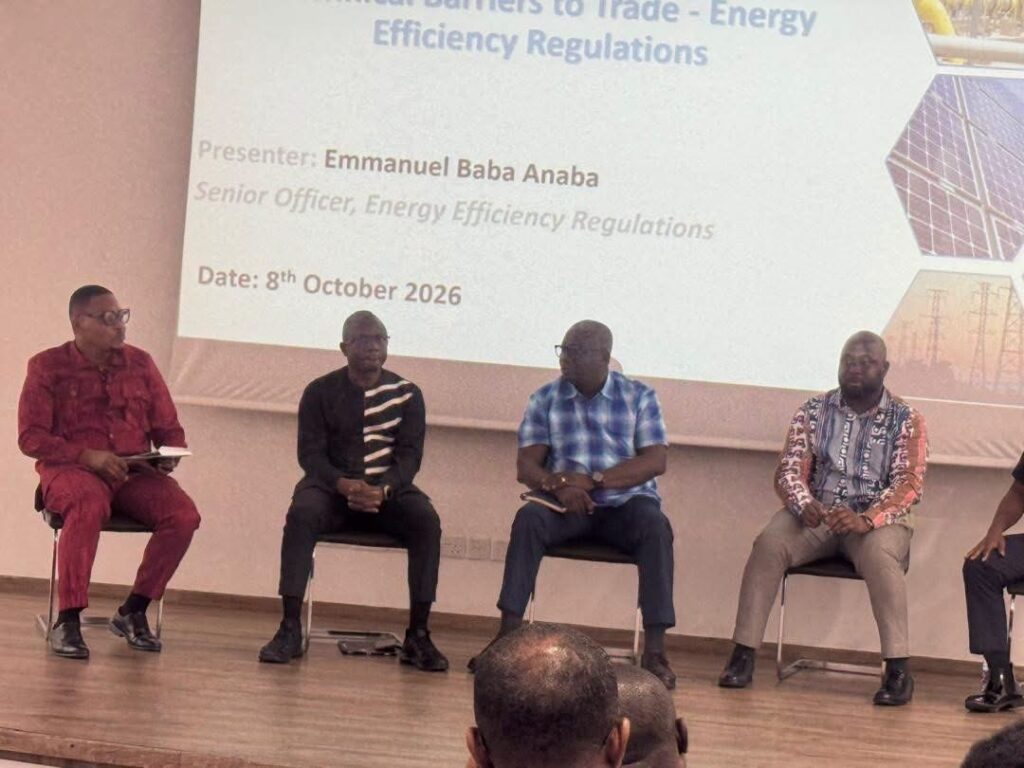
The Ministry, through its Standards Division under the Industrial Development Directorate, organised a one day sensitisation workshop in Accra to educate private sector operators on Sanitary and Phytosanitary (SPS) measures and Technical Barriers to Trade (TBT).
The workshop brought together exporters, importers and other industry stakeholders to strengthen their understanding of the requirements and their implications for international trade, particularly the regulations businesses must satisfy when trading with overseas markets.
Also, Speaking at the opening of the workshop on behalf of the sector minister, the Head of the Standards Division, Mr Michael Senayah, outlined the purpose of the engagement.
”The programme is aimed at equipping exporters and importers with the necessary information on SPS and TBT requirements that could affect their businesses and access to international markets.”
Head of Standard Devision, Mr. Micheal Senayah
Under the World Trade Organization’s SPS Agreement, countries can establish measures to protect human, animal and plant health, including regulations on food safety, animal diseases and plant pests.
However, these measures must comply with applicable WTO rules, including requirements relating to scientific justification and the avoidance of arbitrary or unjustifiable discrimination between trading partners.
Maintaining Local and International Regulations Measures
The WTO’s Agreement on Technical Barriers to Trade, governs technical regulations, voluntary standards and conformity assessment procedures, with the objective of ensuring that such measures do not discriminate against imported products or create unnecessary obstacles to international trade.
The distinction is important for Ghanaian businesses because the requirements applicable to a product depend on the nature and purpose of the regulation imposed by the importing country.
Also, the Food safety and plant health controls may fall under SPS rules, while product specifications, labelling requirements and technical testing procedures may be covered by TBT rules, depending on their scope.
For exporters, failure to identify and meet the relevant requirements can create additional compliance costs and expose consignments to delays, rejection or other restrictions, depending on the regulations and enforcement procedures of the destination market.
The WTO identifies transparency as an important element of the SPS framework, requiring members to publish relevant measures and provide information on their regulations. Its TBT framework also promotes transparency and encourages the use of international standards to support predictable trading conditions.
These provisions are particularly relevant to businesses seeking to diversify export destinations, as regulatory requirements can differ across markets. Understanding applicable standards before production, shipment and customs clearance can help businesses prepare the necessary documentation and demonstrate that their products meet the conditions for entry.
A Broader Mandate to Promote Domestic and International Trade
Ghana’s Ministry of Trade, Agribusiness and Industry has a broader mandate to promote domestic and international trade, industrial development and private sector growth. Its official priorities include supporting Ghanaian businesses
The aim is to access export opportunities under arrangements such as the African Continental Free Trade Area (AfCFTA), the African Growth and Opportunity Act (AGOA) and the Economic Partnership Agreement (EPA).
Another objective of the Ministry is to improve awareness of international standards which are very relevant to the country’s export development objectives, particularly efforts to expand markets for locally manufactured and processed products.
However, access to trade agreements alone does not guarantee market entry; businesses must also satisfy the applicable product standards and regulatory requirements to give clarity and purpose to all stakeholders, especially business people and the regulatory authorities both domestic and International.

The workshop represents a government-private sector engagement aimed at improving awareness of these obligations. Its practical value will depend on businesses applying the information to their production, quality assurance, testing, certification and export procedures.
Again for importers, understanding SPS and TBT requirements is equally important in assessing the conditions governing goods entering Ghana and ensuring that relevant regulatory obligations are addressed.
As international trade becomes increasingly shaped by technical regulations and product standards, the Ministry’s engagement underscores the importance of regulatory knowledge in business planning.
For Ghanaian companies seeking sustainable growth in export markets, compliance is an essential consideration in protecting product quality, managing trade risks and maintaining access to international customers.
The Ministry of Trade, Agribusiness and Industry promises to support both domestic and International Exports Compliance and advices all stakeholders to adhere to the Compliance requirements and encourages stakeholders to report to the ministry for support if they encounter challenges in their line of duty.
READ ALSO:Ghana Stock Market Sheds Momentum as 28 Equities Battle for Direction