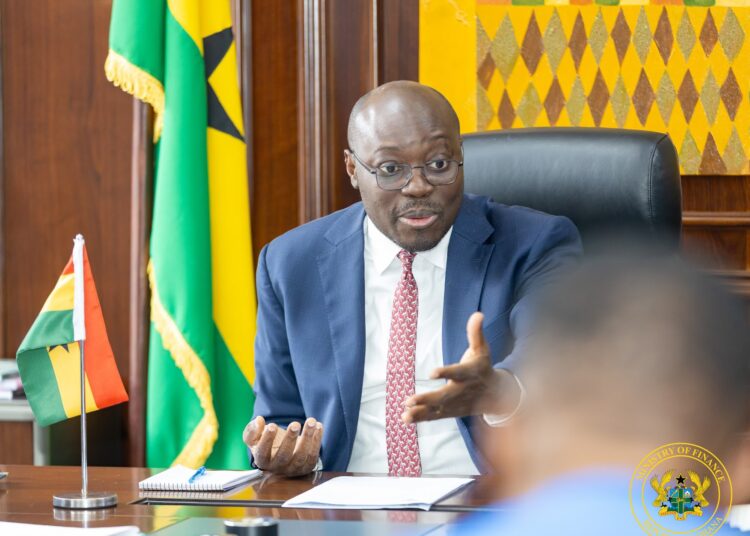
Finance Minister Dr Cassiel Ato Forson has made a pointed case for stricter discipline in how Ghana collects and spends public money. He delivered the message during his nationwide engagement ahead of the 2027 Budget Statement and the government’s New Economy agenda.
Dr Ato Forson argued that waste, uncollected revenue and poor spending carry a direct human cost, and he called for revenue recovery to become a working method rather than a slogan.
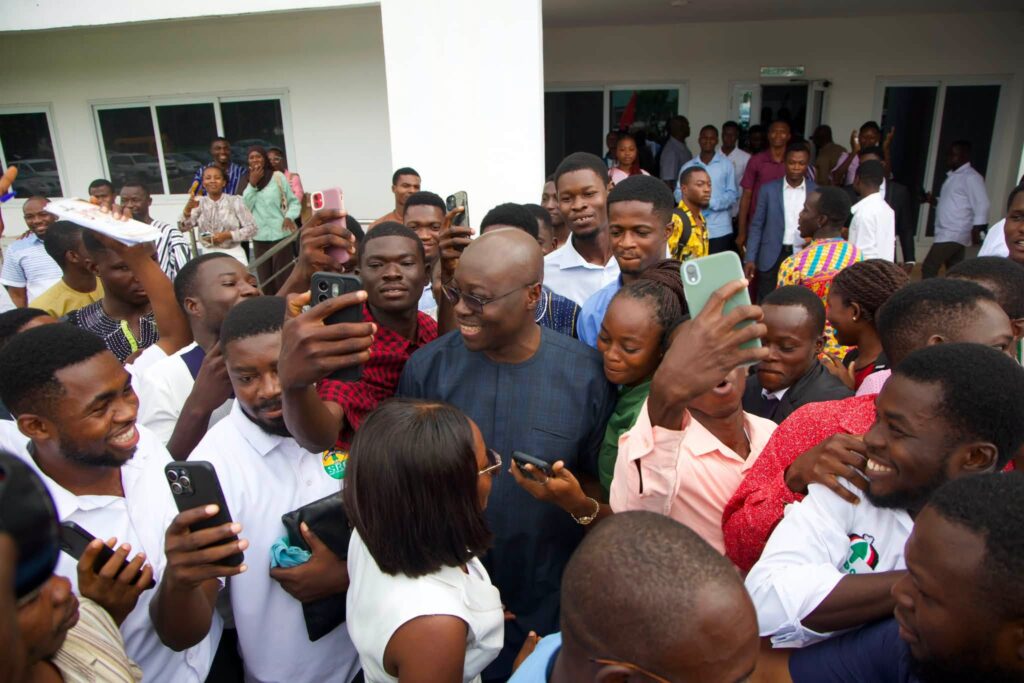
His remarks sit within a fiscal agenda that includes a new Independent Fiscal Council and ten tax and revenue laws signed in August, and he linked the New Economy to jobs for young people after sessions at the University for Development Studies, Nyankpala Campus, and the University of Ghana.
“Collect what is due the state, protect what is collected, spend what is approved, account for what is spent, recover what is owed, and prevent it from happening again.”
Dr Cassiel Ato Forson, Minister for Finance
The engagement forms part of the build-up to the 2027 Budget Statement. Dr Ato Forson has already opened the budget debate to public input, and the university sessions put the same conversation before academics, researchers and students.
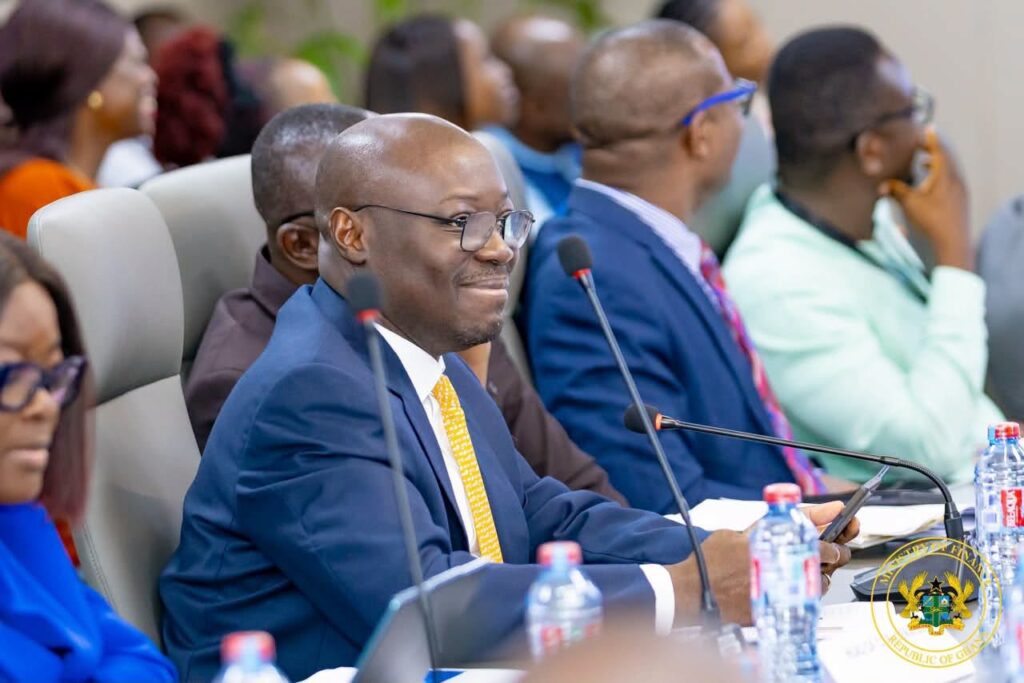
In a written statement after the Nyankpala session, he described the New Economy engagement with the university community as “deeply successful and inspiring.” He disclosed that the engagements continue at the University of Ghana.
Every Cedi Has a Job Waiting
Dr Ato Forson opened his remarks with a blunt premise. He stated: “Ghana does not have the luxury of wasting public resources. Every Cedi has a job waiting for it.”
In his telling, public money can “buy medicine, repair a classroom, desilt a drain, improve a market, or maintain a feeder road.” He used those everyday examples to show what is at stake when money is lost or misdirected.
The Minister’s argument extends a theme President John Dramani Mahama has pressed publicly. The President has credited fiscal discipline for the country’s economic recovery, and on September 8 he inaugurated a five-member Independent Fiscal Council under the Public Financial Management (Amendment) Act, 2025 (Act 1136).
Dr Emmanuel Oteng Kumah chairs the council, which serves a four-year term. President Mahama charged it with scrutinising fiscal decisions and assessing compliance with established rules, and he declared: “Fiscal responsibility must not be regarded merely as a statutory requirement; it is a moral obligation to present and future generations.”
Restraint, the President has argued, also benefits private business. In April 2025, he assured banks that the government would stay disciplined in its spending so that more credit remains available to private firms. He argued that the previous government had crowded out private borrowers, and he insisted: “If the private sector thrives, the economy thrives.”
New Laws Target Revenue Leaks
In August, President Mahama assented to ten bills covering taxation, customs, excise, cocoa and justice. The Income Tax (Amendment) Act exempts minimum wage earners from income tax and raises the presumptive tax threshold from GH¢200,000 to GH¢750,000.
The Customs Act brings customs legislation into one statute, and President Mahama said it would help close loopholes. The Excise Act consolidates earlier excise laws, and the Ghana Cocoa Board Act commits government to process at least 50% of the country’s cocoa locally.
Government has also abolished the Electronic Transfer Levy and other levies, and it has set aside GH¢1 billion toward a GH¢3 billion National Housing Fund. Dr Ato Forson also set out what the New Economy must deliver. He insisted that it “must create jobs at scale: decent, productive jobs that give young people a real stake in Ghana’s future.”
Earlier coverage examined a US$2bn jobs plan and the question of how the 2027 budget will finance it. The programme itself has been put at US$10bn, which raises the stakes for how carefully its money is handled.
What Remains Unanswered
The Minister’s excerpts give principles rather than figures. They do not state how much revenue is currently uncollected, which arrears he has in mind, or how recovery will be measured. They also leave open how the new fiscal council and the August laws will feed into the 2027 Budget Statement.
With the University of Ghana session now under way, those details may emerge as the engagements continue. Students, academics and taxpayers will be watching to see whether the call to count every cedi becomes a visible change in practice.
READ ALSO: Cedi’s Brief Recovery Masks Growing Dollar Supply Crisis