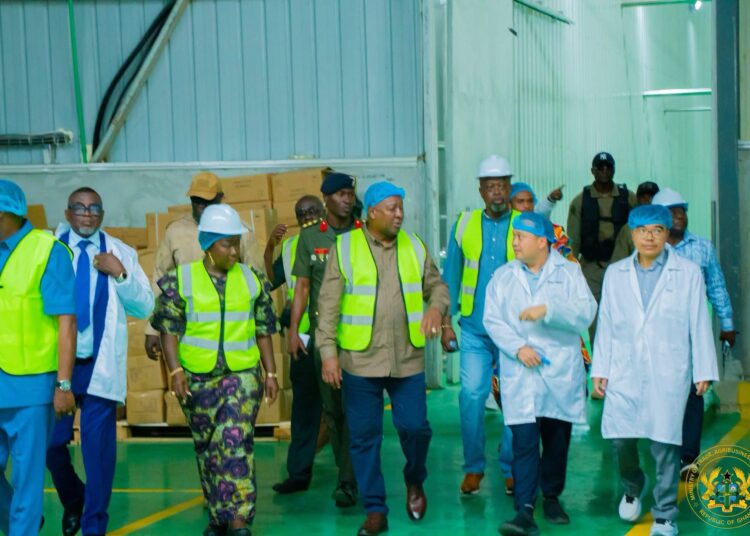
President John Dramani Mahama and the Minister for Trade, Agribusiness and Industry, Elizabeth Ofosu-Adjare, are stepping up engagement with Ghanaian manufacturers as the government seeks to strengthen domestic production, create jobs and expand the country’s industrial base.
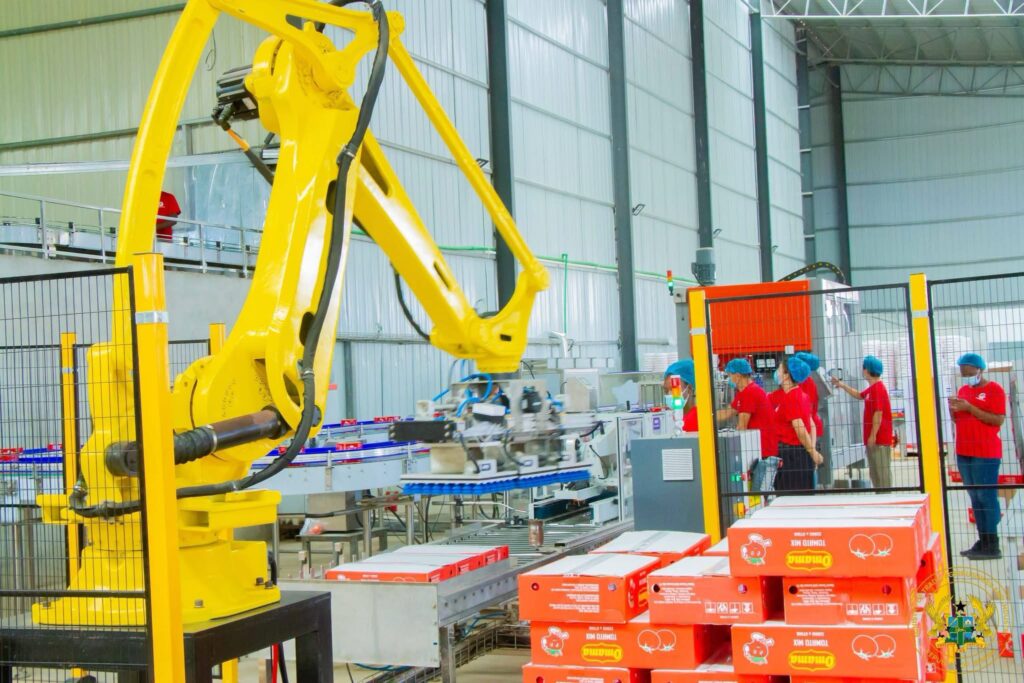
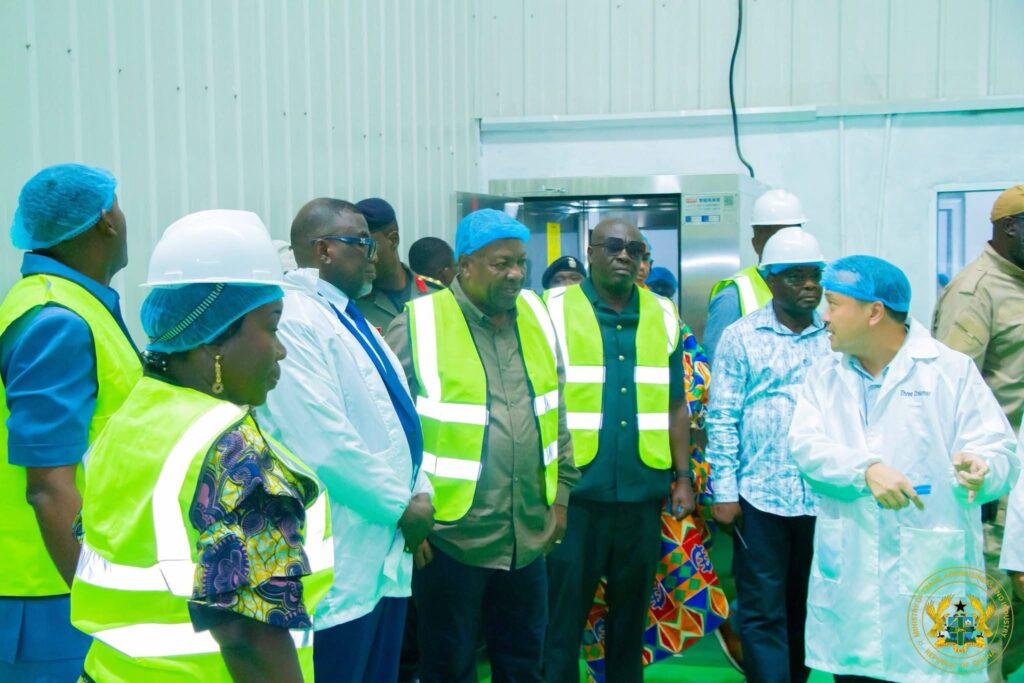
The two officials visited Ghato Foods Ltd, a Tema-based manufacturer of tomato paste and other food products as part of efforts to gain first hand insight into the operations, challenges and contributions of businesses within Ghana’s manufacturing sector.
The visit underscored the importance of private sector investment in driving industrial development, particularly in food processing, where stronger domestic production can create employment, add value to agricultural commodities and reduce dependence on imported products.
Speaking to workers after touring the facility, President Mahama encouraged them to remain committed to their responsibilities and support management in expanding the company’s operations.
He said business growth could create additional employment opportunities for young Ghanaians while contributing to national economic development.
”Such expansion would create more employment opportunities for young Ghanaians, while contributing to the growth and development of the Ghanaian economy.”
President of Ghana, H.E. John Dramani Mahama
Manufacturing Takes Centre Stage
The visit reflects the government’s broader focus on strengthening existing businesses alongside efforts to attract new investments into Ghana’s industrial sector.
President Mahama expressed appreciation to Ghato Foods for investing in local manufacturing, emphasising the importance of establishing and expanding production facilities to generate decent jobs and reinforce the country’s industrial capacity.
For businesses operating in the food-processing industry, investment in production infrastructure is essential to improving output, meeting consumer demand and developing products that can compete with imported alternatives.
The sector also provides opportunities to connect manufacturers with local farmers and agricultural suppliers. Where processing companies can secure consistent supplies of suitable raw materials, they can help create more predictable markets for producers while supporting the development of domestic value chains.
The government’s broader industrial agenda has also placed renewed attention on Tema, one of Ghana’s established manufacturing centres. During a separate engagement with industry in the city.
President Mahama highlighted the importance of expanding production and strengthening the operating environment for businesses.
My goal is to build an economy where Ghanaian businesses produce more, export more and employ more.
President of Ghana, H.E. John Dramani Mahama
The statement captures the wider economic ambition surrounding engagements with manufacturers: encouraging businesses to increase production, explore new markets and create employment through sustained investment.
Tomato Processing Offers Growth Potential
Ghato Foods’ production of tomato paste places the company within a strategically important segment of Ghana’s food processing industry, where domestic agricultural production and industrial capacity must work together to meet consumer needs.
Ghana continues to face a significant gap between domestic tomato supply and national demand. In September 2026, a report shows that the Ghana Tomato Self Sufficiency Initiative was targeting approximately 400,000 tonnes of tomato production under a broader effort to reduce dependence on imported tomatoes.
The initiative’s initial target was about 100,000 tonnes during the 2026–2027 crop season, drawing on cultivation across more than 10,000 acres in 35 districts and 10 regions.
The Ministry of Food and Agriculture is implementing the programme in partnership with FarmMate Limited.
According to the report, Ghana’s annual tomato demand stands at approximately 805,000 metric tonnes, against estimated domestic production of 510,000 metric tonnes.
Post harvest losses also remain a concern, with an estimated 30 per cent of locally produced tomatoes lost after harvesting.
These figures highlight the commercial opportunity for stronger processing capacity, improved storage and more efficient links between farmers and manufacturers.
For processors, a dependable supply of quality tomatoes is essential to maintaining production schedules, controlling costs and delivering consistent products to the market.
For farmers, reliable purchasing arrangements can provide an incentive to increase production and improve quality.
The potential benefits extend beyond the factory floor. Stronger domestic processing can support jobs in farming, transportation, packaging, warehousing, distribution and retail.
However, capturing these opportunities requires coordinated investment in agricultural productivity, processing technology, logistics and reliable access to raw materials.
Investment, Jobs and Competitiveness
The Ghato Foods visit also draws attention to the relationship between manufacturing expansion and employment, particularly for young people seeking opportunities in Ghana’s formal economy.
Expanding a factory’s operations can increase demand for production workers, technicians, quality control personnel, logistics staff and administrative professionals.
The scale of these benefits depends on the company’s investment decisions, production requirements and ability to grow its market. Manufacturers must also remain competitive by managing operating costs, maintaining product quality and responding to changing consumer preferences.
For food processors, access to appropriate machinery, packaging materials, working capital and reliable raw material supplies can influence production efficiency and the ability to compete against imported products.
The wider economic environment is equally important. Businesses require predictable regulations, dependable infrastructure and efficient transport systems to move raw materials and finished goods between production centres and markets.
President Mahama’s October 8 engagement with industry in Tema highlighted the government’s intention to support existing factories as part of its industrial development strategy.
The administration has linked this approach to its proposed 24-hour economy, which seeks to encourage expanded business activity, production and employment.
The President said the policy was intended not only to establish new factories but also to help existing businesses expand operations, raise output and employ more people, according to the Information Services Department.
For Ghato Foods, the central commercial question is how investment in production can translate into sustainable business growth, stronger market access and additional jobs.
The visit provides an opportunity to highlight the role of domestic manufacturers in Ghana’s industrial development, although the account of the engagement did not specify any new investment commitments, production targets or employment figures for the company.
Ultimately, sustained growth in local manufacturing will depend on more than factory visits. It will require businesses to invest, farmers to supply competitive raw materials and policymakers to address the constraints affecting production.
Strengthening these relationships could help Ghana retain more value from its agricultural output, develop competitive food products and create employment across the supply chain.
The engagement with Ghato Foods therefore places local manufacturing within a wider economic objective: building productive businesses capable of serving domestic consumers, supporting agriculture and creating opportunities for Ghana’s growing workforce.
READ ALSO:Closer EU Ties More Plausible Than UK Rejoining — Analyst