China has imposed sanctions on Paraguay’s Communications Minister Gustavo Villate and Belize’s Foreign Minister Francis Fonseca over their countries’ diplomatic relations with Taiwan, escalating Beijing’s efforts to isolate the self-governing island internationally.
China’s Ministry of Foreign Affairs announced the measures on Monday, saying that they were intended to safeguard China’s national sovereignty and oppose what Beijing describes as separatist activities linked to Taiwan.
The sanctions, which took effect immediately, include freezing any assets the two officials hold in China, prohibiting them from entering mainland China, Hong Kong and Macau, and barring Chinese organisations and individuals from conducting transactions or other forms of cooperation with them.
In explaining the decision, the Chinese Foreign Ministry accused certain politicians of promoting relations with Taiwan for personal political interests, despite Beijing’s objections.
The ministry stated that the officials had “taken a series of egregious actions and statements” that were “damaging China’s core interests.”
Paraguay and Belize are among the 12 countries that maintain formal diplomatic relations with Taiwan, whose international recognition has steadily declined as Beijing seeks to persuade governments to establish ties with China instead.
China considers Taiwan part of its territory and has repeatedly stated that it intends to achieve reunification, including through the possible use of force. Taiwan’s government rejects Beijing’s claim and maintains that the island’s future should be determined by its people.
Taiwan Ties Prompt Diplomatic Backlash
The sanctions came two days after Taiwan marked its National Day, during which President William Lai Ching-te reaffirmed the island’s commitment to peace and democratic freedoms.
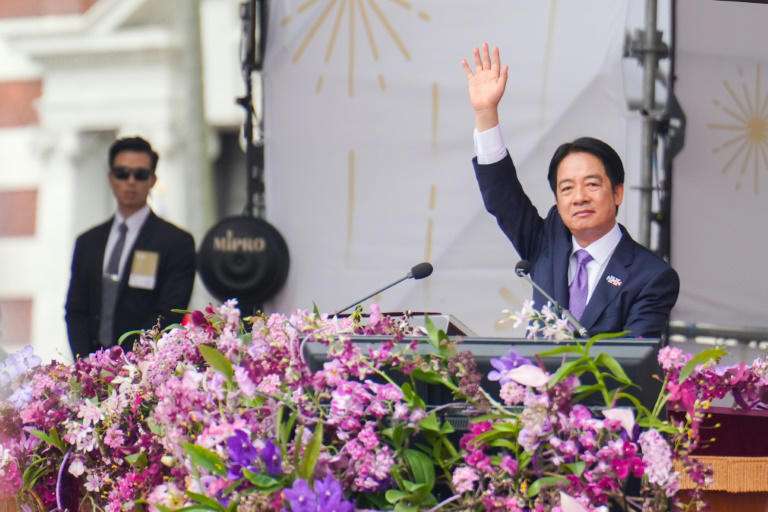
Speaking outside the Presidential Office on Saturday, Lai said that Taiwan “cherishes peace” and would “not give up our freedom.”
China’s Taiwan Affairs Office condemned the speech, accusing Lai of disregarding facts, distorting the truth and misleading the public.
The office said that his remarks revealed what it described as “ulterior motives”, reflecting Beijing’s continued opposition to statements and actions that it views as promoting Taiwanese independence.
The dispute comes amid renewed efforts by China to advance its goal of reunification. In January, Chinese President Xi Jinping described reunification with Taiwan as “unstoppable,” reiterating Beijing’s position that the island should eventually come under Chinese control.

Villate’s public support for Taiwan appears to have contributed to the latest diplomatic dispute. In a social media post marking Taiwan’s National Day, Paraguay’s Communications Minister reaffirmed his country’s relationship with the island.
“Paraguay reaffirms its relationship of friendship and cooperation, based on shared values and principles: the self-determination of peoples, human rights and democracy.”
Gustavo Villate
Paraguayan President Santiago Peña has also described Taiwan as a “fundamental partner” for his country. Earlier this year, Peña visited Taipei, where the two sides signed several agreements covering mutual legal assistance in criminal matters, cybersecurity cooperation, and investment in artificial intelligence and computing.
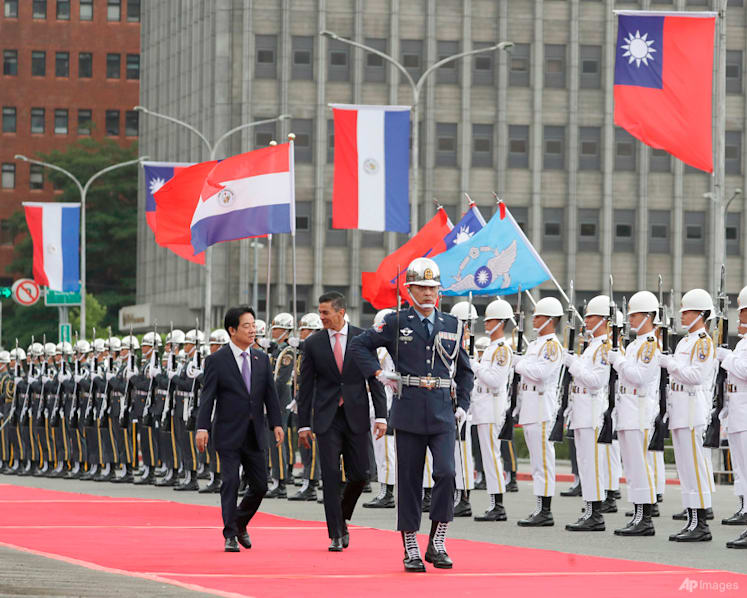
The visit underscored Paraguay’s intention to maintain its relationship with Taiwan despite pressure from Beijing.
Belize has similarly continued to express support for its diplomatic partnership with Taiwan. The Belize embassy in Taiwan published a message on Facebook celebrating the 37th anniversary of diplomatic relations between the two sides. “Together, we look forward to a future of growth, opportunity, and lasting friendship,” the embassy wrote.
Last month, Taiwan’s Foreign Minister Lin Chia-lung visited Belize, where discussions focused on strengthening bilateral ties. Taiwan’s foreign ministry said the two sides had agreed to deepen their cooperation.
China’s sanctions against Fonseca introduce further pressure into that relationship, although the measures announced by Beijing specifically target the Foreign Minister rather than constituting a formal severance of diplomatic relations between Belize and Taiwan.
For both Paraguay and Belize, maintaining ties with Taiwan places them among a small group of countries that continue to recognise the island diplomatically rather than establish formal relations with Beijing.
Taiwan’s other diplomatic partners in the Americas include Guatemala and Haiti, alongside several Caribbean island states.
US Support Adds To Wider Taiwan Tensions
The diplomatic dispute is unfolding against a broader backdrop of tensions between China, Taiwan and the United States over the island’s security and international standing.
Washington does not maintain formal diplomatic relations with Taiwan, but US law requires it to provide the island with defensive capabilities. The United States has continued to support Taiwan’s efforts to strengthen its military capacity amid concerns about a possible Chinese attack.
Earlier this month, the United States delivered two fighter jets to Taiwan as the island sought to bolster its defence capabilities.
Beijing has consistently opposed US military support for Taiwan, arguing that foreign involvement encourages separatism and interferes in China’s internal affairs. Washington, meanwhile, maintains that support for Taiwan’s defensive capabilities is necessary to help preserve stability across the Taiwan Strait.
By targeting officials from Paraguay and Belize, China has signalled its continued opposition to international engagement with Taiwan and its willingness to impose restrictions on individuals it accuses of challenging its position.
The sanctions add another dimension to the diplomatic contest over Taiwan’s international status, with implications for relations between China and countries that continue to support the island.
READ ALSO: CJP Vows To Continue Anti-Government Protests Despite Crackdown