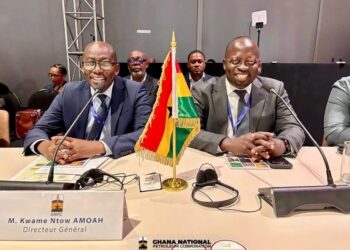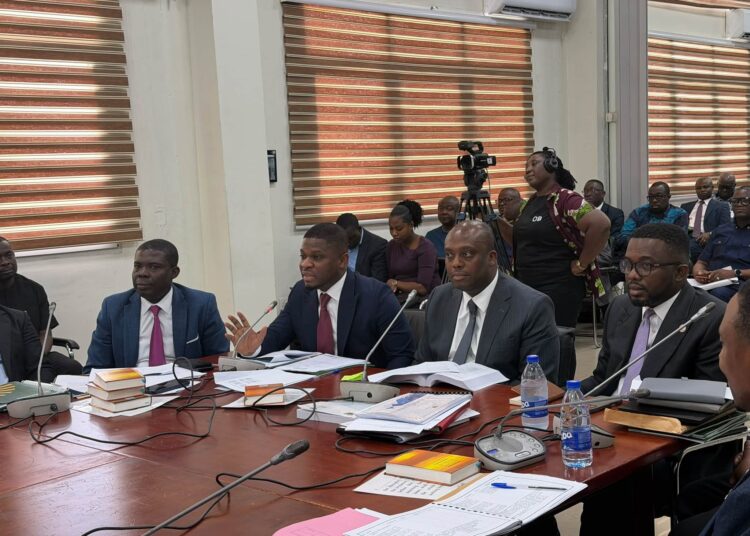
Chief Executive Officer of the Ghana Gold Board (GoldBod), Sammy Gyamfi, has revealed that the state institution is firmly on course to equal or surpass its gold purchasing and export performance achieved in 2025, alongside driving a substantial increase in foreign exchange earnings.
Speaking before Parliament’s Public Accounts Committee, the Chief Executive Officer outlined how the regulatory body continues to uphold its fundamental mandate by strengthening national reserves, regulating Ghana’s active gold trading market, and securing foreign exchange liquidity.
“This year we are on track to at least meet and possibly exceed our 2025 gold purchase and export targets, as well as substantially exceeding our foreign exchange generation targets for the year 2025, which was 10.8 billion United States dollars.”
Sammy Gyamfi,
Addressing lawmakers, Mr. Gyamfi explained that GoldBod has aggressively shifted its strategic operational posture to favor domestic value addition over raw, unrefined commodity exports.
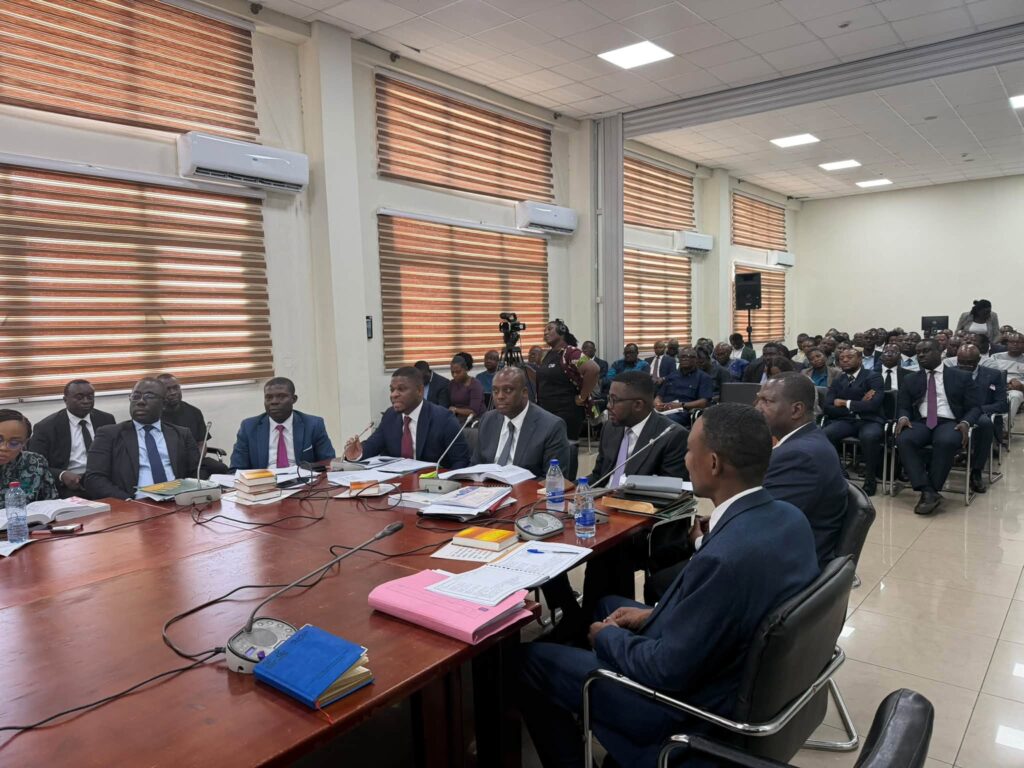
The Chief Executive Officer pointed out that this structural shift ensures a significant percentage of locally mined gold undergoes full processing inside Ghana prior to international shipment.
Consequently, the Board expects its current trajectory to comfortably outperform the previous year’s financial benchmark, where GoldBod generated an impressive 10.8 billion United States dollars in total foreign exchange revenues.
Domestic Refining Paradigm Shift
Under previous trading regimes, vast quantities of gold extracted across traditional mining enclaves were shipped directly to foreign destinations without undergoing local processing.
Mr. Gyamfi emphasized that GoldBod has effectively dismantled that model, noting that “about 80 to 90 per cent of the gold we purchase and export is refined here locally.”
This dramatic increase in onshore refining capacity reflects a deliberate state policy designed to capture maximum economic returns throughout the mineral value chain.
The expansion of domestic processing infrastructure is delivering direct economic benefits to the country’s workforce.
According to Mr. Gyamfi, local refineries are currently operating “24/7, employing Ghanaians,” which retains vital refining fees within the national economy that previously escaped to overseas processing hubs.
Furthermore, precious metals like silver, which are recovered as standard by-products during gold purification, are now systematically retained within Ghana rather than being lost to foreign trade partners.
Retaining Secondary Mineral Value
The strategic retention of silver and associated refining by-products is serving as a crucial catalyst for domestic industrialization.
By making these secondary raw materials directly available to local fabricators and jewelers, the government is providing essential inputs for small and medium manufacturing enterprises across Ghana.

The Chief Executive Officer noted that keeping these resources home not only generates additional foreign exchange avenues but also solidifies local industrial linkages.
The necessity for this structural initiative stems from decades of primary commodity dependence, where Ghana exported raw gold and subsequently imported expensive finished jewelry and industrial components.
By establishing a robust in-country refining framework, GoldBod is effectively plugging revenue leakages, insulating the national currency through bolstered foreign exchange reserves, and laying down a sustainable blueprint for mineral-led national development.
READ ALSO: Festive Dollar Demand Could Test GoldBod’s FX Strategy, Asantewah Warns