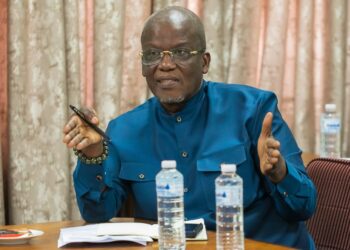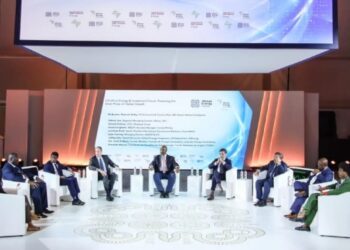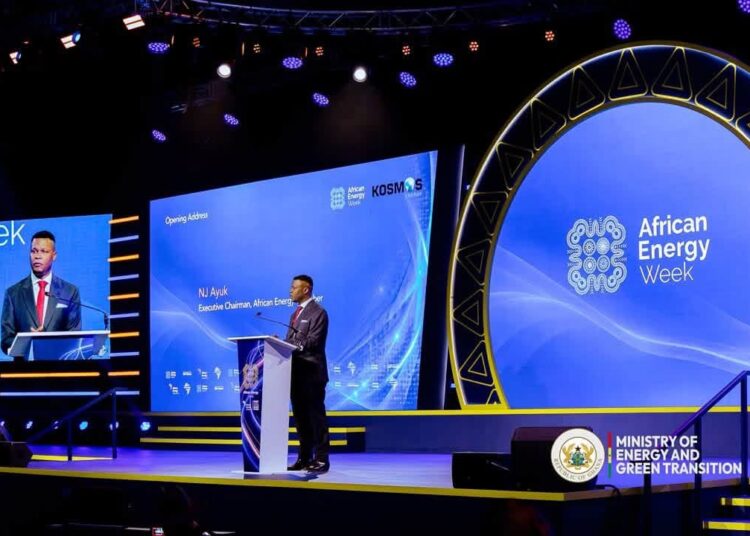
African Energy Chamber (AEC) Executive Chairman NJ Ayuk has urged African governments to accelerate oil and gas exploration, expand energy infrastructure and mobilise domestic financing, arguing that the continent’s energy resources must translate into reliable power, industrial growth and employment rather than remain undeveloped amid persistent energy poverty.
Speaking at African Energy Week (AEW) 2026, Ayuk advocated an “all-of-the-above” energy strategy that accommodates hydrocarbons, renewables and other energy sources to meet Africa’s growing demand.
He argued that countries should determine their energy pathways according to their development needs instead of abandoning commercially viable resources under external pressure.
“Energy poverty is not a climate strategy, and deprivation is not development,” he said, framing access to energy as an economic and social priority for a continent seeking to expand industrial production and improve living standards.
His argument comes as African producers confront a dual challenge: maintaining investment in established oil and gas fields while developing new resources and financing the infrastructure required to bring energy to consumers.
Ayuk maintained that geopolitical tensions and disruptions to international supply chains have reinforced the importance of secure energy supplies, but stressed that resource potential alone would not guarantee energy security.
The decisive factors, he argued, include infrastructure, financing, logistics, regulatory predictability and the ability of governments to move projects from announcement to execution.
Production Ambitions Depend on Sustained Exploration
Ayuk said Africa’s hydrocarbon production was projected to reach 11 million barrels of oil equivalent per day in 2026 and rise to 12.5 million barrels by 2030.
Nigeria, Algeria, Angola, Libya and Egypt remain among the continent’s major oil and gas producers, while other countries are seeking to attract investment into underexplored basins.
However, increasing production will require more than identifying new resources. Existing fields experience natural declines, meaning producers must invest in maintenance, enhanced recovery, brownfield redevelopment and new exploration to sustain output.
Ayuk argued that African governments should create conditions that support investment across both mature and frontier petroleum provinces.
“Exploration is the absolute key to our survival,” he said, linking continued exploration to the continent’s ability to develop its resources and address energy poverty.
The emphasis on exploration reflects a wider commercial reality: without sufficient investment to replace declining production, countries risk losing output even where petroleum resources remain available.
Yet exploration is capital-intensive and carries geological and commercial risks, making predictable fiscal terms and credible development plans important to investment decisions.
Ayuk pointed to Nigeria’s efforts to reform deepwater fiscal and contractual terms as an example of why investment conditions matter.
He also cited Angola’s use of fiscal incentives to revitalise mature oilfields, arguing that established producers must continue investing in existing assets while pursuing new reserves.
These examples underline the need for policies that reflect the characteristics of different petroleum provinces.
Deepwater projects, mature onshore fields and frontier exploration do not carry identical costs or risks, and their commercial viability may depend on different contractual and fiscal arrangements.
South Africa and Frontier Basins Seek Clearer Investment Conditions
Ayuk also called on South Africa to address regulatory and legislative obstacles affecting petroleum development, particularly in the Orange Basin.
He argued that discoveries in neighbouring Namibia had strengthened the case for exploration and development planning across the wider offshore region.
For South Africa, the opportunity lies in determining whether its prospective resources can be developed under a stable framework that provides clarity for investors and benefits the domestic economy.
Ayuk urged authorities to remove unnecessary barriers and accelerate decisions needed to attract investment into prospective petroleum areas.
He also highlighted exploration opportunities in frontier basins, including Sierra Leone, Liberia and The Gambia, where new agreements with international oil companies could help revive interest in underexplored areas.
The broader message is that African governments must balance the desire to attract investment with the need to secure public benefits from resource development.
Regulatory clarity does not remove geological uncertainty, guarantee commercial discoveries or eliminate environmental and social considerations. It does, however, help investors assess the risks they are taking and the obligations they will face.
For countries competing for exploration capital, prolonged uncertainty can delay investment decisions, while stable contractual arrangements can provide a clearer basis for committing funds.
Africa Energy Bank Emerges as a Financing Priority
A central part of Ayuk’s argument concerned the availability of capital for African energy projects. He identified the planned Africa Energy Bank as a potential source of financing for oil, gas and other energy investments across the continent.
Ayuk expressed appreciation to the African Petroleum Producers’ Organization (APPO) and the African Export-Import Bank (Afreximbank) for advancing the initiative, presenting it as an important step towards strengthening Africa’s ability to finance its own energy development.

He argued that African projects face difficulties accessing international financing amid changing investment policies and restrictions affecting fossil fuel developments.
He also criticised what he described as inconsistent approaches to gas financing, contending that natural gas continues to support industrial activity and energy security in developed economies while comparable African projects face funding constraints.
The financing question is consequential because resource development requires capital at several stages, from exploration and appraisal to production, processing, transportation and distribution.
Where financing is unavailable or prohibitively expensive, projects may remain undeveloped even when resources have been identified.
Ayuk urged African financial institutions and commercial banks to provide greater support for viable energy projects, arguing that the continent needs stronger domestic financing mechanisms to reduce its dependence on external capital.
“Isolation is economic suicide,” he said, making the case for international partnerships, predictable fiscal regimes and stable contracts rather than policies that leave projects unable to attract the necessary investment.
The proposed Africa Energy Bank could potentially address part of this financing challenge, but its practical contribution will depend on its capital base, lending terms, risk-management framework and ability to mobilise additional investment.
Domestic financing institutions will also need to assess projects on credible commercial and development grounds to ensure that funding supports viable investments.
Infrastructure and Local Processing Must Deliver Economic Benefits
Ayuk maintained that Africa’s energy challenge extends beyond oil and gas production to the infrastructure required to convert resources into economic activity.
He called for investment in electricity grids, pipelines, factories and other facilities needed to support industrialisation, create jobs and improve living standards.
The argument is that resource extraction alone does not guarantee broad-based economic gains.
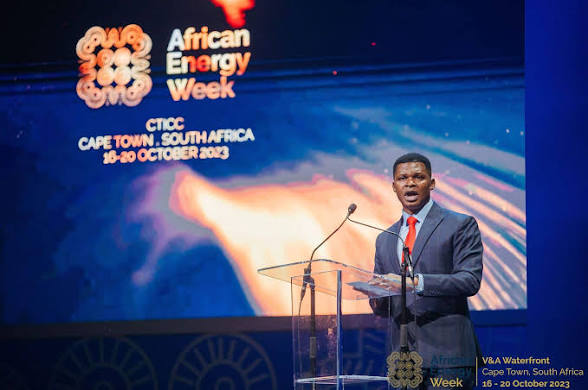
Without adequate infrastructure and domestic processing capacity, countries may continue exporting raw resources while importing finished products and higher-value goods.
Ayuk cited the Dangote Petroleum Refinery as an example of large-scale domestic investment in energy infrastructure.
He argued that the facility had helped address petroleum-product supply constraints in Africa while creating opportunities to supply international markets, including Europe.
The project illustrates the potential contribution of domestic refining to supply diversification and local value addition.
However, the extent of those benefits depends on operational performance, access to crude, product pricing, financing costs and the ability to compete in domestic and export markets.
The wider lesson for African governments is to evaluate energy investments by more than the volume of resources produced. Their contribution to local processing, industrial development, employment and supply resilience also matters.
Ayuk urged countries to apply this approach across their energy industries, arguing that processing resources locally could strengthen industrialisation and reduce dependence on imported finished products.
Local Content Must Not Undermine Investment Viability
Ayuk also cautioned governments against resource nationalism that could discourage investment through unpredictable regulatory changes, retroactive compliance requirements or excessive state equity demands.
While recognising the importance of local content and ensuring that host countries benefit from their resources, he argued that such policies should not make projects commercially unviable or undermine investor confidence.
The distinction is important for African economies seeking both investment and greater domestic participation in their energy sectors.
Local-content policies can support employment, skills development and opportunities for indigenous businesses, but their outcomes depend on implementation, local capacity and the commercial conditions facing individual projects.
Requirements that are poorly sequenced or disconnected from available domestic capabilities may increase costs or delay development.
Conversely, clear and predictable rules can help companies plan training, procurement and local partnerships from the outset.
Ayuk urged governments to reduce bureaucratic delays, honour contractual commitments and accelerate approvals for viable projects.
He argued that public officials should be judged by the results they deliver and the investments they enable, rather than by the number of projects held up by administrative obstacles.
For African governments, the challenge is to establish frameworks that secure national benefits without creating uncertainty that discourages the very investment needed to develop resources.
South-South Cooperation Extends the Investment Debate
Ayuk also advocated stronger cooperation between African countries and other members of the Global South, expressing support for Venezuela’s efforts to develop its petroleum resources despite external economic restrictions.
He encouraged African investors to explore opportunities in Venezuela and called attention to Grenada’s interest in strategic partnerships to develop its offshore energy potential.
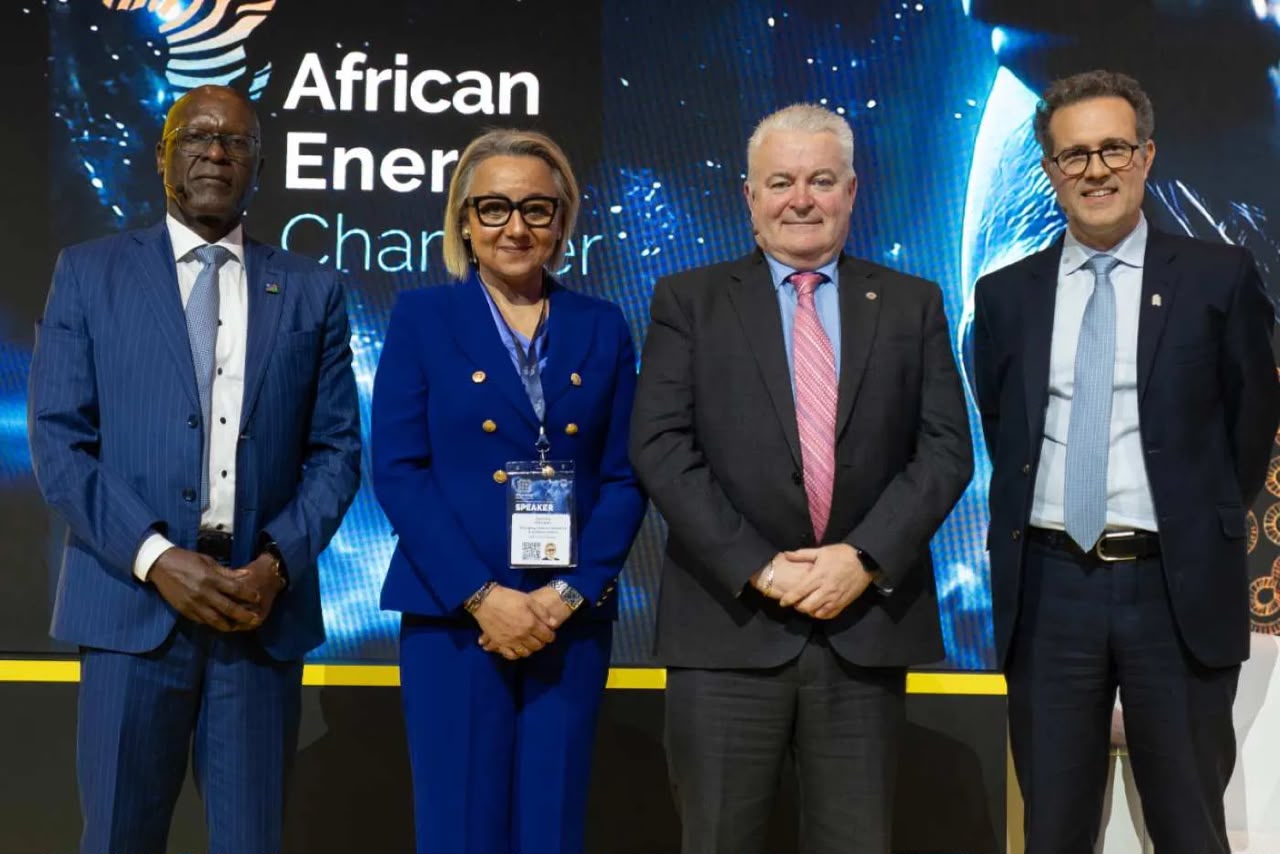
Such cooperation could broaden the range of partnerships available to African businesses and investors.
However, the commercial prospects of individual opportunities would depend on their regulatory conditions, financing requirements, market access and project-specific risks.
Ayuk’s wider argument was that African countries should pursue international partnerships that support their energy objectives rather than rely on a narrow range of financing and investment sources.
He also condemned xenophobia and hostility towards foreign nationals, particularly in South Africa, endorsing President Cyril Ramaphosa’s opposition to xenophobia and Afrophobia.
Ayuk argued that such hostility was inconsistent with African integration and the cross-border collaboration needed to develop the continent’s energy sector.
Pipelines, electricity grids and other infrastructure connect economies across national boundaries, making cooperation important to regional energy security and trade.
Restrictions on collaboration can therefore affect not only individual investors but also the wider networks needed to move energy across markets.
Africa’s Energy Strategy Must Move From Ambition to Delivery
Ayuk’s remarks at AEW 2026 put financing, infrastructure and regulatory execution at the centre of Africa’s energy-development debate.
The continent has substantial oil and gas resources, but turning that potential into economic gains requires sustained investment and the capacity to deliver projects.

His call for an “all-of-the-above” strategy argues for an energy mix shaped by African development needs, while his emphasis on exploration highlights the need to sustain production and develop new resources.
The proposed Africa Energy Bank, meanwhile, reflects the continuing search for financing mechanisms capable of supporting projects that struggle to secure capital through existing channels.
Yet the success of that agenda will depend on how governments reconcile investment attraction with environmental safeguards, fiscal sustainability, local participation and commercially viable project design.
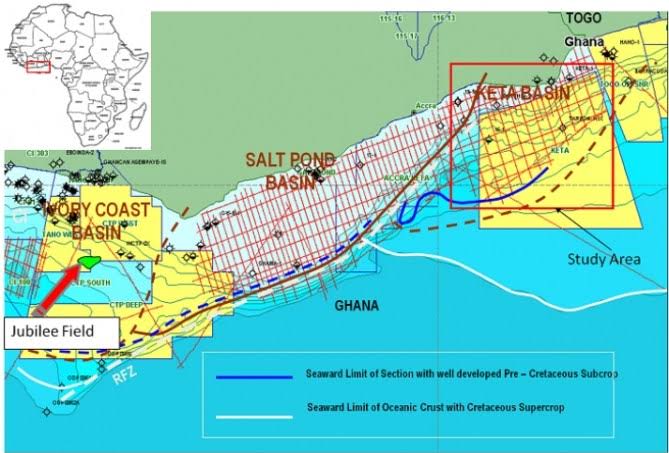
For Ghana and other African economies, the central issue is not simply whether more oil and gas investment can be attracted.
It is whether that investment can improve energy access, strengthen infrastructure, expand local industries and create employment without imposing unsustainable financial or environmental costs.
The test of Africa’s energy strategy will ultimately be the results it delivers: projects completed, reliable energy supplied, domestic value chains strengthened and more people gaining access to modern energy services.