US Ambassador to Turkiye and Special Envoy for Syria, Tom Barrack has emphasized that US efforts to secure a peace agreement with Iran remain undermined by deep mistrust between Washington and Tehran.
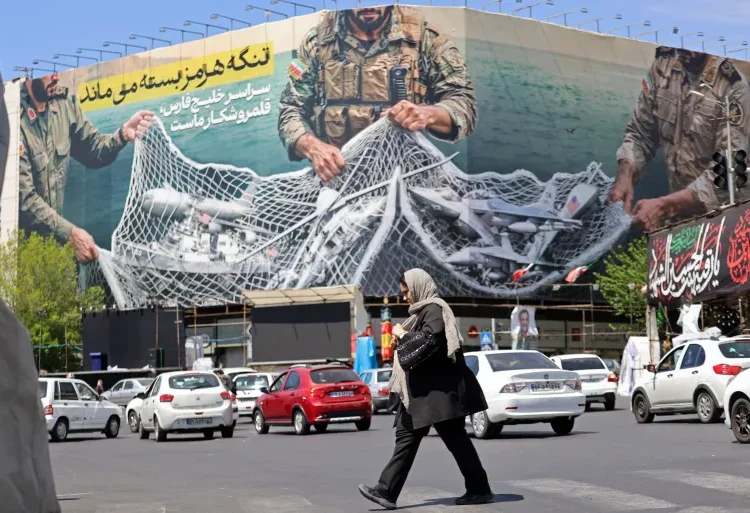
Speaking at the Global Security Forum in Doha, Barrack said that the United States wanted a peace deal to resolve the crisis surrounding the Strait of Hormuz but acknowledged that the lack of confidence between the two sides had complicated negotiations.
“America wants a peace deal. What’s happened from the beginning of these discussions and negotiations is a lack of trust. IRGC does not trust US. The US does not trust IRGC.”
Tom Barrack
Barrack said that any agreement would need to accommodate the interests of all parties, suggesting that a ceasefire in the strategically important strait could provide a starting point for a broader settlement.
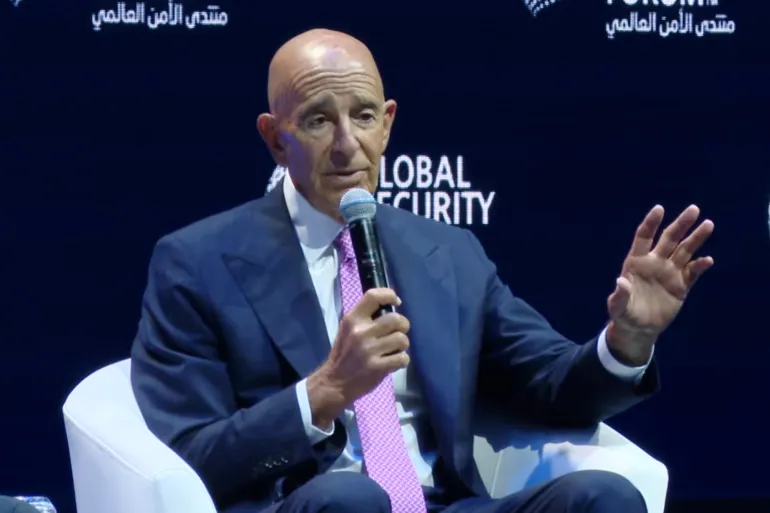
Barrack said that negotiators did not necessarily need to restart the diplomatic process, despite the collapse of an earlier agreement. “We don’t need a reboot,” he said when asked about reviving the Islamabad agreement in June which fell apart.
Instead, he called for a practical solution that would address immediate tensions while creating conditions for a more comprehensive agreement.
Barrack stated that a proposed settlement should include a “ceasefire in the straits” and measures to “ease the pain on the Iranian people.” “Prosperity is the only answer,” he added, presenting economic well-being as an important element in resolving the crisis.
His remarks highlighted the challenge facing negotiators as they seek to bridge longstanding distrust while addressing security concerns surrounding the Strait of Hormuz, a critical waterway for global energy shipments.
Barrack also questioned the effectiveness of previous US military interventions aimed at changing governments in the Middle East, arguing that Washington should reflect on the consequences of its past actions. “Every time we try and intervene, change the person or the regime, it seems to have been a mistake,” he said.
Barrack declined to give a definitive assessment on whether the US-Israel war on Iran had been a mistake. “I don’t know whether it’s a mistake or not,” he said.
However, he appeared to acknowledge that the conflict had generated consequences across the region, describing the situation as “horrible.”
His comments suggested that the broader regional implications of military intervention remain a concern as diplomatic efforts continue.
Barrack Addresses Israel-Turkiye Tensions
Beyond the negotiations with Iran, Barrack addressed the risk of a direct confrontation between Israel and Turkiye, playing down the likelihood that the two countries would deliberately engage in a military conflict. “My belief is Israel is way too smart to actually pick a real fight with Turkey,” he said.
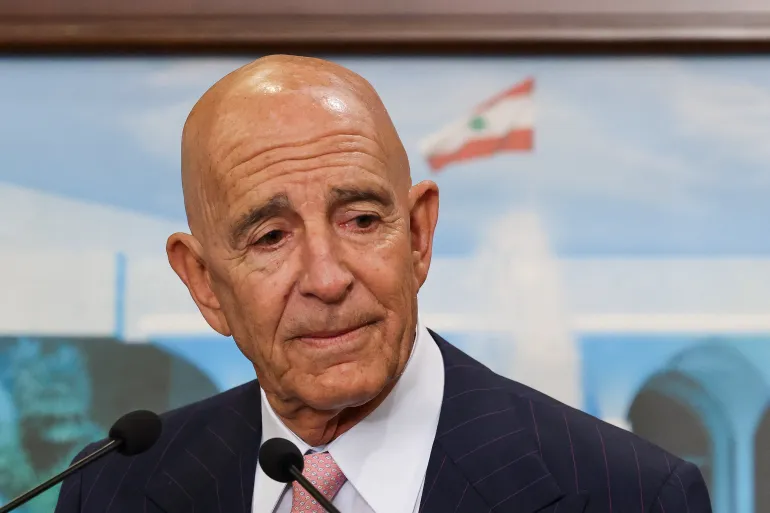
However, he raised concerns about an Israeli military operation involving an airbase in Syria near the Turkish border, saying neither Turkiye nor the United States had been informed about the arrival of Israeli jets.
“Turkey was not informed of Israeli jets coming. We were not informed of Israeli jets coming. Turkey could have, very quickly, sent its jets, and all of a sudden we’re in another situation.”
Tom Barrack
He said that he did not believe either country wanted a confrontation, but his comments underscored the potential for military operations and communication failures to trigger a wider crisis. “I don’t think Israel wants that, I know Turkey does not want that,” he added.
The remarks came as tensions across the region continued to raise concerns about the possibility of renewed fighting and further diplomatic complications.
Qatar Confirms Ongoing US-Iran Diplomatic Engagement
Meanwhile, Qatar confirmed that negotiations between the United States and Iran remain ongoing, despite the heightened tensions and concerns about a possible resumption of hostilities.
Majed al-Ansari, Spokesperson for Qatar’s Foreign Ministry, told the Global Security Forum in Doha that both sides were continuing to engage diplomatically. “On the negotiations, … they are ongoing; we are seeing engagement from both parties,” al-Ansari said.

He also defended the confidential nature of the discussions, suggesting that the absence of frequent public updates did not mean diplomatic efforts had stalled. “The fact that we’re not hearing about it is a good sign that we’re doing our job properly,” he said.
Qatar’s statement offers an indication that diplomatic channels remain active as Washington and Tehran attempt to navigate their differences.
However, Barrack’s remarks point to the central obstacle facing the negotiations; a lack of trust between the United States and Iran. Whether the parties can agree on a ceasefire and broader terms that address their respective interests remains a key question for efforts to resolve the crisis.