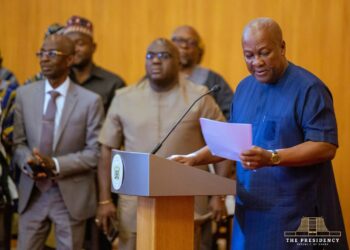
Dr. Paa Kwesi Eduaful Abaidoo, Sustainability Manager at Miniplast Ltd, argues that Ghana needs a comprehensive policy framework that makes exporting a central objective of industrial development.
He maintains that businesses require clear government direction, targeted incentives and sustained institutional support to expand production and secure larger shares of African markets.
Ghana’s non-traditional exports to other African markets reach US$1.5 billion in 2025, highlighting the commercial opportunities available to domestic manufacturers under the African Continental Free Trade Area (AfCFTA).
However, the expansion of regional trade also raises questions about the policies and financial support needed to help more Ghanaian businesses compete across the continent.
Dr. Abaidoo stresses that Ghana’s participation in the continental trade agreement must translate into stronger domestic productive capacity rather than simply wider access to imported goods.
”The whole thing is about having a long-term framework where we are turning from an import-dependent economy to an export-driven economy.”
Sustainability Manager for Miniplast, Dr, Paa Kwesi Eduaful Abaidoo
His position places industrial competitiveness, export financing and coordinated government intervention at the centre of Ghana’s strategy for benefiting from the agreement.
Export Growth Requires Industrial Expansion
The figures from the Ghana Export Promotion Authority’s 2025 Annual Non-Traditional Export Statistics Report show that Ghana earns US$5.006 billion from non-traditional exports during the year, representing a 30.7 per cent increase from US$3.83 billion in 2024.
The total exports to African markets account for approximately US$1.5 billion, demonstrating the importance of the continent to Ghanaian producers seeking opportunities beyond the domestic economy.
The Economic Community of West African States (ECOWAS) accounts for US$767.8 million, while exports to the Alliance of Sahel States (AES) reach US$674.8 million.
The figures indicate that regional markets already provide a significant destination for Ghanaian manufactured and processed goods. Togo records US$232 million in imports of Ghanaian non-traditional exports, while Burkina Faso accounts for US$532.2 million among the AES countries.
Dr. Abaidoo argues that government policy must provide the economic incentives necessary to make this expansion commercially viable. Rather than allowing businesses to concentrate mainly on supplying local consumers.
He advocates a national framework that encourages companies to plan production around opportunities across Africa.
”When the government policy and intention is clear to reduce importation by a certain volume or percentage, it will simply mean that forces will have to pull together from both the financial side and the policy side and even the AfCFTA Secretariat.”
Sustainable Manager for Miniplast, Dr. Paa Kwesi Eduaful Abaidoo
Policy Coordination Becomes Critical
Ghana already has an institutional structure for coordinating AfCFTA implementation through the National AfCFTA Coordination Office, established in March 2020 under the Ministry of Trade, Agribusiness and Industry.
The office works with public institutions, financial organisations and private-sector stakeholders to support Ghanaian enterprises seeking to benefit from the agreement. Its mandate includes coordinating national implementation and facilitating engagement between government agencies and the continental secretariat.
However, Dr. Abaidoo’s call highlights the need for policy coordination to deliver practical benefits at the factory level. Businesses need predictable regulations, accessible financing and a clear understanding of the markets they intend to enter.
The government’s 2026 Budget Statement identifies several measures relevant to this objective.
These include completing a review of the national AfCFTA policy framework, supporting at least 200 micro, small and medium sized enterprises to access new markets, and extending the period for exporters to repatriate proceeds under the applicable letter-of-commitment arrangement from 60 to 120 days.
The budget also outlines efforts to strengthen local manufacturing through the Feed the Industry Programme, which targets an increase in factory utilisation rates from 30–40 per cent to 70–80 per cent by improving domestic raw-material supply chains.
Financing Must Support Competitiveness
Access to affordable capital remains an important consideration for manufacturers seeking to increase production. Export expansion often requires investment in machinery, working capital, packaging, product development and compliance with standards in destination markets.
Dr. Abaidoo’s proposed framework therefore places responsibility on government and relevant institutions to create incentives that encourage productive investment and support a sustained shift towards exports.
”The policy guide and policy pool is very important because if we, as a ministry, for example, decide that we are going to do more export compared to import as a country, what it simply means is that there are some structural incentives which will now pull us along.”
Sustainable Manager for Miniplast, Dr. Paa Kwesi Eduaful Abaidoo
The policy direction also needs to account for the role of imported machinery and intermediate inputs in domestic manufacturing. Reducing imports indiscriminately could increase production costs for businesses that depend on foreign equipment or raw materials.
A more targeted approach would strengthen local capacity where competitive production is feasible while preserving access to essential industrial inputs.
The ultimate test is whether incentives generate additional investment, higher factory utilisation, stronger export earnings and sustainable employment. Ghana’s US$1.5 billion in non-traditional exports to Africa in 2025 provides a measurable starting point for assessing progress.
For Dr. Abaidoo, the wider objective is to make export competitiveness a consistent national economic priority rather than an isolated trade initiative.
That ambition requires government policy, industrial financing and private-sector investment to work towards the same goal: enabling Ghanaian businesses to produce more competitively and secure a stronger position in Africa’s expanding regional market.
READ ALSO:Ghanaian Banks Pocket GH¢9.2bn as Profitability Slumps 5.7%