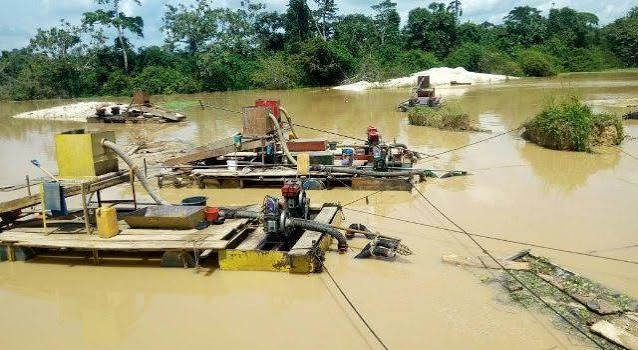
The National Anti-Illegal Mining Operations Secretariat (NAIMOS) has destroyed changfang machines as part of operations against illegal mining, according to its Director of Operations, Colonel K.S. Appiah.
Speaking during the Progress Series, Col. Appiah outlined the agency’s enforcement activities between June 13, 2024, when he assumed office, and September 30, 2026, explaining that the operations sought to weaken the equipment and infrastructure sustaining illegal mining in environmentally sensitive areas.
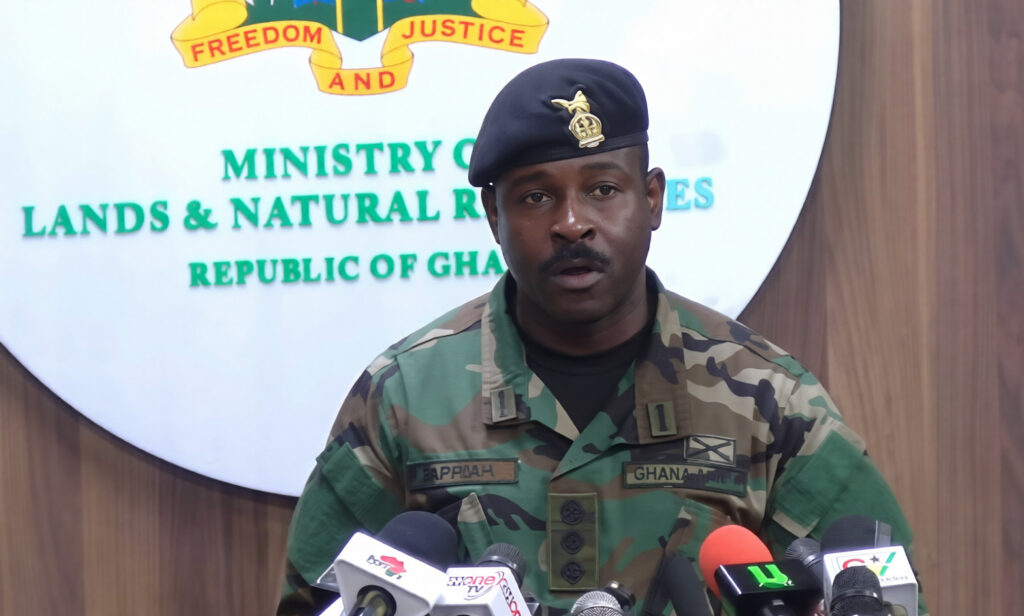
“Over the period, about 1,970 changfang machines and 863 makeshift structures have been destroyed, disrupting mining capacity and infrastructure that sustains it.”
Colonel K.S. Appiah
Beyond the destruction of mining infrastructure, the director reported that NAIMOS task forces recovered “74 firearms and 551 rounds of ammunition” during the period. The operations also resulted in the seizure of excavators, pumps, vehicles and other equipment used to facilitate illegal mining.
Col. Appiah explained that these interventions are part of a wider enforcement strategy targeting the resources and logistical arrangements that enable illegal operators to continue working in protected areas. The operations combined “reconnaissance, mobile and riverine patrols, raids, special operations and community engagement.”
According to the director, NAIMOS conducted 738 operational activities over the period, covering approximately 50,662 kilometres cumulatively. The deployments extended across the Western, Western North, Central, Eastern and Ashanti regions, as well as the Bono and Ahafo, Savannah and Northern operational areas.
He explained that suspects apprehended during the exercises were handed over to the appropriate authorities for investigation and further action. Col. Appiah also underscored the importance of preserving evidence and supporting judicial processes to ensure enforcement actions can contribute to credible deterrence.

The operations, he indicated, are intended to restrict illegal miners’ ability to occupy sensitive locations, transport machinery freely and resume mining after security personnel have withdrawn. However, he acknowledged that disrupting illegal activity requires sustained follow-up to prevent operators from returning to previously targeted areas.
The director’s account also placed environmental protection at the centre of NAIMOS’ operational responsibilities, particularly the safeguarding of water bodies and strategic forest reserves. He identified measurable environmental improvement as an essential indicator of long-term success.
NAIMOS Expands Field Operations Through Forward Bases
The National Anti-Illegal Mining Operations Secretariat (NAIMOS) is strengthening its field presence through forward operating bases and coordinated deployments to protect vulnerable river systems and forest landscapes as announced by the Director of Operations, Colonel K.S. Appiah.
Col. Appiah explained that the agency’s operational design focuses on securing strategic watersheds from their sources to estuaries, linking protection of headwaters with enforcement along river corridors and the safeguarding of downstream communities.
“The desired end state is substantially reduced illegal mining in priority areas, effective control of illegal miners and their heavy equipment, disrupted criminal networks, and enduring monitoring and protection arrangements in place.”
Colonel K.S. Appiah
The director outlined how NAIMOS combines permanent forward deployments with temporary operating bases and mobile interventions to respond to illegal mining activity across several parts of the country. He explained that the arrangement allows task forces to concentrate resources in areas requiring sustained attention while extending operations to locations without established bases.
In the Western Region, the agency has forward operating bases at Aiyinase, Asankragwa and Agona, supported by temporary bases. These facilities support field operations and enable personnel to respond to activity in affected communities.

For the Western North Region, Col. Appiah identified the In-chief forward operating base as a key support point, particularly for operations across the Tano and Bia river systems and adjoining forest areas.
Meanwhile, the forward operating base in the Eastern Region supports operations along the Birim River and its tributaries, including the wider Atewa landscape. In the Ashanti Region, the Teppa and Manso Nkwanta bases help sustain enforcement and protect reclamation sites from renewed encroachment.
Beyond these locations, NAIMOS has conducted coordinated deployments across the Central, Bono and Ahafo, Savannah and Northern operational areas. Col. Appiah explained that these exercises involve collaboration with sister security agencies, including military formations under the Central and Northern Commands and the police commands operating in those areas.
The director indicated that the agency intends to establish additional forward operating bases next year, although he did not specify their proposed locations in the available remarks.
He also explained that NAIMOS’ strategy addresses the interconnected nature of illegal mining, which threatens water security, agricultural livelihoods, forest ecosystems and public safety. Accordingly, the agency’s operational design seeks to disrupt the systems that enable destructive activity while supporting the recovery of affected environments.
READ ALSO: COCOBOD Exposes Best Farmers to Global Cocoa Market