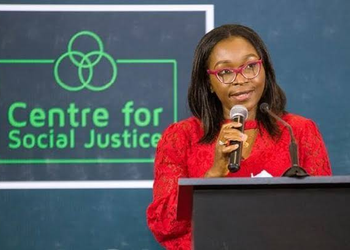
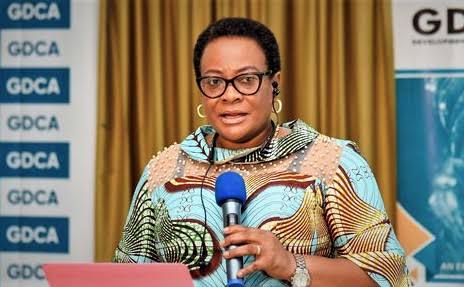
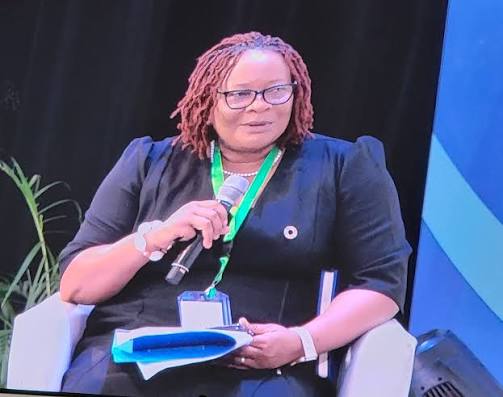
The Executive Director of Transparency International Ghana, Mary Awelana Addah, has called for stronger anti-corruption measures and greater accountability for abuses of power, arguing that evidentiary challenges and elite influence continue to complicate efforts to address wrongdoing in Ghana.
Speaking at a public event in Accra, Mrs Addah also urged citizens to sustain advocacy and report abuses, particularly those involving the rights of girls, warning that weak public engagement can allow powerful individuals to escape accountability.
She argued that Ghana must move beyond reactive responses to corruption and rights violations towards proactive policy advocacy capable of delivering measurable results.
Addah Highlights Evidence Challenges in Corruption Cases
Mrs Addah acknowledged that fighting corruption remains difficult partly because of the challenges involved in establishing evidence against suspected offenders.
She indicated that reforms to the country’s systems should consider ways to address those obstacles, including reviewing the circumstances under which individuals accused of wrongdoing may be required to explain the source or legitimacy of their conduct.
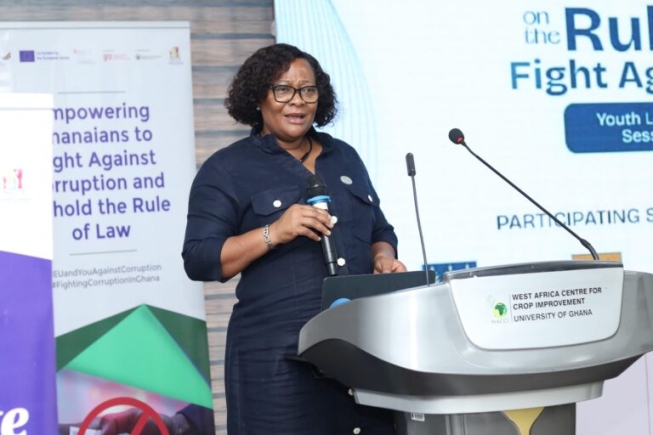
The Transparency International Ghana executive director referred to discussions held during the development of the National Ethics and Anti-Corruption Action Plan the previous year, noting that the issue had been raised and included among the proposed key performance indicators for implementation.
However, she expressed uncertainty about whether the proposed measure would be implemented, citing the constitutional review process as a possible complication.
Mrs Addah argued that Ghana could learn from approaches adopted in other jurisdictions, where certain legal frameworks place specific evidentiary obligations on individuals facing particular allegations.
She also referred to provisions under the Economic and Organised Crime Office (EOCO) Act concerning money laundering, suggesting that the country had already adopted related measures in that area. “We need to do more of that,” she stated, endorsing calls for stronger mechanisms to address the difficulties associated with proving corruption.
Her remarks highlighted the need to consider legal and institutional reforms that could improve accountability while ensuring that any changes are properly developed and implemented.
Elite Influence and Abuse of Power
Mrs Addah also raised concerns about the relationship between political influence, institutional authority and alleged abuses involving girls. She described such situations as examples of power being used for private gain, particularly where an individual occupying a position of authority within an institution is also actively involved in partisan politics.
In her assessment, the overlap between institutional power and political connections can complicate efforts to secure accountability, especially when allegations involve the abuse of authority for sexual favours.
She characterised the situation as a manifestation of impunity, arguing that the rights and welfare of children can be undermined when powerful interests take precedence over their protection. “This is impunity at play because elites have tried as much as possible to bargain with the lives of our children, and their rights have been abused,” she stated.
Her comments underscored the importance of ensuring that people in positions of authority are held accountable for alleged misconduct, regardless of their political affiliations or institutional standing.
Mrs Addah did not identify the individual or institution connected to the allegations in the portion of the remarks provided. Her comments therefore point to broader concerns about power and accountability rather than establishing the guilt of any specific person.
Citizen Advocacy Key to Protecting Girls
The Transparency International Ghana executive director stressed that sustained citizen engagement remains essential to confronting abuses and securing institutional responses.
She argued that the absence of active public support, citizen engagement, and activism can delay efforts to address rights violations. However, she noted that sustained advocacy over the preceding week had produced significant results, demonstrating the potential impact of citizens who are willing to raise concerns and demand action.
According to Mrs Addah, citizens must be prepared to identify troubling developments, report them and maintain pressure for appropriate responses. She also reflected on her own experience as a secondary school student in 1985, recalling that allegations of lesbian relationships involving teachers existed at the time but that students lacked the courage to report such matters.
Her recollection illustrated what she described as a change in the willingness of girls to speak about sensitive issues, which she linked to advocacy surrounding rights and empowerment.
She suggested that increased awareness of rights could encourage girls to report concerns that might previously have remained unaddressed. The remarks placed particular emphasis on creating conditions in which children feel empowered to speak out and can expect their concerns to receive serious attention.
From Reactive Responses to Proactive Policy Advocacy
Mrs Addah called for a shift towards proactive policy advocacy, arguing that citizens and institutions must do more than respond after allegations emerge. She maintained that sustained public pressure can help produce meaningful outcomes and encourage authorities to address weaknesses in existing systems.
Her comments linked anti-corruption reform with the broader need to confront impunity, protect vulnerable people and strengthen accountability across public institutions.
The call also highlighted the importance of translating policy commitments into practical action, particularly where proposed reforms have been identified, but implementation remains uncertain.
Mrs Addah’s central message was that stronger systems alone may not be sufficient without active citizen participation and consistent pressure for accountability.
She urged Ghanaians to report wrongdoing and support advocacy efforts that challenge abuses of power, arguing that sustained engagement is necessary to turn policy commitments into tangible results.
READ ALSO: War-Torn Sudan Faces Growing Famine Threat From Drought