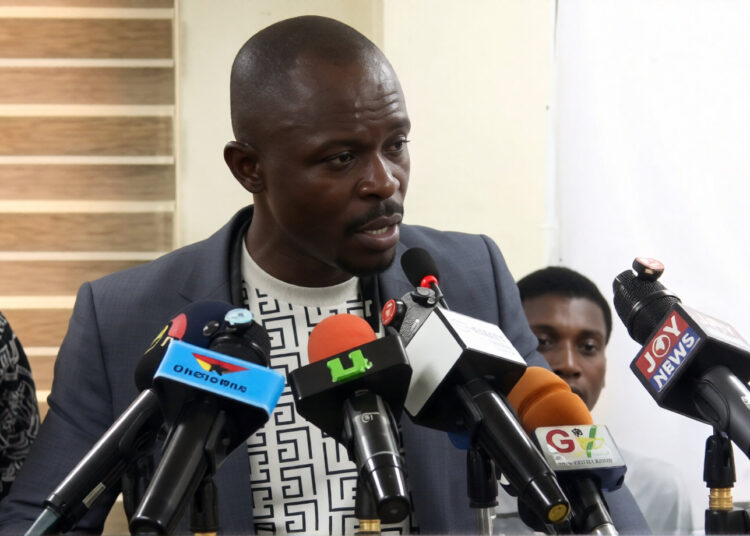
Member of the organising team and one of the returnees Emmanuel Akorkor has explained that the massive relocation of nearly two thousand nationals from South Africa provided a critical shield against intensifying threats.
Mr Akorkor who touched down on home soil on July 27 2026 as part of the second repatriation wave expressed profound gratitude toward the authorities for executing a life saving operation.
“The evacuation exercise done by the Ghanaian government for all 1,964 was a timely intervention. It was a timely intervention, for some of us else, most of us would have lost our lives.”
Emmanuel Akorkor

Speaking at a press conference, the organising team member recounted his involvement in the process from the initial registration and verification exercises at the Ghanaian ambassador’s office in South Africa to the subsequent arrangements for returnees awaiting flights.
He observed that the number of Ghanaians seeking evacuation were unexpectedly high, leaving the premises overcrowded as people urgently pursued an opportunity to return home. Although he missed the first three charter flights because others had registered earlier, he participated in the subsequent evacuation process and witnessed the difficulties surrounding the exercise.
In addition, Mr Akorkor led a group of more than 100 Ghanaians who stayed at accommodation arranged by Ambassador Benjamin Quashie while awaiting their flight. The group remained there for approximately two months and several days, giving him a close view of the uncertainty facing those waiting to leave South Africa.

Having lived in the country for more than a decade, the evacuee explained that the latest wave of xenophobic violence felt more threatening because it appeared to affect locations beyond areas where he previously considered himself relatively safe.
“This time it has come closer to my door,” he remarked, describing the fear that prompted him to consider how he could move his wife and children out of harm’s way before the government’s evacuation arrangements became known to him.
Mr Akorkor therefore disputed attempts to discredit the repatriation exercise, arguing that criticism of the intervention risked undermining a programme that beneficiaries regarded as essential to their safety.
He expressed his appreciation for the government’s assistance and emphasised that returning citizens had made a prudent decision by choosing to leave when danger appeared imminent.
SA Evacuees Defend GH¢5,500 Packages Against Online Claims
Emmanuel Akorkor, an organising member of the evacuation team defended the financial support provided to Ghanaians repatriated from South Africa, disputing social media claims about the assistance received by returning families.
Mr Akorkor, who returned with his wife and four children, recounted that each of his six family members received GH¢5,500. He urged the public to distinguish beneficiaries’ experiences from allegations circulating online about the government’s support.
“All six of us received 33,000. Can you just imagine! What can’t you do with this sum of money? Why then do we have to really throw dust into the public eyes and instead and destroy the image that have been carved positively for the nation?”
Emmanuel Akorkor
Explaining the process, Mr Akorkor recounted that he and his wife worried about how they would manage financially after returning to Ghana. However, information they received about the packages before travelling gave them some reassurance as they considered the challenge of rebuilding their lives.
He explained that the assistance was provided after returnees completed the necessary registration and data collation procedures. While he signed for himself, his wife signed for the children, and the family received the payments as expected.
The evacuee expressed surprise when he first heard that a video was circulating on social media alleging irregularities in the government’s support programme. After watching the footage, he decided to speak publicly about his family’s experience and invite others to verify the details.
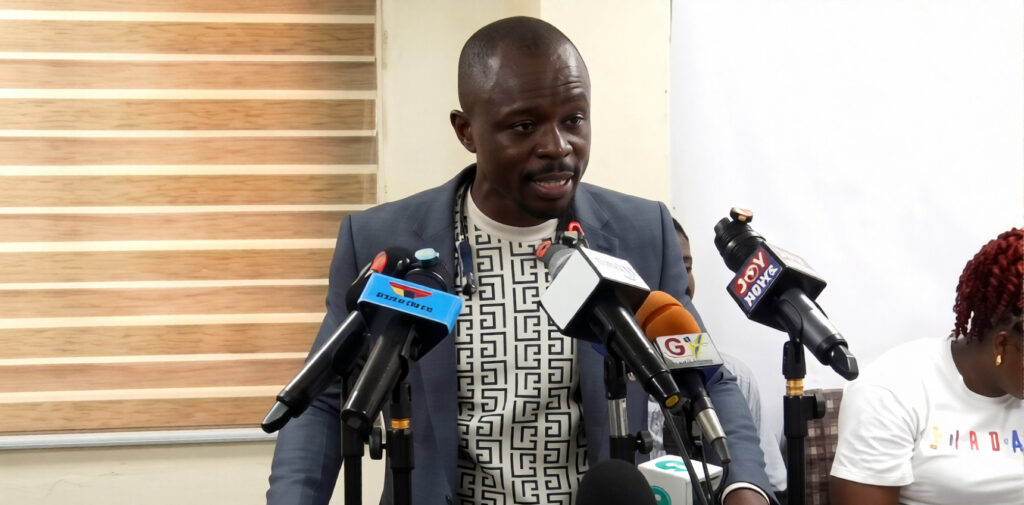
In addition, Mr Akorkor pointed to his participation in WhatsApp groups involving evacuees as part of his basis for challenging the allegations. He explained that one platform has nearly 400 members, while another group involving Ghanaians connected to Kumasi, London and South Africa had more than 500 participants.
He posited that, to his knowledge, no member has raised a complaint in those groups about receiving nothing or being given less than promised.
Mr Akorkor also highlighted the intended purpose of the financial package, arguing that it could help beneficiaries meet immediate needs, establish small businesses and begin reintegrating into Ghanaian society.
For him, the evacuation and the accompanying support offered two forms of assistance: removing citizens from a threatening situation and providing resources to help them rebuild their lives after returning home.
He consequently challenged attempts to discredit the programme, maintaining that public discussion should take account of the experiences of beneficiaries who could verify what they received.