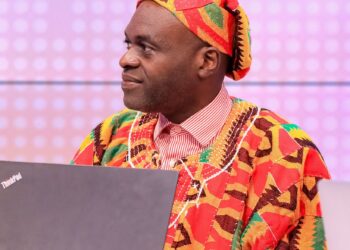

Legal scholar Professor Stephen Kwaku Asare, popularly known as Kwaku Azar, has argued that the Supreme Court should not hear the NPP’s presidential term limit suit unless it discloses a genuine constitutional dispute. The CDD-Ghana Fellow made the case in a written statement reacting to the party’s writ against the Attorney General.
Kwaku Azar explained that the Constitution lets the court decide disputes over laws, acts or omissions, and does not let it settle public debates. He cited the Bilson case as authority and suggested that the court dismiss a writ that plainly fails to disclose a cause of action, without prejudice to a properly constituted action later.
“The Supreme Court is a court of law, not a constitutional advice centre.”
Professor Stephen Kwaku Asare, popularly known as Kwaku Azar, CDD-Ghana Fellow and Legal Scholar
Kwaku Azar based his comments on media reports of the writ. The NPP, he noted, wants declarations on the interpretation of articles 58(2) and 66(1), (2) and (3)(a) of the 1992 Constitution.

The party asks the court to rule that the term limit means a maximum of two terms, whether consecutive or not. It also wants the court to affirm that nobody can be elected President more than twice or hold office beyond two four-year terms, or eight years in total.
The NPP asked the Supreme Court to define the presidential term limit. Deputy Attorney General Dr Justice Srem-Sai confirmed in August that five such suits were pending against the Attorney General.
What the Old NPP Actually Challenged
Kwaku Azar began with the party’s own record. In NPP v. Attorney-General, known as the 31st December case, the party challenged the government’s decision to celebrate the overthrow of the Third Republic and to fund the celebration with public money.
The Supreme Court held by majority that the celebration and the spending were inconsistent with the letter and spirit of the 1992 Constitution. In NPP v. Inspector-General of Police, the party attacked provisions of NRCD 68 that required police permission for public demonstrations.

The court unanimously held that the permit requirements infringed the freedom of assembly under Article 21(1)(d). Kwaku Azar drew a lesson from both. The party of that era challenged identifiable government actions and existing laws, he argued, and the court was not being invited merely to settle an interesting public debate.
Articles 2 and 130 Have Limits
Kwaku Azar turned to the text of the Constitution. Article 2(1), he explained, lets a person invoke the Supreme Court’s jurisdiction where an enactment, an act or an omission allegedly contravenes the Constitution. It does not open the court to every question that arises in public discourse.
“Here, what enactment is being challenged? What unconstitutional act or omission is alleged?” He pointed out that nobody has filed to contest a third presidential election, and no electoral authority has ruled that a twice-elected President may stand again.
On the reported facts, he stated, there is at best a public debate. Article 2 gives broad standing, but he insisted that broad standing does not remove the need for a justiciable cause of action.
Article 130 gives the court exclusive original jurisdiction over the interpretation and enforcement of the Constitution. Kwaku Azar noted that this jurisdiction is not unlimited and that the court has repeatedly made clear it does not give advisory opinions.
Bilson and Akosah Cited as Authority
According to Professor Asare, in Bilson v. Attorney-General, the plaintiff sought declarations on section 34 of the Transitional Provisions, which indemnified acts of earlier military regimes. The Supreme Court dismissed the action because nobody had relied on that provision in an actual dispute.
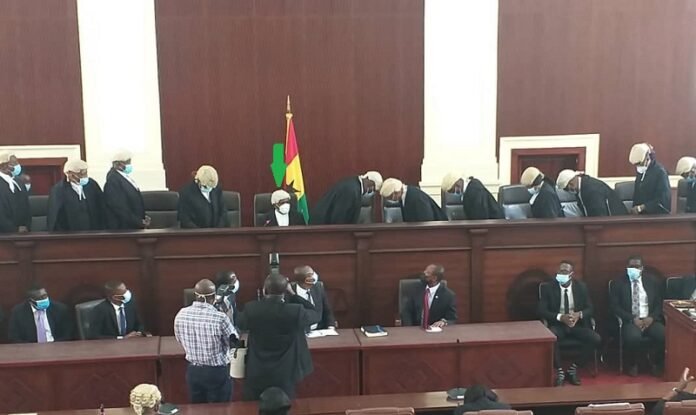
The court held that it can interpret the Constitution within a dispute and has no jurisdiction to advise prospective litigants. Kwaku Azar called the case important because it separates a genuine dispute from a request for judicial reassurance.
He also addressed Republic v. Special Tribunal; Ex parte Akosah, which lists situations that raise real questions of interpretation, such as ambiguous wording and rival readings. He explained that the case arose when a lower court decides whether to refer a question upward.
It does not invite citizens to manufacture competing interpretations, he argued, and asserting a different reading on Facebook, radio or television does not create a justiciable controversy.
Disagreement Is Not a Controversy
Kwaku Azar welcomed debate over the Constitution as healthy but warned against turning every argument into litigation. Otherwise, he noted, every constitutional debate on radio, television or social media could become a Supreme Court case.
He framed the preliminary question for the court. The issue is not whether two terms means two terms, he stated, but whether the writ presents a genuine controversy or seeks an advisory opinion on a hypothetical future event.
He allowed one qualification. The precise pleadings matter, and if the NPP can show a genuine controversy, the court must consider it.
A Call for a Short Ruling
Kwaku Azar urged the court to stay disciplined and resist the pull of politically important questions. Judicial resources are scarce, he argued, and they belong to genuine disputes and not to free constitutional consultations.

Where a writ plainly shows no justiciable cause of action, he wants the court to dispose of it at the earliest procedurally appropriate opportunity. He even drafted the order.
“A short ruling may suffice: ‘This action is dismissed for want of jurisdiction, without prejudice to a properly constituted action arising from a justiciable controversy. See Bilson v. Attorney-General’.”
Professor Stephen Kwaku Asare, popularly known as Kwaku Azar, CDD-Ghana Fellow and Legal Scholar
The writ itself gives the Attorney General 14 days after service of the NPP’s statement of case to file a defence. The court has yet to announce when it will hear the party’s suit.
READ ALSO: Yinka Ogunbiyi Unveils World’s First Air Braiding Robot