West Africa’s petroleum trade could face greater scrutiny under a proposed regional digital system that would track fuel products from their point of origin to retail outlets, as regulators seek stronger controls over product quality, revenue collection and cross-border distribution.
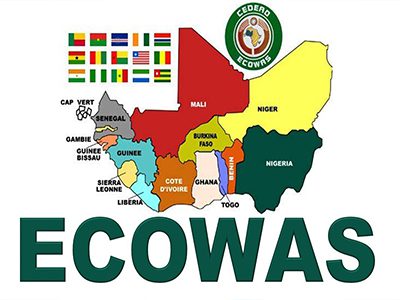
The proposal for a West African Fuel Passport, presented by Chamber of Oil Marketing Companies (COMAC) Chief Executive Officer Dr Riverson Oppong at OTL Africa Downstream Energy Week 2026, is intended to establish a common framework for certifying and monitoring petroleum products traded across the Economic Community of West African States (ECOWAS).
The proposed system would cover petroleum cargoes and individual truckloads, creating a digital record of their movement from refineries or ports through storage facilities and border crossings to final retail outlets.
For Ghana, which participates in regional petroleum trade while maintaining its own downstream regulatory and quality-control arrangements, the proposal raises an important question: how can authorities strengthen oversight without creating additional obstacles for legitimate fuel suppliers?
The proposal was discussed during a plenary session at the OTL conference themed “West African Fuels Congress: What’s New and What’s Next?”
The session examined the region’s changing fuel market and the reforms needed to improve supply security, product quality, pricing and cross-border trade.
A Fragmented Market Creates Traceability Challenges
Petroleum products moving across West Africa may pass through several jurisdictions, storage facilities, transport operators and distribution channels before reaching consumers.
Each stage creates a need for accurate information about the product’s origin, quantity, quality and destination. Where regulatory systems and documentation requirements differ, monitoring the full journey can become difficult.

The proposed Fuel Passport seeks to address this challenge through an ECOWAS-wide digital record that would make product movements more visible to regulators and relevant market participants.
COMAC’s announcement described the proposal as:
“An ECOWAS-wide digital system that would certify petroleum products to an agreed quality standard and track each cargo or truckload from the refinery or port through depots and borders to the retail outlet.”
The significance of the proposal lies in its attempt to connect product certification with physical traceability.
A certificate issued at the point of origin would be linked to subsequent movements, allowing authorities to establish whether a consignment reaching a depot or retail outlet corresponds with the product initially documented.
This could help identify discrepancies between declared and delivered volumes, improve the monitoring of petroleum movements and make it harder for products to enter legitimate distribution channels without adequate documentation.
However, a digital record will only be reliable if the information entered at each stage is accurate and independently verifiable.
A system that records incorrect declarations without effective checks could create an appearance of transparency without materially improving enforcement.
Fuel Quality Is A Central Concern
Product quality is another major consideration behind the proposed framework.
Different fuel specifications and enforcement practices across national markets can complicate regional trade.
They can also create difficulties for regulators seeking to ensure that products entering their markets meet approved standards.
A common certification system could provide a shared reference point for verifying product quality before and during cross-border movement.
For Ghana, this could complement the work of domestic downstream regulators by improving access to information about the origin and certification of petroleum products entering the market.
It could also help legitimate importers and distributors demonstrate compliance when operating across multiple jurisdictions.
But harmonisation would require agreement on the standards themselves. ECOWAS member states would need to establish which specifications apply, how products are tested, which institutions are authorised to certify them and how disputes over compliance are resolved.
Without those agreements, a digital passport could simply reproduce existing differences in national standards.
There would also need to be clear procedures for dealing with products that fail quality tests while in transit or after reaching storage facilities.
The framework must establish who is responsible for intervention, whether products can be rejected or redirected, and how enforcement decisions are recognised across borders.
Revenue Protection And Legitimate Trade
The proposed system could also have implications for government revenue.
Unrecorded petroleum movements and discrepancies in reported volumes can weaken regulatory oversight and create opportunities for non-compliance.
A traceable system could help authorities compare the quantities declared at different stages of the supply chain and investigate unexplained differences.

The benefits would extend to legitimate businesses if improved documentation reduced uncertainty and made it easier to verify the status of products moving between countries.
COMAC said the proposal could help “reduce unrecorded product movements, improve quality assurance, strengthen revenue protection and make legitimate cross-border petroleum trade easier across the region.”
That objective presents a useful balance. Regional controls should make it harder for non-compliant operators to exploit gaps between national systems, while allowing businesses that meet the rules to move products without unnecessary delays.
For smaller distributors and transport operators, however, compliance costs will matter. If registration, digital reporting or certification requirements are expensive or difficult to access, the system could place disproportionate pressure on businesses with limited administrative capacity.
The design would therefore need to account for the different sizes of operators and the practical conditions under which petroleum products are transported and stored.
Implementation Will Be The Real Test
The Fuel Passport would require cooperation between energy ministries, petroleum regulators, customs authorities, standards agencies, port operators and private-sector participants.
ECOWAS would also need to establish governance arrangements covering data ownership, access rights, cybersecurity, verification procedures and responsibility for enforcement.
A further challenge would be integrating the proposed platform with existing national systems. Countries may already operate different licensing, product-testing and cargo-monitoring arrangements.
The regional framework would need to connect these systems or establish a practical transition process rather than assume that all members can adopt an identical structure immediately.
The proposal also raises questions about the treatment of products imported from outside West Africa and subsequently traded within the region.
A workable system would need to establish how such products are certified before entering regional distribution networks.
COMAC’s participation at OTL Africa Downstream Energy Week provided an opportunity to place Ghana’s downstream experience within this wider discussion.
The organisation’s announcement said the session was intended to contribute practical proposals for a safer, more transparent and better-connected West African petroleum market.
The next step, however, would be to move from the proposal to consultations with regional institutions and national regulators.
Agreement on common standards, pilot implementation and clear enforcement responsibilities would be necessary before the system could deliver measurable results.
The idea addresses a real weakness in cross-border petroleum trade: the difficulty of maintaining consistent oversight as products move between markets.
But the value of a regional passport will ultimately depend on whether it becomes a trusted regulatory instrument rather than another layer of paperwork.
For Ghana and its ECOWAS partners, the opportunity is to use digital traceability to improve consumer protection, strengthen revenue accountability and make legitimate petroleum trade more predictable.
Achieving those outcomes will require regional coordination that is as strong as the technology being proposed.
READ ALSO: Queen Maxima Challenges BoG to Measure Ghana’s Financial Health