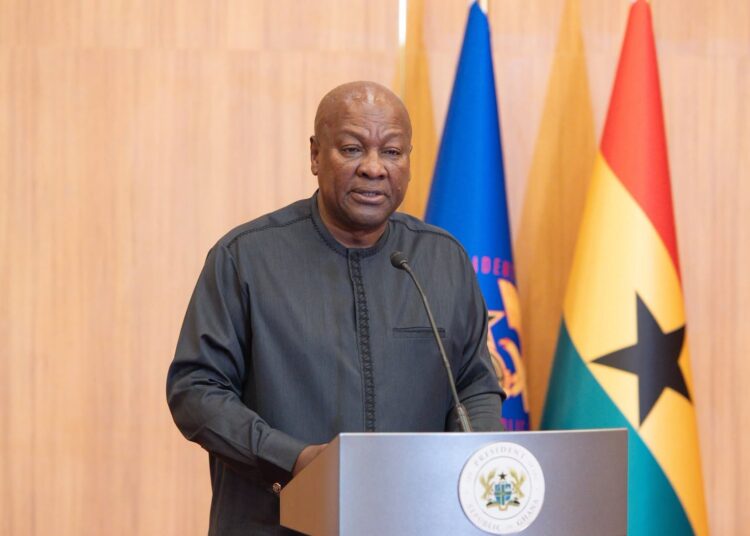
President John Dramani Mahama has asked Ghanaians to accept TraffiTech-GH speed enforcement, arguing that the system will save lives on roads that claimed 2,151 people in 2025.
He spoke to the Presidential Press Corps after returning from London, the Russia-Africa Summit, and the 28th Commonwealth Heads of Government Meeting (CHOGM) in Antigua and Barbuda.
President Mahama described the cameras as a digital upgrade that removes the roadside disputes between police officers and drivers. He promised a month-to-month comparison with last year’s figures to prove the results, and he explained why the system currently enforces speed limits and nothing else.
“We cannot afford to continue losing people at that rate.”
President John Dramani Mahama
Mahama Frames TraffiTech-GH as a Digital Upgrade
Speaking on how the traffic technology goes beyond penalties, the President highlighted the shift from analogue to digital policing. He recalled officers who stood along the road, pointed a speed gun at approaching vehicles and read out the speed. Those encounters often turned contentious, he noted, because drivers disputed the figure.
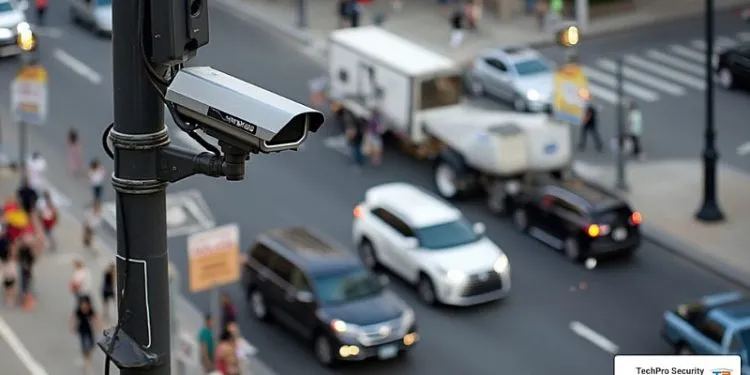
The state, he argued, has simply replaced “that policeman with a machine.” The device checks the speed, sends the driver an alert, and attaches a video that shows where the car went over the limit.
President Mahama believes the process is now “making it more scientific.” The latest TraffiTech-GH rules on repeated offences show how that digital record can follow a driver’s licence.
2,151 Road Deaths Anchor the Government’s Case
President Mahama grounded his argument in the national toll. He disclosed that 2,151 Ghanaians died in road accidents in 2025, and he urged listeners to picture the victim as a husband, a child, a mother or a sister. The number, he suggested, leaves the country no room for delay.
He then turned to a narrower statistic. Pedestrian knockdowns killed 474 people last year, he stated, and many of them were people simply crossing the road. A good number were schoolchildren heading home from class.
Why 50 Kilometres per Hour Matters
The President explained the physics behind the speed limit. A driver travelling at 80 or 100 kilometres per hour cannot stop when a child steps onto the road, he argued, while a driver at 50 can. The general limit in every urban centre, including Accra, is therefore 50.
“If you don’t go above 50, you won’t get a speeding ticket.”
President John Dramani Mahama
President Mahama shared a story that suggests the cameras already change behaviour. A motorist told him that he had never paid attention to his speedometer until the system arrived, and that he now checks it constantly to stay under 50.
The President also conceded that better roads could tempt drivers to go faster, which is why he wants motorists to abide by the limit as improvements continue.
A Month-to-Month Test of the System
President Mahama tied his appeal for patience to a promised review. The system started on November 1, and he intends to compare each month with the same month last year. He is confident that “you yourself will be surprised at the number of lives this traffic tech system will save.”
The pledge sets a clear standard for the programme. It also answers critics who have questioned readiness, including concerns about road safety preparedness and calls for stronger public education after the earlier postponement. In earlier remarks, President Mahama also defended the fines and told drivers to obey the limits.
Only the Speeding Module Is Live
The President clarified what the cameras currently enforce. “But so far, it’s only the speeding module that has been activated,” he stated. Other modules exist for crossing red lights and illegal parking, but neither has been switched on.
He outlined a rough timetable. The red light module could follow next year, and the illegal parking module could come later in the same period or after it. He offered no firm dates. For now, President Mahama wants drivers to concentrate on speed and cut it. “So let’s get used to reducing our speed,” he urged.
GPRTU and the Bus Stop Question
Transport operators have raised a separate concern. The Ghana Private Road Transport Union (GPRTU) has argued that authorities must clear bus stops before enforcing parking rules, so that its members can reach those stops.
President Mahama agreed that the argument applies to illegal parking, and he promised that the issue will matter when that module arrives. He told the union and bus operators that the argument has no bearing on the present rollout. “Right now, it has nothing to do with bus stops,” he explained, and he asked them to accept the speed limit and stay below 50.
President Mahama’s remarks set up a test with a visible deadline. If the monthly comparisons show fewer deaths, the government will have a strong argument for expanding the cameras to red lights and parking. If they do not, critics who demanded better preparation will find fresh ammunition.
For ordinary Ghanaians, the President’s message is simple. Keep to 50 in town, watch the speedometer, and expect the government to publish proof of the system’s value by the end of the year.
READ ALSO: Oil Price Slide Exposes Geopolitical Risks For Fuel Markets