


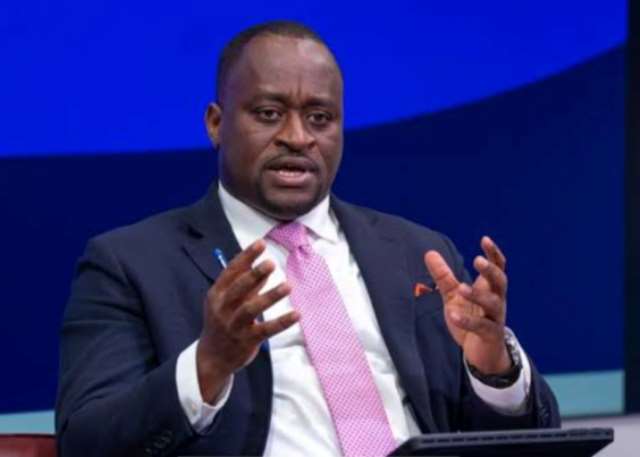
Technical Advisor at the Finance Ministry, Dr Theo Acheampong, has disclosed that the government has allocated approximately GH¢30 billion in the 2027 Budget to support its New Economy agenda, marking a shift towards direct public investment alongside private-sector participation.
Speaking in a post-2027 Budget interview, Dr Acheampong explained that the allocation, equivalent to approximately US$2.5 billion, would support investment across the programme’s priority sectors and complement incentives designed to attract private capital.
“This time around we’re saying that we are putting our own direct public resources in it in addition to the tax incentives that are needed to catalyse and bring public investment.”
Economist and Technical Advisor at the Finance Ministry, Dr Theo Acheampong,
GH¢30bn Allocation Marks Shift in Government Support
Dr Acheampong directed attention to Appendix 4A of the 2027 Budget, specifically page 213, where he identified a line item for the New Economy programme.
He disclosed that the allocation stood at approximately GH¢30 billion, describing it as a direct public investment commitment that had not featured in the same way in previous allocations for the 24-hour economy initiative.
According to him, earlier government allocations to the 24-hour economy were largely intended to support the programme’s secretariat and mobilise private capital, while the government offered tax incentives and other measures to encourage businesses to invest.
The new approach, he explained, will see government commit its own resources to investment while continuing to provide incentives to attract private-sector participation. Dr Acheampong stated that the allocation forms part of a broader financing plan intended to mobilise approximately US$10 billion over four years.
Fiscal Reforms to Finance the New Economy
The Finance Ministry advisor identified two major sources of funding for the programme: fiscal space created through adjustments to the primary balance target and additional revenue expected from tax reforms.
He explained that the government intends to amend the Public Financial Management framework to reduce the primary balance target from 1.5 per cent to 0.5 per cent of GDP. Dr. Acheampong noted that the government had exceeded its initial fiscal target in 2025, recording a primary surplus of approximately 2.5 to 2.6 per cent of GDP.
He argued that the initial fiscal consolidation had helped restore macroeconomic stability, creating room for the government to redirect resources towards productive public investment.
The second source of funding will come from reforms to existing tax measures. Dr Acheampong cited changes to the excise tax and customs regimes, which he expects to generate an additional 0.5 per cent of GDP in revenue.
He stressed that the government was not introducing new tax handles but was seeking to mobilise additional revenue through reforms to the existing system. Together, the two measures are expected to provide an additional 1.5 per cent of GDP to support the New Economy agenda.
Private Sector Investment and Joint Ventures
Dr Acheampong explained that the original financing model for the 24-hour economy relied heavily on private-sector capital, with government expected to provide incentives to encourage businesses to invest and create jobs.
These incentives included tax waivers, exemptions on selected import-related charges and accelerated depreciation to reduce the cost of investment. He disclosed that the programme had attracted approximately US$11.5 billion in pipeline investments, of which about US$6 billion represented committed investments.
However, he cautioned that the existence of incentives and investment commitments did not automatically mean that all projects would proceed immediately, as private businesses must still make final investment decisions.
He acknowledged that this process creates a time lag between the announcement of incentives, investment decisions and the eventual creation of jobs. The next phase, he explained, would involve government working more directly with private businesses through joint ventures, co-investment and other partnerships to accelerate investment and deepen job creation.
New Economy Focuses on Sustainable Jobs
Dr Acheampong acknowledged concerns that the 24-hour economy programme had not yet delivered the expected number of jobs, but maintained that some employment had been created and investments were progressing through the pipeline.
He argued that the focus must now shift towards creating more durable jobs by addressing the financing and coordination challenges that have affected the implementation of previous development plans.

According to him, Ghana has identified sectors in which it possesses comparative and competitive advantages, but sustaining progress requires adequate funding, effective coordination and consistency in implementation.
He added that the New Economy agenda builds on the foundation of macroeconomic stability, which he described as essential for attracting investment and expanding productive activity. Dr Acheampong further noted that the government intends to reduce the cost of credit to make borrowing more affordable for businesses.
He explained that although lending rates had declined from previous levels, the average borrowing cost remained around 16 per cent, which could constrain investment and expansion. He disclosed that the government wants to create conditions under which businesses can eventually access credit at rates below 10 per cent.
The GH¢30 billion allocation, combined with private-sector investment and fiscal reforms, is expected to support the government’s efforts to expand production, attract investment and create sustainable employment under the New Economy agenda.
READ ALSO: NDC Election Directorate Demands Formal Notice of Injunction