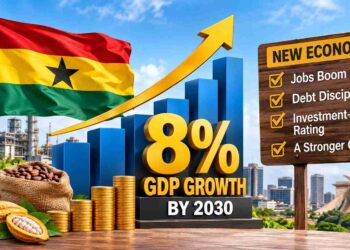
President John Dramani Mahama’s government is putting GH¢30 billion on the table in 2027 to accelerate Ghana’s economic transformation, placing industrial expansion, business growth and job creation at the centre of its ambitious New Economy Programme.
The massive allocation, equivalent to 1.5 per cent of Gross Domestic Product (GDP), represents a significant financial commitment by the government as it seeks to move Ghana beyond economic stabilisation towards stronger productive capacity and sustainable growth.
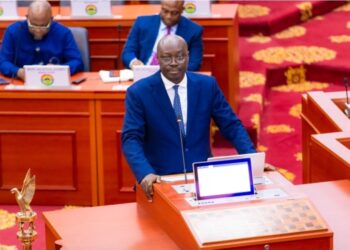
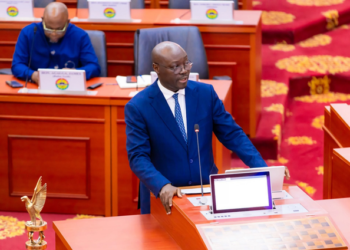
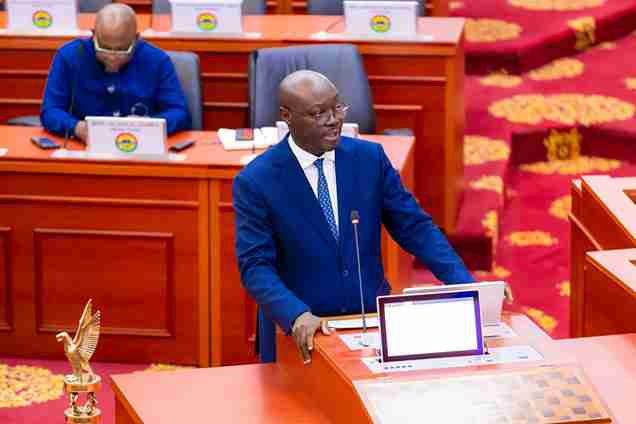
Presenting the 2027 Budget Statement and Economic Policy to Parliament, Finance Minister Dr Ato Forson announced that the government would channel the funds into strategic investments intended to reshape the country’s economic structure.
“Mr Speaker, in 2027, we will invest 1.5 per cent of GDP, equivalent to 30 billion Ghana cedis in the New Economy,” he told Parliament.
The announcement puts a substantial price tag on Mahama’s economic ambitions, with expectations that the investment will stimulate productive activity and create opportunities across different sectors.
GH¢30bn Bet on a New Economic Direction
The GH¢30 billion commitment signals the government’s determination to make productive investment a major driver of economic growth.
Rather than relying solely on headline economic indicators, the New Economy Programme is designed to channel resources into productive infrastructure, industries and other strategic sectors capable of expanding businesses and strengthening Ghana’s economic foundations.
According to Dr Forson, the investment will support businesses to grow, increase the country’s export capacity and generate employment opportunities.
The programme forms part of a broader four-year economic transformation agenda running from 2027 to 2030.
Its success, however, will depend heavily on how effectively the allocated resources are deployed and whether the investments generate measurable improvements in production, incomes and employment.
Jobs and Wages Become the Real Test
One of the most striking aspects of the government’s announcement is its emphasis on ensuring that economic growth translates into improvements in the everyday lives of ordinary Ghanaians.
For many households, the ultimate measure of economic recovery is not simply rising GDP figures but access to decent jobs, better wages and opportunities to improve their living standards.
Dr Forson acknowledged this expectation, stressing that the government intends to judge economic performance by the opportunities it creates.
“A young Ghanaian will see economic growth reflected in jobs, wages and opportunities. We judge growth by the jobs it creates, the income it raises, and the productive capacity it leaves behind.”
The commitment places employment generation at the heart of the New Economy Programme, particularly at a time when young people continue to seek meaningful opportunities in the labour market.
It also raises expectations that the GH¢30 billion investment will deliver tangible outcomes beyond increased government spending.
Government Promises Accountability Over GH¢30bn
With such a significant allocation involved, questions surrounding transparency, project selection and value for money will inevitably attract attention.
The government appears conscious of the need to demonstrate that the funds will be used efficiently rather than lost through poorly designed projects or wasteful expenditure.
Dr Forson assured Parliament that every project under the programme would undergo rigorous appraisal and value-for-money assessments before implementation.
“Our commitment will be budgeted, authorised and transparently reported,” he assured Parliament.
This commitment will be important in building public confidence, particularly as the programme stretches across four years and involves substantial public resources.
Effective monitoring will also be necessary to establish whether the investments are delivering the intended economic and social returns.
A Major Test of Mahama’s Economic Ambitions
The GH¢30 billion allocation gives Mahama’s New Economy Programme significant financial backing, but the real challenge will be translating the investment into visible economic transformation.
Expanding industries, strengthening productive infrastructure, supporting businesses and creating sustainable employment will require careful execution and consistent oversight.
Ghanaians will be watching to see whether the programme can deliver the jobs, incomes and business opportunities promised by the government.
Ultimately, the success of Mahama’s GH¢30 billion bet will not be determined by the size of the budget allocation alone, but by how much stronger Ghana’s productive economy becomes between 2027 and 2030.
READ ALSO: Ghana Targets Food Import Reduction Through Eight Value Chains