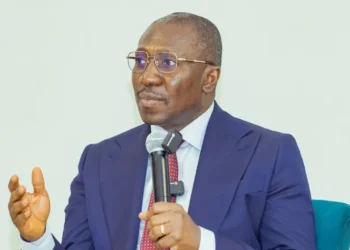
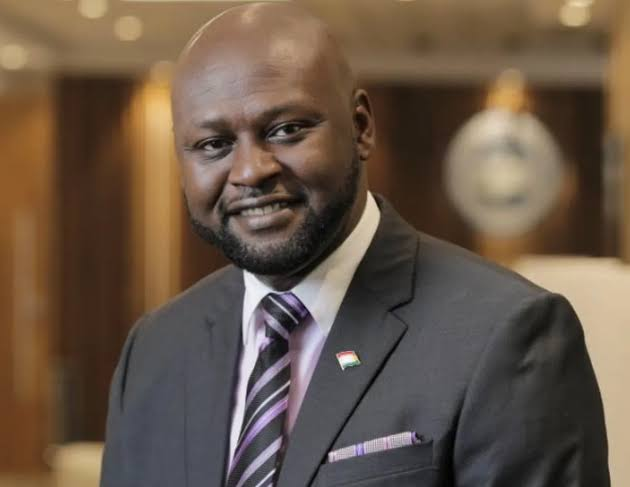
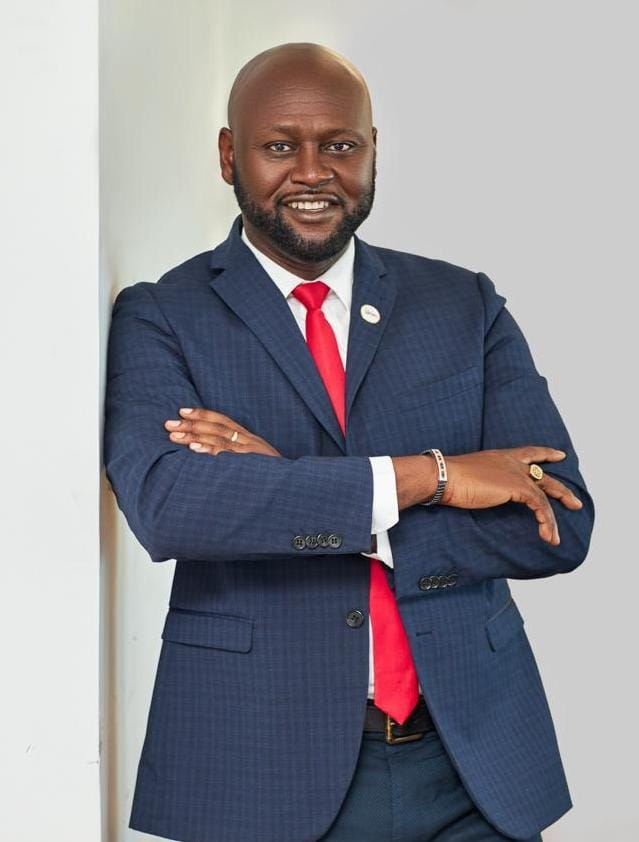
Director of Information Technology for the New Patriotic Party (NPP) and former Chief Executive Officer of the Ghana Integrated Aluminium Development Corporation (GIFFEC), Prince Ofosu-Sefah, has questioned the economic impact of the government’s New Economy agenda, arguing that improvements in selected economic indicators have yet to translate into substantial growth and employment opportunities.
In his submissions on the government’s economic programme, he challenged the administration to demonstrate how its policies are improving economic activity, creating jobs and easing the cost of living.
He also questioned the country’s international reserve position and the management of proceeds from gold transactions, insisting that economic performance must be measured by tangible outcomes.
“GDP is key because that really is the measurement of economic activity there may just be a difference between that and a bit of jobs because you can also have jobless growth.”
Prince Ofosu-Sefah
Mr Ofosu-Sefah questioned whether the government’s eight plans under the New Economy would produce the results promised to Ghanaians, drawing a comparison with the eight plans previously outlined for the 24-Hour Economy.
He argued that policy announcements alone do not establish economic progress, particularly when improvements in macroeconomic indicators fail to generate employment and expand productive activity.
New Economy must deliver jobs and economic growth
He explained that GDP growth and job creation are not necessarily the same, since an economy can experience growth without creating sufficient employment. Real GDP, he noted, removes the effects of inflation and provides a clearer indication of actual ecoomic activity.
He cited real GDP growth of 5.8 per cent in 2024 when the current administration assumed office, noting that the figure had undergone several revisions. It was initially reported at 5.7 per cent, revised to 6.0 per cent, subsequently placed provisionally at 4.6 per cent and later updated to 5.7 per cent by some reputable organisations.
He described the performance as relatively flat, adding that unemployment had moved from slightly above 13 per cent to 12.8 per cent, while youth unemployment remained around 22 per cent.
Economic performance must reflect living condition
Mr Ofosu-Sefah maintained that the figures explain why critics describe the economy as a “paper economy”. He argued that lower inflation and improvements in the exchange rate should not be the principal measures of success when employment and living conditions remain major concerns.
“The real test of economic management should be GDP growth, employment and the cost of living.”
Prince Ofosu-Sefah
He further argued that the current government inherited a favourable international economic environment, pointing to the unprecedented prices of gold and cocoa over the preceding two years.
He also referenced the previous administration’s debt exchange programme, which he believes reduced some of the financial pressures that would otherwise have confronted the current government.
Ghana’s international reserves questioned
The NPP official raised concerns about the country’s international reserves, claiming that they had declined from approximately US$14 billion to US$11 billion over about six months.
He drew attention to the timing of the decline, which he associated with the period of the government’s gold-related initiatives, although he did not establish a direct causal link.
Mr Ofosu-Sefah further maintained that the Akufo-Addo administration left approximately 31 metric tonnes of gold reserves, of which the current government sold 19 metric tonnes for US$2.6 billion.
Citing figures he attributed to financial experts, he argued that the transaction could have generated as much as US$3.8 billion, leaving a potential US$1.2 billion difference that, in his view, required investigation.
He also put the international reserves inherited by the current government at approximately US$9 billion. Adding the US$2.6 billion proceeds from the gold sale, he arrived at US$11.6 billion, which he compared with the current reserve position of about US$11 billion.
“The Gold-for-Reserves programme, which is supposed to help build the country’s reserves, has not, in my assessment, taken us beyond the position inherited from the previous government.”
Prince Ofosu-Sefah
Debt levels and previous economic challenges
Mr Ofosu-Sefah also compared the current administration’s performance with the economic conditions inherited by the Akufo-Addo government in 2017.
He put the debt-to-GDP ratio inherited by the NPP at approximately 73 per cent, arguing that the administration subsequently recorded real GDP growth of 8.5 per cent in its first year.
He contrasted unemployment of about 3.4 per cent and youth unemployment of approximately 12 per cent during that period with the current rates of 12.8 per cent and nearly 22 per cent.
He further cited GDP growth rates of 3.4 per cent, 2.5 per cent and 3.6 per cent in the three years preceding the NPP’s assumption of office. He also recalled an energy crisis and independent power producer agreements which, according to him, required World Bank intervention.
Ofosu-Sefah disputes gold refinery claims
On the gold refinery, Mr Ofosu-Sefah maintained that the project was initiated under the NPP administration, disputing suggestions that it originated with the current government.

He argued that public discussions should distinguish between projects initiated by previous administrations and those continued or advanced by their successors.
His broader argument was that Ghana’s economic policies must be assessed against measurable outcomes, particularly growth, employment, production and household welfare.
He maintained that the New Economy agenda must demonstrate how its policy commitments will translate into tangible improvements for businesses and ordinary citizens.
READ MORE: Afenyo-Markin Questions Removal of Big Six from New Banknotes