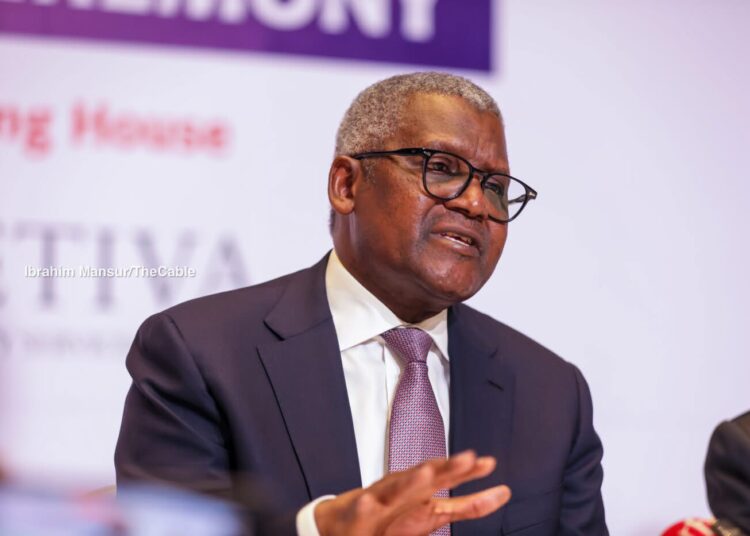
The role of private sector investment in accelerating Africa’s industrial transformation is taking centre stage at the Invest Ghana Summit 2026, as African industrialist Alhaji Aliko Dangote engages business leaders and policymakers in a fireside chat in Accra.
The session, currently underway at the Kempinski Gold Coast City Hotel, brings together discussions on Africa’s investment landscape, industrial expansion and opportunities for stronger private sector partnerships across the continent.
Alhaji Dangote, Founder and Group President of the Dangote Group, is sharing perspectives from his experience building one of Africa’s largest industrial conglomerates.
“Investing in Ghana’s New Economy: Building a Productive Economy that Creates Value and Competes Globally.”
Founder and President Dangote Group, Alhaji Aliko Dangote
His participation comes at a time when African economies are seeking to attract productive investments, strengthen domestic manufacturing capacity and reduce dependence on imported goods.
The conversation also places renewed attention on the role of indigenous businesses in mobilising capital, developing industries and creating employment opportunities.
The theme of the two day summit reflects the need to move beyond investment commitments towards projects that generate measurable economic value through production, technology transfer, industrial capacity and export development.
Investment Opportunities and Africa’s Industrial Ambitions
Africa’s ability to attract investment remains central to its economic transformation, particularly as governments seek to develop industries capable of competing in international markets.
According to the United Nations Conference on Trade and Development (UNCTAD), Africa attracted approximately US$70 billion in foreign direct investment (FDI) in 2025, representing a decline from the exceptional US$94 billion recorded in 2024.
Despite the reduction, the 2025 figure was approximately one-third higher than the continent’s average investment inflows between 2010 and 2024.
The figures demonstrate the continent’s continued attractiveness to international investors while highlighting the need to translate capital inflows into productive economic activities.
UNCTAD’s World Investment Report 2026 identifies energy, minerals and infrastructure among the sectors attracting considerable investment interest.
However, the report also highlights the importance of ensuring that investment contributes to productive capacity, employment generation, skills development and technology transfer.
“Africa received $70 billion” in foreign direct investment in 2025, according to UN Trade and Development’s World Investment Report 2026.
UNCTAD
For Alhaji Dangote, whose business interests span cement, fertiliser, oil refining, petrochemicals and other industrial activities, the conversation provides an opportunity to examine the conditions necessary for African businesses to expand beyond national markets.
His industrial experience is particularly relevant to discussions about developing local production systems, strengthening supply chains and reducing the continent’s dependence on imported manufactured products.
The challenge facing African economies is not simply attracting foreign capital but creating an environment in which local entrepreneurs and international investors can establish sustainable businesses, develop industries and participate in regional and global trade.
Ghana’s Industrialisation and Investment Prospects
Ghana’s participation in the investment conversation comes against the background of its efforts to reposition the economy towards production-led growth.
The Ghana Statistical Service’s provisional 2025 national accounts indicate that the country’s economy expanded by 6.0 per cent, with industry accounting for 31.3 per cent of gross domestic product (GDP).
Agriculture contributed 22.8 per cent, while services accounted for 45.9 per cent. The Invest Ghana Summit, organised by the Ghana Investment Promotion Authority (GIPA), is expected to bring together more than 2,000 delegates from over 40 countries to explore investment opportunities and facilitate business partnerships.
The programme includes the presentation of more than 220 vetted investment projects, alongside business-to-business engagements, government-to-business meetings and sector-specific discussions.
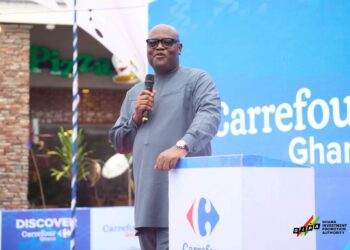
GIPA Chief Executive Officer Simon Madjie has described Dangote’s participation as significant to Ghana’s investment promotion efforts.
“Mr Dangote’s presence at the Invest Ghana Summit is a powerful endorsement of Ghana’s economic potential and investment outlook.”
C.E,O of GIPA, Mr. Simon Madjie
The summit also provides an opportunity for Ghana to position itself as a destination for investors seeking access to the African Continental Free Trade Area (AfCFTA) market.
With the AfCFTA Secretariat headquartered in Accra, the country has an opportunity to attract businesses interested in establishing production facilities and distributing goods across African markets.
Private Sector Partnerships and Continental Growth
The fireside chat also highlights the importance of stronger partnerships between African governments, indigenous businesses and international investors in addressing the continent’s industrial development challenges.
Private-sector investment remains essential to expanding production capacity, introducing new technologies, developing infrastructure and creating employment. However, businesses require predictable policies, efficient institutions and access to markets to operate competitively.
UNCTAD’s 2026 investment report identifies infrastructure, skills development, supplier networks and regional cooperation as important foundations for attracting productive investments.
These considerations are particularly relevant to Africa, where fragmented markets and limited industrial capacity have historically constrained the growth of manufacturing and cross-border trade.
The expansion of regional value chains could enable countries to specialise in different stages of production, improve the movement of intermediate goods and create opportunities for businesses to serve larger markets.
For Ghana, this presents opportunities in agro-processing, pharmaceuticals, textiles, mineral processing and other manufacturing activities where local production can support regional demand.
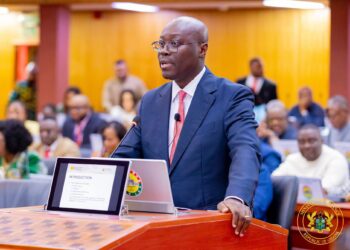
“By connecting investors directly with bankable projects and decision-makers, we are creating a platform that turns investor interest into tangible economic outcomes for Ghana.”
C.E.O of GIPA, Mr. Simon Madjie
Alhaji Dangote’s engagement adds an important private-sector dimension to these discussions, bringing attention to the relationship between investment, industrial entrepreneurship and Africa’s capacity to build competitive businesses.
READ ALSO:Dr Adam: NPP Began Economic Recovery Before This Government