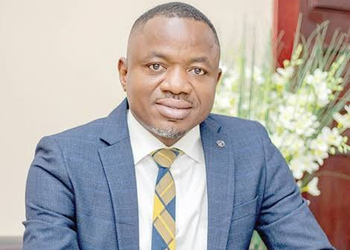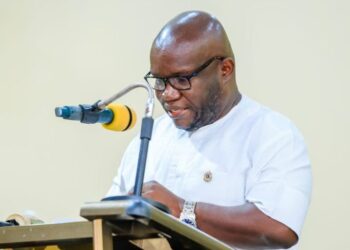
Professor Kwadwo Appiagyei-Atua of the University of Ghana School of Law has challenged the University of Ghana Enterprise Limited (UGEL) over its position on the Rent Commissioner’s jurisdiction, arguing that the company cannot invoke institutional autonomy to shield its accommodation charges from legal scrutiny.
He maintained that UGEL is a private entity legally distinct from the University of Ghana and therefore cannot rely on the university’s academic freedom to evade the Rent Commissioner’s authority.
He also raised concerns about a potential conflict of interest involving the university’s Pro Vice-Chancellor, who chairs the UGEL board, and urged student groups, lecturers and their unions to defend students’ accommodation rights.
“Institutional autonomy cannot protect UGEL because it is a private entity, registered as being distinct and separate from UG.”
Professor Kwadwo Appiagyei-Atua of the University of Ghana School of Law
Prof. Appiagyei-Atua argued that UGEL could only rely on institutional autonomy, a principle associated with academic freedom, to contest the Rent Commissioner’s jurisdiction over its rental premises.
However, he maintained that the argument was untenable because the company operates as a separate legal entity from the university.

He explained that the involvement of a Pro Vice-Chancellor as chairperson of the UGEL board did not confer immunity on the company or remove it from the authority of the Rent Commissioner under the law.
Students’ Academic Freedom
According to the law professor, the arrangement also raises questions about conflicting institutional responsibilities, particularly where the university is expected to protect students’ academic freedom while a university-linked entity increases accommodation costs.
Prof. Appiagyei-Atua contended that the Pro Vice-Chancellor’s dual institutional position creates a conflict of interest because the university has a responsibility to safeguard students’ welfare and academic freedom.
He argued that accommodation charges that force students to sleep in classrooms and chapels or travel long distances to attend lectures undermine their ability to pursue their education.
“Charging cut-throat rates that force students to sleep in classrooms, chapels and travel long distances to school violates their academic freedom,”
Professor Kwadwo Appiagyei-Atua of the University of Ghana School of Law

He further maintained that even if UGEL were considered part of the university, institutional autonomy could not justify actions that undermine the rights of students within the academic community.
The professor stressed that academic freedom should not be interpreted narrowly as a privilege belonging only to university management. Rather, it must also protect students whose access to education could be compromised by unaffordable accommodation.
Universities and Student Protests
Prof. Appiagyei-Atua also criticised the University of Ghana’s handling of the students’ campaign, accusing the institution of compromising its autonomy by allowing national security involvement in the matter without an invitation.
He further alleged that the university had made efforts to intimidate the Graduate Students’ Association of Ghana (GRASAG), the Students’ Representative Council (SRC) and concerned students who intended to demonstrate over the accommodation concerns.
He observed that GRASAG and SRC initially became reluctant to sustain the campaign, while the concerned students continued their civil disobedience campaign.
Their persistence, he noted, had helped bring the two student bodies back into the campaign, with the National Union of Ghana Students (NUGS) also joining the broader call.
The professor urged the student groups to maintain pressure on the university and UGEL, describing their demands as legitimate and connected to the interests of the wider academic community.
Defend Students’ Rights
Prof. Appiagyei-Atua also called on the University Teachers Association of Ghana (UTAG) to support the students, arguing that lecturers should move beyond an inward-looking approach focused primarily on their members’ welfare.
He urged the association to embrace a broader human rights role by defending vulnerable members of the university community and speaking for those whose concerns might otherwise go unheard.

“It’s time it turned away from its inward-looking approach informed by its welfarist, unionist approach to becoming human rights defenders, a voice for the voiceless on campus and in the larger society,”
Professor Kwadwo Appiagyei-Atua of the University of Ghana School of Law
He emphasised that students constitute approximately 80 per cent of the university’s academic community, making their participation and welfare central to the institution’s existence.
“Without you there’ll be no university and all lecturers will be made redundant,”
Professor Kwadwo Appiagyei-Atua of the University of Ghana School of Law
Prof. Appiagyei-Atua concluded by urging students and their representative bodies to remain united and pursue their demands, insisting that the university’s accommodation arrangements must respect students’ rights and the legal protections governing rental premises.
READ MORE: Korle Bu Board Chairman Explains Delay in 5-Year-Old’s Brain Surgery