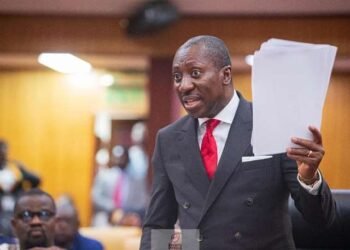
Minority Leader Alexander Kwamena Afenyo-Markin has challenged the Mahama administration to demonstrate how its New Economy agenda will create jobs and deliver opportunities for ordinary Ghanaians, accusing the government of failing to fulfil key employment and recruitment promises.
Concluding debate on the 2027 Budget in Parliament, the Effutu MP criticised the government’s 24-Hour Economy programme, questioned the availability of incentives for private businesses and highlighted delays in the recruitment and posting of teachers and nurses.
“Your own party foot soldiers are after you. You have not created jobs for them.”
Minority Leader and MP for Effutu Hon. Alexander Kwamena Afenyo-Markin
Hon. Afenyo-Markin argued that the government’s New Economy agenda had yet to establish clear fundamentals for creating opportunities for ordinary Ghanaians. He questioned whether the programme offered practical measures to support businesses, expand employment and improve the prospects of young people entering the labour market.
The Minority Leader accused the administration of relying on political messaging and changing the presentation of its economic agenda without adequately explaining how its policies would deliver results.
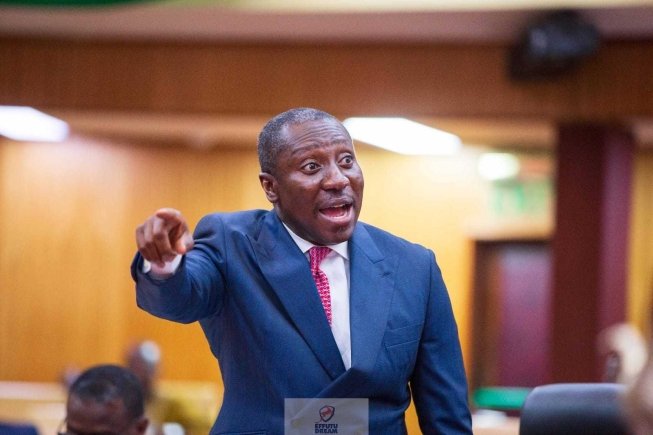
He described the government’s shift towards the New Economy language as “sloganeering”, arguing that the administration should account for the implementation of its earlier 24-Hour Economy commitments rather than introduce new labels.
His criticism focused particularly on the role of private businesses in the programme. He argued that the government’s ambition of creating one job across three shifts would require incentives to persuade companies to operate beyond conventional working hours.
24-Hour Economy requires private-sector incentives
Hon. Afenyo-Markin maintained that businesses would need practical support to absorb the additional costs associated with round-the-clock operations. He identified electricity tariff rebates, preferential income tax arrangements and incentives for importing equipment and raw materials as measures that could encourage businesses to participate.
“If you want me to operate 24-hour economy what you need to do is that on electricity tariffs you give me rebates.”
Minority Leader and MP for Effutu Hon. Alexander Kwamena Afenyo-Markin
He argued that without such incentives, the government could not reasonably expect private businesses to create additional shifts and employment opportunities on the scale promised.
The Minority Leader stated that he had examined the government’s 2025 Budget and found no incentives that, in his assessment, adequately supported private-sector participation in the programme.
He therefore questioned how the administration intended to achieve its employment objectives if businesses were not given sufficient reasons to expand their operations. Hon. Afenyo-Markin also criticised the government’s proposal to use state institutions to drive economic activity, arguing that private enterprise should take the lead in creating sustainable jobs.
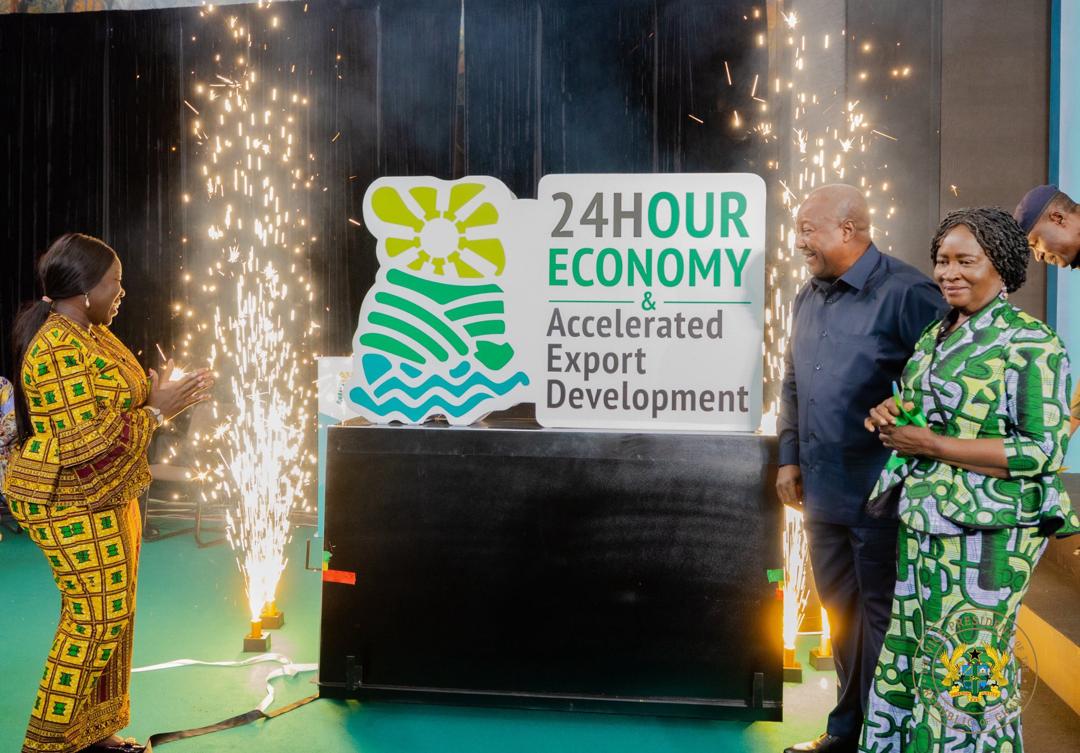
He maintained that government agencies could support the economy through an enabling environment but should not displace private businesses as the principal drivers of employment.
Women’s banking and youth skills development
The Minority Leader also questioned the government’s delivery on its promise to establish women’s banking to provide loans for women entrepreneurs. He recalled that the initiative had been presented as a major commitment to women but argued that, after two years, the promised financial support had not reached its intended beneficiaries.
He extended his criticism to skills development and technical education, referencing the previous administration’s Free Senior High School, technical and vocational education and training (TVET), and science, technology, engineering and mathematics (STEM) initiatives.
Hon. Afenyo-Markin argued that these programmes had expanded access to education and skills training, creating an expectation that the current administration would build on them by providing employment opportunities for young people.
He questioned what the government had done to connect education and skills development to jobs under its New Economy framework. According to him, young people and even members of the governing party were demanding answers about employment opportunities.
He argued that the administration’s promises would remain unconvincing unless it could demonstrate how its programmes were translating into jobs and practical support for young entrepreneurs.
Teacher and nurse recruitment delays criticised
The Effutu MP further accused the government of failing to fulfil its commitments to recruit teachers and nurses. He told Parliament that recruitment portals had repeatedly been opened and closed, leaving applicants uncertain about their prospects.
He also highlighted the concerns of trained teachers awaiting posting and nurses expecting employment after the government had promised recruitment. The Minority Leader argued that these delays contradicted the expectations created by the government’s campaign commitments and budget announcements.
“Our teachers are waiting for posting. Nurses are waiting for posting.”
Minority Leader and MP for Effutu Hon. Alexander Kwamena Afenyo-Markin
He maintained that the government needed to provide clarity on the recruitment process and demonstrate that its promises were being translated into employment opportunities.
Hon. Afenyo-Markin warned that the concerns of unemployed graduates and other ordinary Ghanaians could not be addressed through repeated announcements without tangible implementation.
He argued that a government unwilling to listen to those concerns risked losing public support, urging voters to hold the administration accountable for its commitments.
Article 66 and concerns over projections to 2030
The Minority Leader also raised constitutional concerns over the 2027 Budget’s projections extending to 2030, noting that President John Dramani Mahama’s current tenure runs until 2028.
He questioned why the government’s financial projections extended beyond the end of the current presidential term and asked whether the timeline suggested an attempt to compromise Article 66 of the Constitution.
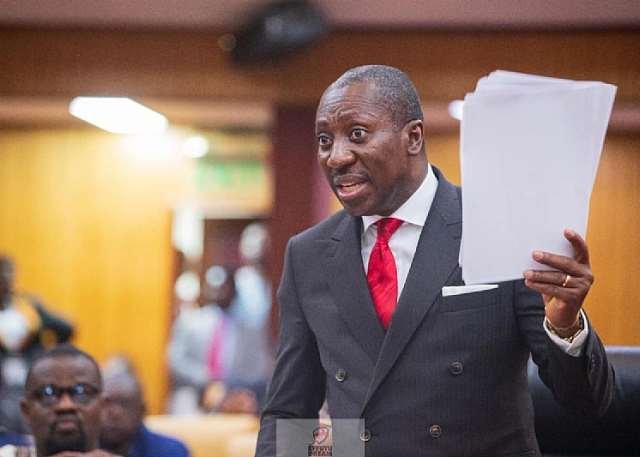
Hon. Afenyo-Markin invoked Article 66(2), which provides that a person shall not be elected to hold office as President of Ghana for more than two terms. He argued that the constitutional provision was clear and should not be subjected to attempts to extend presidential tenure beyond the permitted limit.
“A person shall not be elected to hold office as President of Ghana for more than two terms.”
Minority Leader and MP for Effutu Hon. Alexander Kwamena Afenyo-Markin
He warned against what he described as ambitions for a third term and declared that the Minority would remain vigilant against any attempt to undermine the constitutional provision.
His remarks amounted to a political warning based on his interpretation of the budget’s projections. He did not establish that the government had announced a plan to amend the Constitution or extend the President’s tenure.
Hon. Afenyo-Markin maintained that the two-term limit must be respected and argued that democratic institutions and citizens should resist any attempt to alter that constitutional safeguard.
Government urged to account for its promises
The Minority Leader’s criticisms brought together concerns about employment, private-sector incentives, skills development and constitutional limits.
He argued that the New Economy agenda must be judged by its ability to create jobs, support businesses and improve opportunities for ordinary citizens, rather than by its policy descriptions or political messaging.
He also challenged the administration to explain the delays affecting teacher and nurse recruitment and account for the support promised to women entrepreneurs. On presidential tenure, he insisted that Article 66 must remain binding and warned against any attempt to pursue a third term.
Hon. Afenyo-Markin concluded that the government’s performance should be measured against the expectations it had created among Ghanaians, arguing that voters had the power to reject an administration that failed to honour its promises.
READ ALSO: Oil Market Swings Expose Ghana’s Energy Price Dilemma