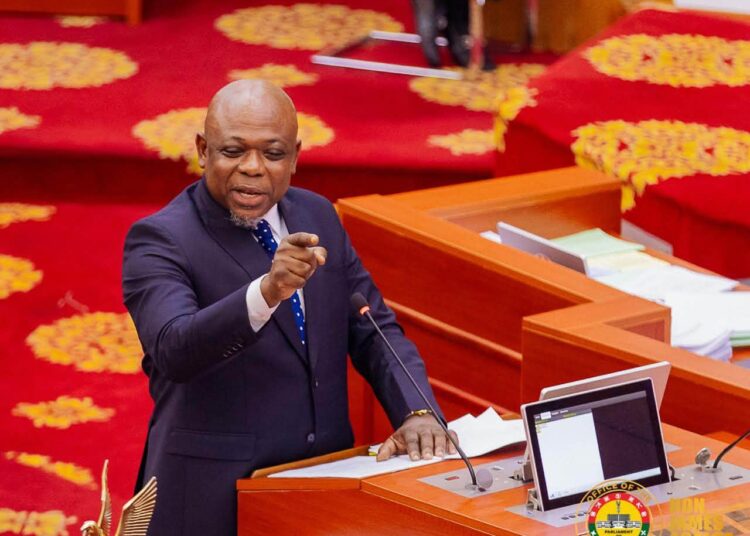
Majority Leader Hon. James Agalga has told Parliament that Ghana is better off than it was two years ago, citing inflation that fell from 54.1 percent to 5.5 percent and public debt that dropped from 61.8 percent to 47.5 percent of GDP. The Builsa North MP made the case in his concluding remarks supporting the 2027 Budget Statement and Economic Policy.
He maintained that lower interest rates, improved fiscal balances, stronger international reserves and credit rating upgrades demonstrate the recovery, while a GH¢30 billion allocation to the New Economy Programme provides funding for the government’s industrialisation and job creation agenda.
“The central question is simple: Is Ghana better off than it was two years ago? Let the evidence speak.”
Majority Leader Hon. James Agalga
Hon. Agalga urged Parliament to assess the government’s performance through the economic indicators, pointing to reductions in inflation and borrowing costs alongside improvements in the country’s fiscal position.
He reported that food inflation declined from 8.7 per cent to 2.8 per cent in October 2026, while the price of a bag of cement fell from GH¢115 to GH¢80. He further placed the primary surplus at 1.4 per cent of GDP and the fiscal deficit at 1.0 per cent, against a target of 3.0 per cent.
The Majority Leader also cited gross international reserves of US$12.7 billion, equivalent to 4.5 months of import cover, and a reduction in the policy rate from 18 per cent to 11 per cent. Government, he added, had retired GH¢36 billion in debt ahead of schedule.
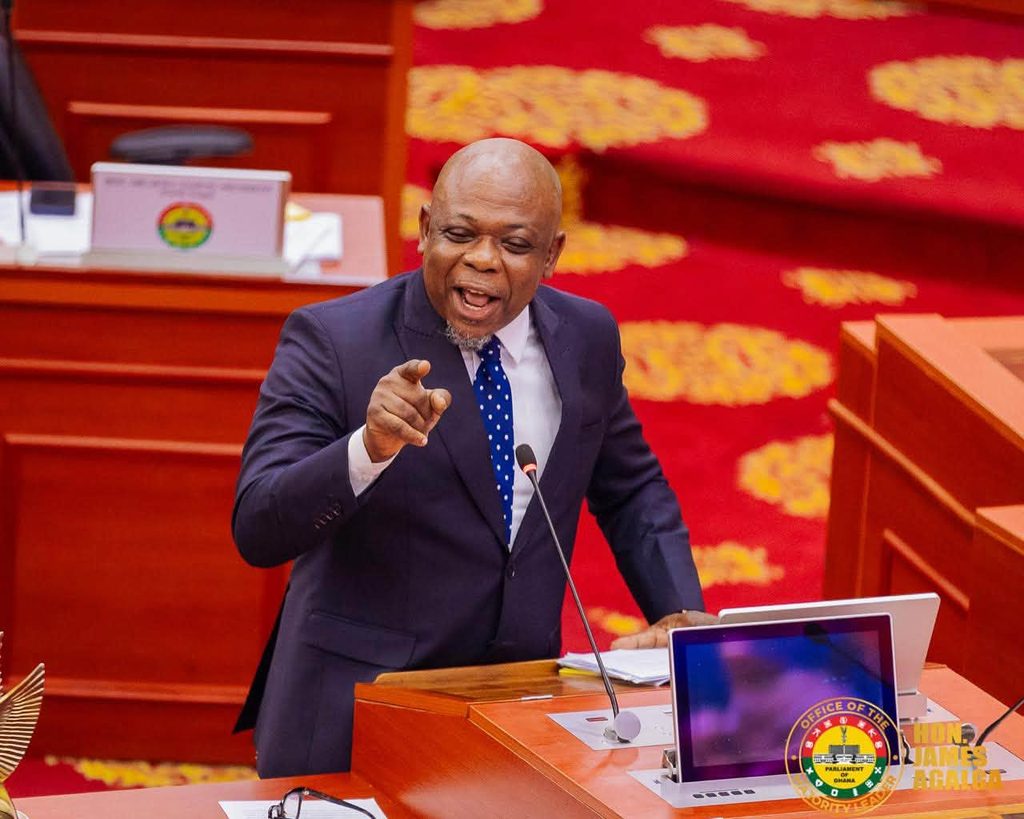
He credited the progress to the economic measures outlined by Finance Minister Cassiel Ato Forson, who previously declared that Ghana’s economic crisis had ended. He also cited credit rating upgrades by Fitch and Moody’s as evidence of improving international confidence.
“The world now sees what the Minority refuses to see”.
Majority Leader Hon. James Agalga
However, the figures he presented did not specify the base periods for all the comparisons. Separately, data analyst Alfred Appiah has argued that the public debt ratio remains above the government’s 45 per cent debt anchor, highlighting the distinction between a declining debt ratio and compliance with the stated fiscal benchmark.
GH¢30 Billion Allocation for New Economy Programme
Turning to the government’s growth strategy, Hon. Agalga described the New Economy Programme as a funded policy framework rather than an electoral promise. “The New Economy Programme is not a pledge. It is a budget line,” he stated.
The 2027 Budget allocates GH¢30 billion to the programme, which targets commercial agriculture, energy, textiles, pharmaceuticals and critical minerals. The allocation forms part of the government’s broader US$10 billion initiative, which Finance Minister Dr Ato Forson has linked to job creation and an 8 per cent economic growth target.
Hon. Agalga disclosed that commercial agriculture would receive US$2.9 billion, with plans to establish 100,000 hectares of rice production hubs across the Afram Plains, Volta Basin, Western and Northern regions. The initiative targets 125,000 jobs from rice production.
He also highlighted a policy requiring public institutions to purchase locally produced rice from 2027. In the poultry sector, he reported a 22 per cent increase in production under the Nkoko Nkitinkiti initiative, while construction of the Bechem poultry processing factory was 50 per cent complete.
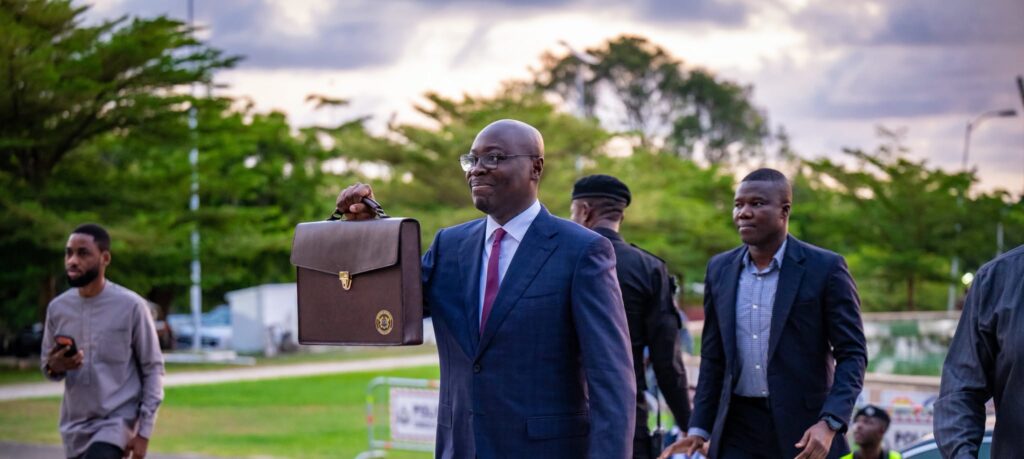
Hon. Agalga contrasted the government’s agricultural infrastructure plans with the previous administration’s record, criticising the NPP over the Pwalugu Multipurpose Dam.
He accused the former government of commissioning the project without delivering irrigation infrastructure, claiming that “not a single hectare irrigated” followed. The assertion was part of his parliamentary argument and was not independently established by the material presented.
He stated that the current government had allocated US$1 billion to the Pwalugu Dam, with the first phase expected by 2029. He also identified the Aninkroma Irrigation Project, covering 500 acres in the Ashanti Region, and the Anunuso Water Conservation Scheme, which is expected to serve 175 hectares of rice cultivation.
Education and Digital Economy
On education, the Majority Leader outlined plans to complete 30 Community Day Senior High Schools and construct 200 junior high schools, 200 primary schools and 200 kindergartens through the Ghana Education Trust Fund (GETFund).
The proposed investments also include teachers’ accommodation, sanitation facilities, textbooks and furniture. He stressed the importance of providing adequate teaching personnel, describing a school without a teacher as “a monumental failure.”
Hon. Agalga also cited growth in digital financial services, reporting that transactions processed through the Ghana Interbank Payment and Settlement Systems (GhIPSS) increased by 32.61 per cent, with transaction value exceeding GH¢1 trillion over six months.
He further reported 26.7 million active mobile money accounts and more than 200 fintech firms operating in the country. “This government is building with concrete, with irrigation, with processing factories, with classrooms, and with fiscal discipline,” he stated.
He criticised the previous NPP administration over projects he described as incomplete, including Agenda 111, arguing that the former government left behind announcements without corresponding delivery.
Agalga Defends Presidential Aircraft Acquisition
The Majority Leader also addressed criticism surrounding the government’s acquisition of a new presidential aircraft, maintaining that the purchase had received parliamentary approval without objection from either side of the House.
He argued that the previous presidential aircraft was 16 years old and had been grounded in France for several months in 2025. He further maintained that the government financed the purchase from its own resources rather than through borrowing.
Parliament approved the acquisition on December 4, 2025, while the Ghana Air Force received the Dassault Falcon 6X on November 16, 2026. The government had previously indicated that the aircraft would be acquired by November, describing the delivery as part of efforts to modernise military aviation.
Despite highlighting improvements in the macroeconomic indicators, Agalga acknowledged that the recovery had not translated into improved conditions for every Ghanaian household.
“The recovery has not reached every household yet,” he told Parliament. He argued, however, that the assessment of the government’s performance should also consider the direction of the economy and the policies being implemented to sustain growth.
The Majority Leader urged MPs to support the 2027 Budget, maintaining that its allocations provide a framework for economic expansion, agricultural development, infrastructure investment and employment creation.
READ ALSO: Ato Forson Pays GH¢12.9bn Ahead of February 2027 Debt Maturity