• About
  • Advertise
  • Privacy Policy
  • Contact
Saturday, August 22, 2026
  • Login
The Vaultz News
  • Top Stories
  • News
    • General News
    • Education
    • Health
    • Opinions
  • Economics
    • Economy
    • Finance
      • Banking
      • Insurance
      • Pension
    • Securities/Markets
  • Business
    • Agribusiness
    • Vaultz Business
    • Extractives/Energy
    • Real Estate
  • World
    • Africa
    • America
    • Europe
    • UK
    • USA
    • Asia
    • Around the Globe
  • Innovation
    • Technology
    • Wheels
  • Entertainment
  • 20MOBPL2DNew
  • Jobs & Scholarships
    • Job Vacancies
    • Scholarships
No Result
View All Result
The Vaultz News
  • Top Stories
  • News
    • General News
    • Education
    • Health
    • Opinions
  • Economics
    • Economy
    • Finance
      • Banking
      • Insurance
      • Pension
    • Securities/Markets
  • Business
    • Agribusiness
    • Vaultz Business
    • Extractives/Energy
    • Real Estate
  • World
    • Africa
    • America
    • Europe
    • UK
    • USA
    • Asia
    • Around the Globe
  • Innovation
    • Technology
    • Wheels
  • Entertainment
  • 20MOBPL2DNew
  • Jobs & Scholarships
    • Job Vacancies
    • Scholarships
No Result
View All Result
The Vaultz News
No Result
View All Result
in Economy, Sub Top Stories1

Ghana’s Public debt rises by GH¢3.5 billion in 3 months

Maynard Championby Maynard Champion
September 25, 2021
Reading Time: 4 mins read
Add as Preferred on Google
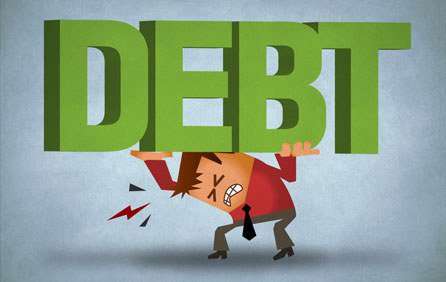
Ghana’s Public debt rises by GH¢3.5 billion in 3 months

Ghana’s stock of public debt has continued to rise, even though at a slower pace, gradually pushing it further above sustainable levels. According to data from the Bank of Ghana, the country’s nominal debt stock rose by GH¢3.5 billion between May and July this year.

Consequently, this pushed the Debt-to-GDP ratio to 76.4% as of End-July 2021, up from 75.7% in May, according to BoG’s latest Summary of Economic and Financial Data released on Friday, September 24, 2021.  

Despite the country’s Gross Public debt rising to GH¢ 335.9 billion as of End-July 2021, it shows that government’s commitment to ensure fiscal consolidation is yielding some results, at least to some extent.  

More especially, when previously, the debt rose by GH¢27.8 billion within two months, thus between April and May this year. At that time, it became more scary at such pace fearing the country’s debt could have hit almost 100% of total output, even months before the year comes to an end.  
ADVERTISEMENT
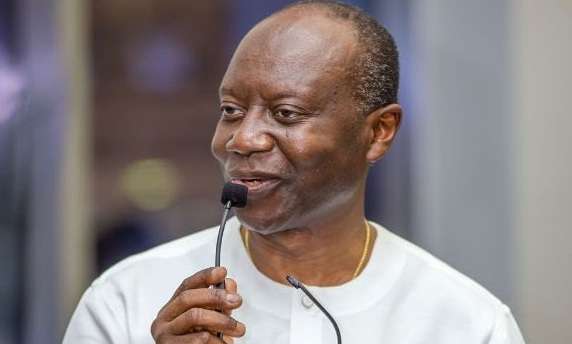
Ghana Finance Minister Ken Ofori Atta 2
Finance Minister – Ken Ofori-Atta

Year-on-year growth

Yet, concerns raised by major international and multinational institutions such as the World Bank and the IMF still remain critical at this stage. More so, when the debt is still very much above the 70% sustainability threshold. This highlights the need to exercise some fiscal restraint to curtail any debt service challenges on the country. 

In the corresponding period of 2020, debt stock was GH¢263.4 billion, representing 68.7% of GDP at the end of July. This implies that the country’s obligations rose by GH¢72.5 billion over the past one year.  This means that the debt stock rose by 27.5 percent year-on-year in July 2021.

Debt components

In terms of the major divisions of public debt, the data from the Central Bank show that domestic investors still continue to hold the majority of the country’s debt. The domestic debt component currently stands at GH¢173.4 billion, representing 39.5 percent of the country’s GDP.  A caveat here is that, the banking sector continue to hold the majority of this debt, something the IMF earlier warned against. This is worrying because of its tendency to crowd out private sector investment as banks’ appetite to hold government securities rise.  

The Fund also warned against monetary financing of the country’s debt. As of May 2021, domestic debt was GH¢171.7 billion and the banking sector which comprises the Central Bank and all other Commercial Banks, held GH¢86.5 billion, representing 50.4 percent of the entire debt.  

Private sector credit

Private Sector Credit however, declined from GH¢43.3 billion in May 2021 to GH¢ 42.7 billion in June 2021, a 1.4 percentage points decline. At the end of the first half of 2021, private sector credit growth slowed to 6.8 percent , reflecting a 7.4 percentage point decrease compared to 14.2 percent in June 2020.

ADVERTISEMENT
1x 1 1
Dr. Ernest Addison – Governor of the Bank of Ghana

Should this continue, Agriculture,  one of the key sectors in economic transformation, will continue to receive limited credit which has already declined by 35.41% year-on-year in April 2021. It is of major concern since BoG earlier revealed that credit flow to the private sector is concentrated within four key sub-sectors.

With regards to the other debt component, external debt currently stands at GH¢162.5 billion, representing 37.0 percent of GDP. At End-July last year, external debt was GH¢138.4 billion, accounting for 36.1 percent of GDP. This also implies that investors outside Ghana still have confidence in Ghana’s debt serving potentials. As such, reaffirming the IMF’s earlier statement that Ghana has the ability to pay off all its debts.   But this does not also mean that the country should continue to borrow without looking at the implications on the economy.

Revenues and Grants

On the other side of the coin, revenues and grants also saw some improvements over the review period.  Total revenue and grants rose from 5.1% of GDP in May 2021 to 7.8 percent as of End-July this year, a miniature improvement over the 7.3 percent of GDP recorded in July last year.

ADVERTISEMENT

Compared to debt, revenue mobilization remains very low despite recent efforts by the government to improve it. Tax revenue as a percentage of GDP still lies very much below 15%, lower than that of most African countries.  Whilst efforts to improve revenue mobilization through digitization continues, more fiscal discipline from government is critical.

Just as the IMF earlier emphasized, ongoing energy sector review, diversification in tourism, and the digital transition, which has the potential to reduce corruption, boost tax revenues, and improve service delivery should be the hallmark at this juncture.

READ ALSO: We still stand by the target – Dr. Nsiah Asare

ADVERTISEMENT

Sign Up to Our Newsletter

Fresh updates, Straight to your inbox

Tags: Bank of GhanaDebt-to-GDP ratioDigitizationFiscal consolidationpublic debt stockrevenue
Please login to join discussion
Previous Post

We shouldn’t see D7 as a barrier for students accessing tertiary education- Education Minister

Next Post

Steps must be taken to resolve housing deficit- Freda Sarpong

Related Posts

Ghana’s FDI Jumps From US651.7m to US2.6bn
Economy

Ghana’s FDI Jumps From US651.7m to US2.6bn

August 21, 2026
Minority Caucus Addressing the media
Extractives/Energy

Minority Files Motion to Probe DGPP Losses

August 21, 2026
Ghana Slashes Debt Burden with Belgium Restructuring Deal
Economy

Ghana Slashes Debt Burden with Belgium Restructuring Deal

August 21, 2026
Ghana’s Private Sector Credit Explodes 41.2% in JuneGhana’s Private Sector Credit Explodes 41.2% in June
Banking

Ghana’s Banking Sector Scores Major Capitalisation Breakthrough

August 20, 2026
ADVERTISEMENT

Sign Up to Our Newsletter

Fresh updates, Straight to your inbox

ADVERTISEMENT

Recent News

Mr Mark Prempeh, Director of Petroleum, Ministry of Energy and Green Transition

Government Pushes GNPC Toward A More Commercial Future

August 21, 2026
Photo from PIAC's 15th anniversary launch

GIZ Urges Ghana To Turn Petroleum Accountability Into Development

August 21, 2026
Kai Harvetz celebrate after scoring against Coventry City at the Emirates Stadium

Arsenal Begin PL Title Defence With Resounding Victory Over Coventry

August 21, 2026
From the left, Mr Patrick Stephenson, Country Director for Ghana, NRGI, the moderator, and the panelists for the engagement, from the left: Mr Michael Aryeetey, Deputy CEO, Exploration&Production, GNPC, Mr Benjamin Boakye, Executive Director, ACEP, Mr Agyemang, Technical Director, PIAC and Dr Steve Manteaw, Co-Chair of GHEITI

GNPC Faces Governance Test As Energy Transition Accelerates

August 21, 2026
From the left: Mr Michael Aryeetey, Deputy CEO, Exploration&Production, GNPC, Mr Mark Prempeh, Director of Petroleum, Ministry of Energy and Green Transition, Mr Kwame Ntow Amoah, CEO, GNPC, Nafi Quarshie, Africa Director, NRGI, Mr Benjamin Boakye, Executive Director, ACEP, Mr Abrokwah, GNPC and Mr Patrick Stephenson, Country Manager for Ghana, NRGI

NRGI, GNPC Convene Dialogue On Future Of Ghana’s National Oil Company

August 21, 2026
ADVERTISEMENT
Next Post
Steps must be taken to resolve housing deficit- Freda Sarpong

Steps must be taken to resolve housing deficit- Freda Sarpong

The Vaultz News

Copyright © 2025 The Vaultz News. All rights reserved.

Navigate Site

  • About
  • Advertise
  • Privacy Policy
  • Contact

Follow Us

Welcome Back!

Login to your account below

Forgotten Password?

Retrieve your password

Please enter your username or email address to reset your password.

Log In
No Result
View All Result
  • Top Stories
  • News
    • General News
    • Education
    • Health
    • Opinions
  • Economics
    • Economy
    • Finance
      • Banking
      • Insurance
      • Pension
    • Securities/Markets
  • Business
    • Agribusiness
    • Vaultz Business
    • Extractives/Energy
    • Real Estate
  • World
    • Africa
    • America
    • Europe
    • UK
    • USA
    • Asia
    • Around the Globe
  • Innovation
    • Technology
    • Wheels
  • Entertainment
  • 20MOBPL2D
  • Jobs & Scholarships
    • Job Vacancies
    • Scholarships

Copyright © 2025 The Vaultz News. All rights reserved.

This website uses cookies. By continuing to use this website you are giving consent to cookies being used. Visit our Privacy and Cookie Policy.