• About
  • Advertise
  • Privacy Policy
  • Contact
Monday, May 18, 2026
  • Login
The Vaultz News
  • Top Stories
  • News
    • General News
    • Education
    • Health
    • Opinions
  • Economics
    • Economy
    • Finance
      • Banking
      • Insurance
      • Pension
    • Securities/Markets
  • Business
    • Agribusiness
    • Vaultz Business
    • Extractives/Energy
    • Real Estate
  • World
    • Africa
    • America
    • Europe
    • UK
    • USA
    • Asia
    • Around the Globe
  • Innovation
    • Technology
    • Wheels
  • Entertainment
  • 20MOBPL2DNew
  • Jobs & Scholarships
    • Job Vacancies
    • Scholarships
No Result
View All Result
The Vaultz News
  • Top Stories
  • News
    • General News
    • Education
    • Health
    • Opinions
  • Economics
    • Economy
    • Finance
      • Banking
      • Insurance
      • Pension
    • Securities/Markets
  • Business
    • Agribusiness
    • Vaultz Business
    • Extractives/Energy
    • Real Estate
  • World
    • Africa
    • America
    • Europe
    • UK
    • USA
    • Asia
    • Around the Globe
  • Innovation
    • Technology
    • Wheels
  • Entertainment
  • 20MOBPL2DNew
  • Jobs & Scholarships
    • Job Vacancies
    • Scholarships
No Result
View All Result
The Vaultz News
No Result
View All Result
in Insurance, Finance

Insurers must refrain from unethical practices – CIIG

M.Cby M.C
September 17, 2021
Reading Time: 3 mins read
Insurers must refrain from unethical practices – CIIG

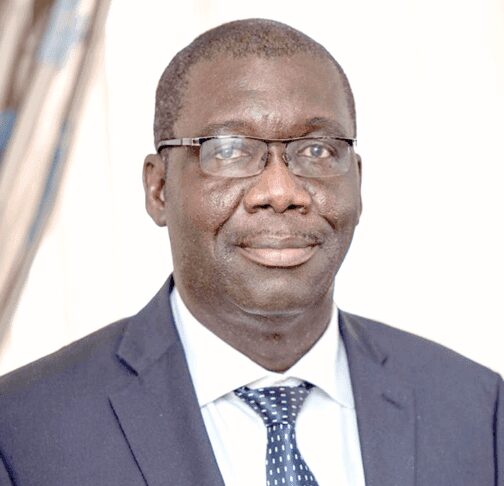
Rev Bishop Asante Marfo-Ahenkora - President, CIIG

Insurance practitioners have been admonished by Chartered Insurance Institute of Ghana (CIIG) to desist from any forms of unprofessional conducts, as these practices will attract possible revocation of membership status from the insurance body.

These unethical conducts, the CIIG reveals, has over the years been a border on corporate governance, as it continues to strip the insurance industry of its popularity.

This, the institute reveals, continue to have a toll on the level of public confidence in the insurance industry.

Mr. Shaibu Ali, the Managing Director of KEK Insurance Brokers Ltd., and a Council Member of the CIIG, while speaking at a seminar ‘Ethical Practices’ encouraged insurance practitioners to as much as possible, “conduct their activities professionally” with utmost good faith (Uberrima fides).

ADVERTISEMENT

In his submission, he also stated that the insurer does not sell tangible products, rather services, with the promise to pay legitimate claims in the unlikely event of casualties (injury, accident, death, etc) to the policyholder or beneficiary.

“If you’re selling a car or a house policy, the person buying will look at the car or house, but if you’re selling a service, they look at you, so if you’re not professional, you will not survive.”

Mr. Shaibu Ali

KEK’s Managing Director re-echoed to the insurers that, if there ever comes a time to enforce any forms of penalties, the CIIG will not hesitate in its capacity to act accordingly.

“We will not leave any stone unturned; we will punish if we have to punish, we will suspend you if we have to suspend you and we can even completely dismiss you from the association if we have to do that because insurance for a long time has had a bad name.”

Mr. Shaibu Ali

The induction seminar

The induction seminar which was moderated by Rev Bishop Asante Marfo-Ahenkora, the President of CIIG, sought to enlighten the inductees (new members) on insurance ethical professional practices.

Also, in attendance at the seminar were, the former Presidents of CIIG, members of the CIIG, as well as the National Insurance Commission (NIC) executives.  

The seminar, which precedes an induction ceremony, seeks to induct about “140 participants, about 28 fellows and in excess of 100 associates”.

Newly inducted members of the insurance association will be awarded with membership certificates, which will help identify the inductees as insurance professionals.

Rev Marfo-Ahenkora, admonished insurance practitioners to uphold integrity in high esteem as they professionally conduct their insurance activities.

With regards to pricing of insurance policies, Bishop Marfo-Ahenkora vehemently moved against the undercutting practices by some insurance companies as it continues to adversely impact the industry.

ADVERTISEMENT

The President of CIIG also urged regulators and key stakeholders to take a critical look at the menace faced the industry, and to find possible remedies to rectify the situation at hand.

Furthermore, with claims payment, other existing members of CIIG encouraged the insurers to refrain from internationally reducing pay-outs to customers, in their quest to minimise the cost component of the insurance companies.

“Claims payment is a marketing tool and not an avenue to lower pay-outs, because it is unethical to do so.”

CIIG

In the meantime, the NIC used the opportunity to commend the CIIG for preparing its inductees before they are inducted as fully fleshed member of the association.

READ ALSO: IMF Chief, Kristalina Georgieva, accused of manipulating China’s business ranking

Sign Up to Our Newsletter

Fresh updates, Straight to your inbox

Tags: Chartered Insurance Institute GhanaInsuranceMr. Shaibu AliNational Insurance CommissionRev Bishop Asante Marfo-Ahenkora
Share2Tweet1ShareSendSend
Please login to join discussion
Previous Post

Minority threatens not to accept regional collation of results during election

Next Post

Morocco pulls off upset win over Cameroon

Related Posts

Africa Poised to Lead in Global Digital Finance Evolution, Says MTN Group CEO
Banking

Africa Poised to Lead in Global Digital Finance Evolution, Says MTN Group CEO

May 18, 2026
Ecobank Ghana PLC Breaks Silence After Supreme Court Judgement
Banking

Ecobank Ghana PLC Breaks Silence After Supreme Court Judgement

May 17, 2026
Ghana Defies Odds With Record Financial Growth
Banking

Ghana Defies Odds With Record Financial Growth

May 16, 2026
Fidelity Demands Africa Own Its Digital Future At a time when Africa’s digital economy is accelerating at an unprecedented pace, Fidelity Bank Ghana has delivered one of the strongest messages yet on the continent’s technological future. The bank made a bold and urgent case for Africa to stop depending on foreign controlled digital systems and begin building its own infrastructure capable of retaining value, strengthening currencies, and driving long term economic sovereignty. As one of the key sponsors of the 3i Africa summit, Fidelity Bank did not just show up to participate. It arrived with a message that resonated deeply across conference halls and policy discussions. Fidelity Bank emerged as one of the loudest voices championing a future where African nations control the very digital rails that power their economies. Digital Infrastructure Is The New Economic Power One of the defining moments of the summit came during a high level panel discussion on digital public infrastructure, where Adeline Aryee delivered a statement that immediately captured the attention of participants. She declared that if Africa builds its own digital rails, it naturally retains the value created by those systems. Her message was clear and uncompromising. In previous decades, national infrastructure was measured by roads, bridges, ports, and airports. Today, the true engines of economic power are payment platforms, identity systems, financial technology ecosystems, and digital marketplaces. According to Aryee, digital public infrastructure is no longer a luxury. It is now a strategic national asset. Her remarks struck at the heart of one of Africa’s most pressing economic concerns. Despite growing digital adoption, many transactions across the continent still pass through foreign payment systems, resulting in value leakage and continued pressure on local currencies. Ghana’s Success Story Becomes A Continental Blueprint Aryee highlighted Ghana’s progress in financial inclusion, mobile payments, and digital banking, describing the country as an emerging model for other African economies. Over the years, Ghana has invested heavily in domestic payment systems such as GhIPSS and its flagship platform, Gh-link. These systems have significantly expanded access to financial services while promoting digital transactions across urban and rural communities. Yet Aryee argued that inclusion alone is no longer enough. The next chapter for Africa, she insisted, must focus on ownership. She questioned why local transactions continue to depend on foreign rails when domestic infrastructure already exists. According to her, such dependence creates unnecessary external exposure and limits the continent’s ability to fully capture the economic benefits of its growing digital market. Her comments triggered intense debate among summit participants, many of whom acknowledged the urgent need for policy reforms and infrastructure investments. Market Driven Innovation Takes Center Stage Beyond infrastructure, Fidelity Bank also made a strong case for innovation that begins with real market needs. During the Ecosystem Roundtable on platforms, talent, and digital markets, Prince Osei Hyeaman-Addai shared insights from the bank’s years of digital financial innovation. He stressed that successful digital products are not built in boardrooms or based on assumptions. Instead, they are created by listening carefully to the market and understanding customer pain points. According to him, the market itself reveals the problems that need solving, the type of platform required, and the path toward scalable growth. His comments reflected a growing shift in African fintech circles, where customer centered design is becoming essential for product adoption and long term relevance. Trust And Credibility Remain The Real Currency Prince also emphasized that technology alone does not guarantee success. In his view, trust, credibility, and strong operational structures remain the real foundations of successful innovation. He noted that while investor interest in African fintech continues to rise, startups must prove they can deliver sustainable solutions, maintain transparency, and build products that respond to local realities. This perspective reflects Fidelity Bank’s own journey in digital transformation. Over the years, the bank has built strategic collaborations with leading fintech players, including IT Consortium, helping pioneer wallet to bank integrations and mobile financial solutions in Ghana. These partnerships have helped position Fidelity as one of Ghana’s most innovation driven financial institutions. A Defining Moment For Africa’s Digital Future Fidelity Bank’s participation at the 3i Africa Summit 2026 was more than a corporate appearance. It was a strategic declaration. At a time when Africa is racing to build competitive digital economies, the bank’s message was impossible to ignore. Africa cannot simply consume technology created elsewhere. It must own the infrastructure, shape the platforms, and capture the value generated by its digital future. As conversations from the summit continue to ripple across financial and policy circles, one thing is becoming increasingly clear. Africa’s next economic revolution may not be built on oil, gold, or minerals. It may be built on digital rails designed, owned, and powered by Africans. READ ALSO: IMF Ghana Review Ends in Dramatic Cliffhanger Fidelity Demands Africa Own Its Digital Future At a time when Africa’s digital economy is accelerating at an unprecedented pace, Fidelity Bank Ghana has delivered one of the strongest messages yet on the continent’s technological future. The bank made a bold and urgent case for Africa to stop depending on foreign controlled digital systems and begin building its own infrastructure capable of retaining value, strengthening currencies, and driving long term economic sovereignty. As one of the key sponsors of the 3i Africa summit, Fidelity Bank did not just show up to participate. It arrived with a message that resonated deeply across conference halls and policy discussions. Fidelity Bank emerged as one of the loudest voices championing a future where African nations control the very digital rails that power their economies. Digital Infrastructure Is The New Economic Power One of the defining moments of the summit came during a high level panel discussion on digital public infrastructure, where Adeline Aryee delivered a statement that immediately captured the attention of participants. She declared that if Africa builds its own digital rails, it naturally retains the value created by those systems. Her message was clear and uncompromising. In previous decades, national infrastructure was measured by roads, bridges, ports, and airports. Today, the true engines of economic power are payment platforms, identity systems, financial technology ecosystems, and digital marketplaces. According to Aryee, digital public infrastructure is no longer a luxury. It is now a strategic national asset. Her remarks struck at the heart of one of Africa’s most pressing economic concerns. Despite growing digital adoption, many transactions across the continent still pass through foreign payment systems, resulting in value leakage and continued pressure on local currencies. Ghana’s Success Story Becomes A Continental Blueprint Aryee highlighted Ghana’s progress in financial inclusion, mobile payments, and digital banking, describing the country as an emerging model for other African economies. Over the years, Ghana has invested heavily in domestic payment systems such as GhIPSS and its flagship platform, Gh-link. These systems have significantly expanded access to financial services while promoting digital transactions across urban and rural communities. Yet Aryee argued that inclusion alone is no longer enough. The next chapter for Africa, she insisted, must focus on ownership. She questioned why local transactions continue to depend on foreign rails when domestic infrastructure already exists. According to her, such dependence creates unnecessary external exposure and limits the continent’s ability to fully capture the economic benefits of its growing digital market. Her comments triggered intense debate among summit participants, many of whom acknowledged the urgent need for policy reforms and infrastructure investments. Market Driven Innovation Takes Center Stage Beyond infrastructure, Fidelity Bank also made a strong case for innovation that begins with real market needs. During the Ecosystem Roundtable on platforms, talent, and digital markets, Prince Osei Hyeaman-Addai shared insights from the bank’s years of digital financial innovation. He stressed that successful digital products are not built in boardrooms or based on assumptions. Instead, they are created by listening carefully to the market and understanding customer pain points. According to him, the market itself reveals the problems that need solving, the type of platform required, and the path toward scalable growth. His comments reflected a growing shift in African fintech circles, where customer centered design is becoming essential for product adoption and long term relevance. Trust And Credibility Remain The Real Currency Prince also emphasized that technology alone does not guarantee success. In his view, trust, credibility, and strong operational structures remain the real foundations of successful innovation. He noted that while investor interest in African fintech continues to rise, startups must prove they can deliver sustainable solutions, maintain transparency, and build products that respond to local realities. This perspective reflects Fidelity Bank’s own journey in digital transformation. Over the years, the bank has built strategic collaborations with leading fintech players, including IT Consortium, helping pioneer wallet to bank integrations and mobile financial solutions in Ghana. These partnerships have helped position Fidelity as one of Ghana’s most innovation driven financial institutions. A Defining Moment For Africa’s Digital Future Fidelity Bank’s participation at the 3i Africa Summit 2026 was more than a corporate appearance. It was a strategic declaration. At a time when Africa is racing to build competitive digital economies, the bank’s message was impossible to ignore. Africa cannot simply consume technology created elsewhere. It must own the infrastructure, shape the platforms, and capture the value generated by its digital future. As conversations from the summit continue to ripple across financial and policy circles, one thing is becoming increasingly clear. Africa’s next economic revolution may not be built on oil, gold, or minerals. It may be built on digital rails designed, owned, and powered by Africans. READ ALSO: IMF Ghana Review Ends in Dramatic Cliffhanger Fidelity Demands Africa Own Its Digital Future
Banking

Fidelity Demands Africa Own Its Digital Future

May 15, 2026

Sign Up to Our Newsletter

Fresh updates, Straight to your inbox

Recent News

Hon. Emelia Arthur, Minister for Fisheries and Aquaculture, with Sector Stakeholders

MoFAD Enforces WTO Fisheries Subsidy Reform Project

May 18, 2026
GSS District Level Multidimensional Poverty Index

250 Districts Record Poverty Decline in Historic GSS Survey

May 18, 2026
Hon. Elizabeth Ofosu-Adjare, Minister for Trade, Agribusiness and Industry

Ghana, UAE Launch Historic Bilateral CEPA Negotiations

May 18, 2026
Antoine Semenyo playing for the Black Stars against Germany in an international friendly

“I Was Never Going to Turn Ghana Down” – Semenyo Reveals

May 18, 2026
Damang Mine Gold Proceeds

E&P Delivers Second Dose of Damang Gold Mine Proceeds to GoldBod

May 18, 2026
Next Post
Morocco pulls off upset win over Cameroon

Morocco pulls off upset win over Cameroon

The Vaultz News

Copyright © 2025 The Vaultz News. All rights reserved.

Navigate Site

  • About
  • Advertise
  • Privacy Policy
  • Contact

Follow Us

Welcome Back!

Login to your account below

Forgotten Password?

Retrieve your password

Please enter your username or email address to reset your password.

Log In
No Result
View All Result
  • Top Stories
  • News
    • General News
    • Education
    • Health
    • Opinions
  • Economics
    • Economy
    • Finance
      • Banking
      • Insurance
      • Pension
    • Securities/Markets
  • Business
    • Agribusiness
    • Vaultz Business
    • Extractives/Energy
    • Real Estate
  • World
    • Africa
    • America
    • Europe
    • UK
    • USA
    • Asia
    • Around the Globe
  • Innovation
    • Technology
    • Wheels
  • Entertainment
  • 20MOBPL2D
  • Jobs & Scholarships
    • Job Vacancies
    • Scholarships

Copyright © 2025 The Vaultz News. All rights reserved.

This website uses cookies. By continuing to use this website you are giving consent to cookies being used. Visit our Privacy and Cookie Policy.

Discover the Details behind the story

Get an in-depth analysis of the news from our top editors

Enter your email address