• About
  • Advertise
  • Privacy Policy
  • Contact
Wednesday, May 13, 2026
  • Login
The Vaultz News
  • Top Stories
  • News
    • General News
    • Education
    • Health
    • Opinions
  • Economics
    • Economy
    • Finance
      • Banking
      • Insurance
      • Pension
    • Securities/Markets
  • Business
    • Agribusiness
    • Vaultz Business
    • Extractives/Energy
    • Real Estate
  • World
    • Africa
    • America
    • Europe
    • UK
    • USA
    • Asia
    • Around the Globe
  • Innovation
    • Technology
    • Wheels
  • Entertainment
  • 20MOBPL2DNew
  • Jobs & Scholarships
    • Job Vacancies
    • Scholarships
No Result
View All Result
The Vaultz News
  • Top Stories
  • News
    • General News
    • Education
    • Health
    • Opinions
  • Economics
    • Economy
    • Finance
      • Banking
      • Insurance
      • Pension
    • Securities/Markets
  • Business
    • Agribusiness
    • Vaultz Business
    • Extractives/Energy
    • Real Estate
  • World
    • Africa
    • America
    • Europe
    • UK
    • USA
    • Asia
    • Around the Globe
  • Innovation
    • Technology
    • Wheels
  • Entertainment
  • 20MOBPL2DNew
  • Jobs & Scholarships
    • Job Vacancies
    • Scholarships
No Result
View All Result
The Vaultz News
No Result
View All Result
in Extractives/Energy

‘Impact of Oil Revenues not Filtering into the Three Key Sectors of the Economy’- Economist

M.Cby M.C
March 11, 2022
Reading Time: 6 mins read
subsea

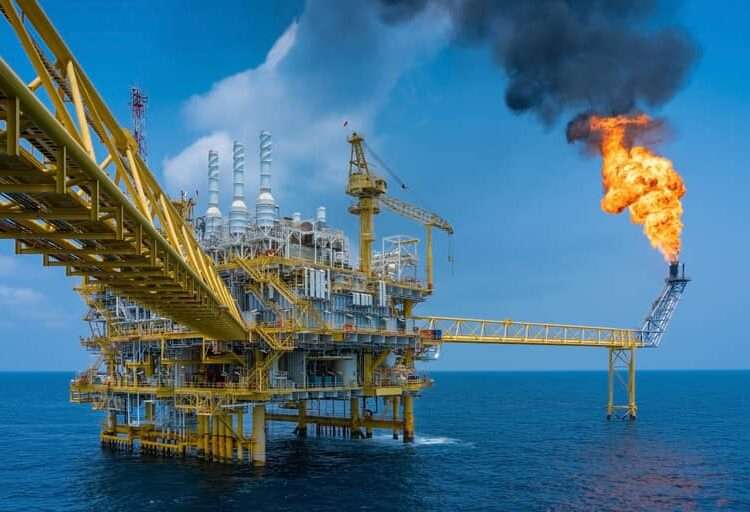
Oil and gas rig offshore

Dr. Theo Acheampong, an Economist and Political Risk Analyst, has suggested that over the last ten years of commercial production of oil in Ghana, revenues accumulated have had negligible impact on the three key sectors of the economy, particularly, agriculture, manufacturing and services sector.

This followed a thorough analysis conducted by the Public Interest and Accountability Committee (PIAC) that showed that out of a total of $31.2 billion generated from the country’s oil fields, total petroleum receipts accrued amounted to only $6.5 billion from 2011-2020, equivalent to 9.97% of GDP.

Quite interestingly, the analysis showed that contrary to pre-oil expectations of sustained economic growth and transformation, this does not reflect any substantial positive outcomes in terms of tangible projects which the $6.5 billion has been used for.

Asked whether Ghana has benefitted from these revenues in terms of the real impact on the economy, Dr Theo Acheampong said:

ADVERTISEMENT

“…What you can again see is that, even with the coming on-stream of oil, in late 2010 but especially 2011 onwards, it is very clear that there has been very little or negligible impact of those oil revenues on the economy of Ghana at the micro level.”

Considering the GDP at the start of the oil commercialisation, it is only two years- 2011 and 2018 that showed evidence of a positive impact. However, for all the other years, the impact has been small or negligible despite the revenues, Dr. Acheampong said.

Nevertheless, there is evidence of some impact of the oil revenues on the country’s trade balance. This is because of the fact that “oil exports is actually constituting about 28% of our total export base as a country now. But it is not filtering through to the three key sectors of the economy,” he said.

“It is not filtering through agriculture, neither is it filtering through manufacturing and we see some small evidence of that filtering into services sector, and even that, it does not last. It comes back to the use of the revenues and the extent to which we have utilized that to catalyze other aspects of the economy.”

Dr Theo Acheampong

revenue
An offshore oil rig

Oil Revenues, a License to Borrow

Sharing similar sentiments, Dr. Lord Mensah, an economist and a senior lecturer at the University of Ghana Business School, said:

“I believe that if you relate the oil find to our borrowing trajectory, clearly, the oil just came to [give us more] reason to borrow. We discovered oil in 2007, quickly, we went to the Eurobond market to borrow. We borrowed from the Eurobond market which had its own responsibilities.”

That said, at the time the government was to service the bond obtained from the Eurobond market, the government had to“issue a new bond to offset the old bond.”

Consequently, this “chain of borrowing” has played out rather frequently since the country discovered oil, he said, adding that “the oil gave some kind of confidence, for which when we issue bonds, the investor will have that kind of trust in our environment to put [in] money.”

Considerably, this adds to other reasons why the country has accumulated debt to this level. “The oil has come to add on to the economy but it didn’t make any impact,” he said.

While one could be justified in criticizing the inefficient management of the oil revenues thus far, the total amount of revenue accrued, however little it is, stems from the structure of the fiscal regime practiced.

From the onset of oil discovery in Ghana, negotiations between the government and investors have been very favorable to the latter, as the government deemed it important to provide incentives to the investors due to the high risks of investments in the exploration of oil.
ADVERTISEMENT
GDP growth
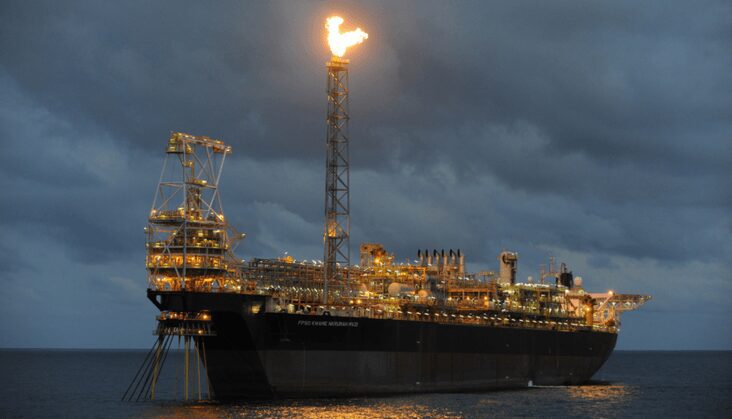
Gas flames flaring up from an off shore oil vessel

Mr Nasir Alfa Mohammed, the Vice Chairman of the PIAC, said:

“Well, that’s peanut, but there are also important considerations for us to look at because, at the time we started exploring for oil, our petroleum basins were largely risky and when you have such circumstances, you are looking for investment arrangements that will attract investors to your petroleum basins to partner with you.

“In doing so, it was likely that we negotiated away certain benefits that would ordinarily have come to us… We really needed the investments, and that explains why at the initial stages we didn’t do well with our negotiations…”

Mr Nasir Alfa Mohammed

Revenue Generated is a function of contracts and agreements signed

Additionally, it is the case that the revenue being generated from oil production is a function of the contracts and the agreements and the different tax elements within them, Dr Acheampong said. He added that, “… if we put that in the right context, you actually would see that, of the $31 billion of which we have gotten $6.5 billion, that’s roughly about 17% or 18% of the revenues, the other bit also includes importantly, the cost of the extraction of the resource itself.

“So, the investors… spent some money and subsequently, we need to take out that cost in addition to whatever profits that they would have made. And I have seen some studies that indicate that as much as between $18 and $19 billion is how much has been invested into the upstream sector in terms of cost.”

Dr Theo Acheampong

Notably, putting this into the right context, one could see that the revenues accrued really reflect the contracts that the country has signed so far, he said. The obvious truth is that “the contracts that we signed in the past were very generous to the investors”.  

More importantly, the $31.2 billion includes the profit to investors as well as the cost of extracting the resource, he explained.

However, there is the argument made about whether, “…that $18 or 19 billion truly reflects the cost that has been spent on the ground and whether or not there has not been some transfer pricing or some sort of tax abuse or cost inflation taking place in the industry.”

revenue
Oil rig offshore

Meanwhile, some analysts have called for a change in the current fiscal regime of the petroleum sector to production sharing agreement (PSA) regime, as that holds several advantages compared to the current regime being practised, and which is widely used among more than 80 oil-producing countries in the world. Thus, Ghana is in the minority, among countries practicing the hybrid system.

Contrary to the low revenues accrued to Ghana under the hybrid system, the Ghana Institute of Governance and Security (GIGS) have long demonstrated that if Ghana had adopted the PSA, as sovereign owners, Ghana would have received $9.61 billion (representing 60.10% of total production revenue as “Government Take”). This is in excess of over $2 billion of what has been accumulated under the current regime.

By considering a regime change, coupled with managing the revenues more efficiently, the narrative could turn positive to the country’s benefit. Since the Royalty/Tax regime and the hybrid system have been practiced for ten years now, and their contributions have been clearly seen, wouldn’t it be prudent to try the PSA regime to prove its much touted potency?

READ ALSO: Supreme Court Ruling not Settling Matters- Inusah Fuseini

Sign Up to Our Newsletter

Fresh updates, Straight to your inbox

Tags: Economic GrowthManagementoilrevenuesectors
Share3Tweet2Share1SendSend
Please login to join discussion
Previous Post

Ukraine War: Businesses Pulling Back From Russia

Next Post

Rice Famers In Akatsi South District Call For Support

Related Posts

Dr. Charles Mensa, Board Chair, IEA
Extractives/Energy

Ghanaian Professionals Have the Technical Expertise to Manage Tarkwa Mine—IEA

May 13, 2026
Mrs. Sophia Akuffo, the former Chief Justice
Extractives/Energy

Tarkwa Mine: Parliament, Other Stakeholders Urged to Support Move to Block Lease Extension

May 13, 2026
IEA
Extractives/Energy

Tarkwa Mine Lease Renewal, Inimical to Ghana’s National Interest—IEA

May 13, 2026
Madam Victoria Awuni
Extractives/Energy

Minerals Commission Reaffirms Commitment to Sustainable Mineral Resource Management

May 13, 2026

Sign Up to Our Newsletter

Fresh updates, Straight to your inbox

Recent News

Prof. George Agyei, GSA's Director General

GSA Enforces Mandatory Pattern Approval For Measurement Hardware

May 13, 2026
Mahama 64

No More Blanket Tax Waivers on Medical Imports, President Mahama Declares

May 13, 2026
US Proposal For Temporary Gaza Ceasefire Fails To Hit Hamas’ Mark

Envoy Says Gaza Ceasefire Dependent On Hamas’ Disarmament

May 13, 2026
United Bank for Africa Posts Industry’s Lowest Bad Loan Ratio United Bank for Africa Ghana has delivered one of the most remarkable performances in Ghana’s banking industry, emerging with the lowest non-performing loan ratio in the sector and setting a new benchmark for prudent lending, asset quality, and corporate discipline. At a time when banks across emerging markets continue to battle rising credit risks, economic uncertainty, and pressure on asset quality, UBA Ghana’s latest financial performance has become a standout success story. The bank’s Non-Performing Loan ratio, which stood at 29.40 percent in 2021, has dropped sharply to an impressive 2.11 percent in 2025. This exceptional improvement places the bank well ahead of regulatory expectations and significantly below the target set by the Bank of Ghana, which requires banks to maintain bad loan ratios below 10 percent by June 2026. The numbers tell a powerful story of strategic execution, disciplined lending, and a leadership team committed to sustainable growth. Bad Loans Fall Dramatically The bank’s total non-performing loans have also seen a dramatic reduction over the four-year period. From GH¢334 million recorded in 2021, the figure has now dropped to just GH¢28 million in 2025. Industry analysts say this sharp decline reflects a deliberate and aggressive approach to loan portfolio management, one that prioritizes risk identification, credit discipline, and rapid intervention. For many financial observers, this is not merely a statistical improvement. It is evidence of a bank that has transformed its internal credit systems and strengthened its ability to manage lending risk in a highly competitive market. UBA Ghana’s performance is being viewed as a model for other financial institutions seeking to improve balance sheet quality while still expanding lending activities. Strong Risk Culture Drives Results According to Kenneth Amponsah, the achievement did not happen overnight. He explained that the bank adopted a consistent and structured approach to managing credit risk across every stage of the lending cycle. He noted that the improvement in the bank’s loan quality was the result of stronger lending standards, improved loan screening procedures, tighter monitoring systems, and faster recovery mechanisms. The bank’s risk management strategy focuses on ensuring quality at the point of loan origination while maintaining strict oversight throughout the life of each facility. This includes strategic portfolio planning, efficient approval processes, proper documentation, collateral verification, real-time account monitoring, and proactive loan recovery. Banking experts say such a full-cycle approach is critical in today’s economic environment, where loan defaults can quickly erode capital and investor confidence. Recovery Efforts Yield Strong Returns One of the strongest drivers behind the bank’s improved asset quality has been its recovery operations. UBA Ghana has significantly strengthened its debt recovery framework, resulting in consistent gains over the years. In 2025 alone, loan recoveries reached an impressive GH¢168 million, highlighting the effectiveness of the bank’s recovery teams and internal enforcement systems. This strong recovery performance has helped the bank clean up its balance sheet while improving liquidity and strengthening capital resilience. Analysts believe the recovery figures also demonstrate the bank’s ability to engage customers proactively while maintaining professional relationships and ensuring compliance. Leadership Applauds Team Performance Commenting on the achievement, Bernard Gyebi praised the collective effort of the bank’s staff, management, and board. He said the milestone reflects the dedication and discipline of Relationship Managers, Risk teams, Executive Management, and Board members who have all contributed to building a resilient institution. According to him, UBA Ghana remains focused on balancing business growth with sound risk management practices. He emphasized that the bank is intentional about creating long-term value for shareholders, customers, and regulators while maintaining high standards of governance and accountability. His remarks underline the bank’s broader strategy of building a strong institution capable of supporting businesses and contributing to national economic growth. Setting the Pace for Ghana’s Banking Sector Industry observers believe UBA Ghana’s latest achievement reflects broader improvements within Ghana’s banking sector, which has undergone major reforms in recent years. However, they note that UBA Ghana’s performance stands out because of the speed, consistency, and scale of its transformation. By bringing its bad loan ratio down to just 2.11 percent, the bank has positioned itself as one of the safest and most disciplined lenders in the market. As competition intensifies and regulatory standards become stricter, UBA Ghana’s performance could serve as a benchmark for banks seeking to combine profitability with responsible lending. With strong governance, effective execution, and a clear commitment to excellence, UBA Ghana appears firmly positioned to sustain its leadership in Ghana’s evolving financial sector. READ ALSO: Tema Manhean Facility To Halt Fisheries Value Leakage United Bank for Africa Posts Industry’s Lowest Bad Loan Ratio

United Bank for Africa Posts Industry’s Lowest Bad Loan Ratio

May 13, 2026
Dr. Charles Mensa, Board Chair, IEA

Ghanaian Professionals Have the Technical Expertise to Manage Tarkwa Mine—IEA

May 13, 2026
Next Post
Rice Famers In Akatsi South District Call For Support

Rice Famers In Akatsi South District Call For Support

The Vaultz News

Copyright © 2025 The Vaultz News. All rights reserved.

Navigate Site

  • About
  • Advertise
  • Privacy Policy
  • Contact

Follow Us

Welcome Back!

Login to your account below

Forgotten Password?

Retrieve your password

Please enter your username or email address to reset your password.

Log In
No Result
View All Result
  • Top Stories
  • News
    • General News
    • Education
    • Health
    • Opinions
  • Economics
    • Economy
    • Finance
      • Banking
      • Insurance
      • Pension
    • Securities/Markets
  • Business
    • Agribusiness
    • Vaultz Business
    • Extractives/Energy
    • Real Estate
  • World
    • Africa
    • America
    • Europe
    • UK
    • USA
    • Asia
    • Around the Globe
  • Innovation
    • Technology
    • Wheels
  • Entertainment
  • 20MOBPL2D
  • Jobs & Scholarships
    • Job Vacancies
    • Scholarships

Copyright © 2025 The Vaultz News. All rights reserved.

This website uses cookies. By continuing to use this website you are giving consent to cookies being used. Visit our Privacy and Cookie Policy.

Discover the Details behind the story

Get an in-depth analysis of the news from our top editors

Enter your email address