Nickolay Mladenov, the top diplomat overseeing the U.S.-brokered ceasefire in Gaza, has said that the truce is hinged on Hamas’ disarmament, a sticking point that has stalled progress on other fronts, including rebuilding the mostly destroyed enclave.
Mladenov, the High Representative for U.S. President Donald Trump’s International Board of Peace in Gaza, said that months without progress implementing the deal benefited neither Israel nor Palestinians. He said that the phased deal was paralyzed over Hamas not yet disarming, calling it “not negotiable.”
Speaking at a press conference in Jerusalem, he noted, “The only way that we believe that we can ensure that Israeli withdrawal takes place to the perimeter is if we have the full element of the plan unfolding in Gaza.”
International mediators have long stressed that disarmament is core to the ceasefire, to which Hamas has agreed, but no significant progress has been made toward it. The Palestinian militant group has sought to link any demilitarization to Israeli troop pullbacks. However, Israel’s military remains in control of more than half of Gaza.
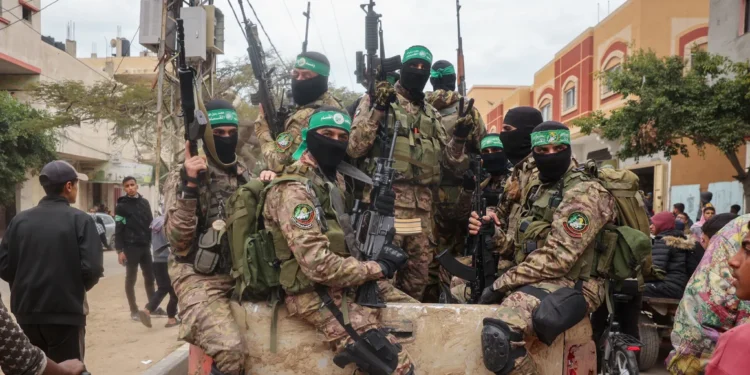
Disarmament is among the most challenging elements of the ceasefire. Hamas, whose founding charter calls for armed resistance against Israel, has been reluctant to give up its arsenal, including rockets, anti-tank missiles and explosives.
Mladenov did not answer questions about what could lie ahead for Gaza in the absence of disarmament. He criticized Hamas for consolidating power in parts of Gaza under its control, saying it hoped “to squeeze better terms of a negotiation.”
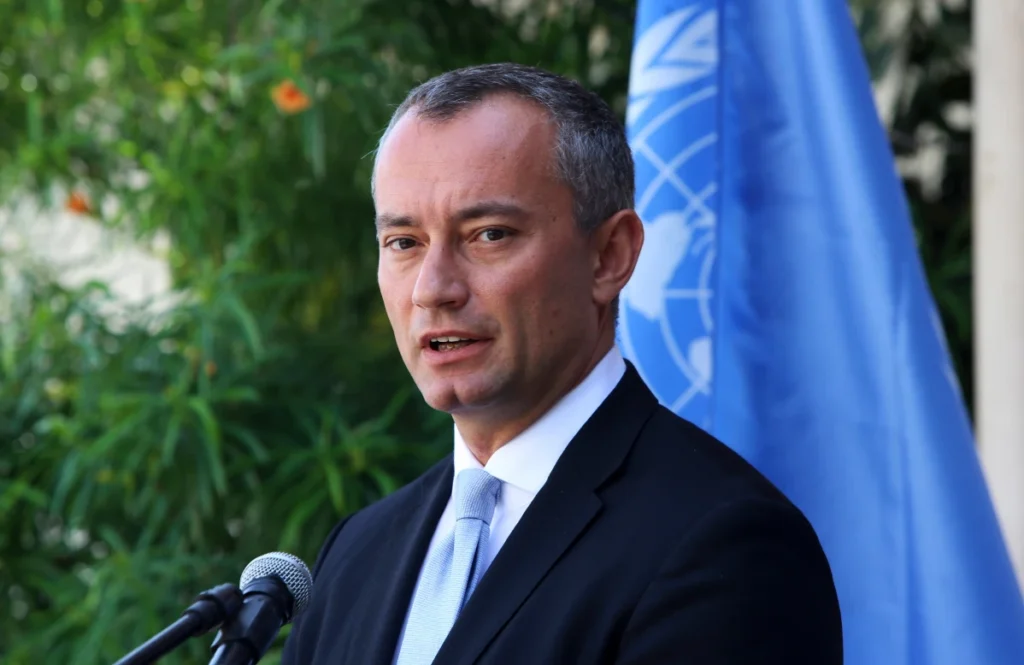
He also said that he could envision a role for Hamas in postwar Gaza if it disarms. “We are not asking Hamas to disappear as a political movement,” Mladenov told reporters.
Israeli leaders have said that they want to destroy the militant group that has governed Gaza for two decades and orchestrated the attack on Israel on Oct. 7, 2023, killing some 1,200 people and taking 251 as hostages.
Israel’s ensuing offensive has killed over 72,724 Palestinians, including at least 846 since a ceasefire took hold last October.
The Board of Peace was established in January on the initiative of US President Donald Trump as part of efforts to reach a peaceful settlement in Gaza.
Trump’s 20-point plan says that all of Hamas’ “military, terror and offensive infrastructure, including tunnels and weapon production facilities” in Gaza must be destroyed. It also says that weapons must be placed “permanently beyond use.”
Israel and the U.S. say this language is clear and that Hamas must surrender all of its weapons. Hamas officials and mediators, speaking on condition of anonymity to discuss the negotiations, say Hamas has sought to differentiate between “heavy” weapons, such as rockets, and “light” weapons like rifles and pistols.
Israel has stepped up its attacks in Gaza in recent days, since the U.S.-Iran ceasefire, and many Palestinians fear a return of more airstrikes and full-scale war may be imminent.
Conditions Remain Dire In Gaza
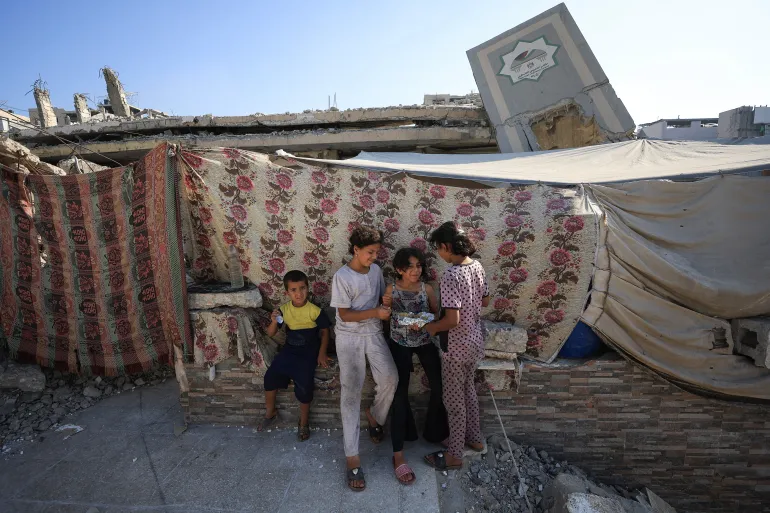
Moreover, Mladenov stated plainly that the plan envisioned in the ceasefire was off to a rocky start. He also said that conditions remain dire and miserable for the more than 2 million people in Gaza. He accused both sides of violating the ceasefire but said it had mostly held and staved off the return of full-scale war.
Seven months after the ceasefire took effect in October 2025, “the door to the future of Gaza is still closed,” he said.
“It is not what the Palestinians were promised and it is not what they deserve. And it is not giving Israel the security to move forward, as the Israeli people also want. We have a ceasefire. It is holding. It is not perfect. It is far from perfect.
Nickolay Mladenov
Referring to the Israeli army’s continued violations of the truce, he said, “There are violations every day, and some of them are very serious.”
Mladenov’s remarks came as the Board of Peace faces scrutiny, with efforts to advance the phased ceasefire stalled. The truce envisioned Hamas handing over its weapons, Israeli forces withdrawing and rebuilding destroyed swaths of the coastal enclave after more than two years of war.
Instead, the seven months since the ceasefire have seen Israel and Hamas trade accusations of violations. Aid groups say Israel has not allowed the promised amount of aid in. Hamas has not disarmed and remains in control of roughly half the strip.
READ ALSO: Over 1,700 People Confined On Cruise Ship In Bordeaux