• About
  • Advertise
  • Privacy Policy
  • Contact
Saturday, May 16, 2026
  • Login
The Vaultz News
  • Top Stories
  • News
    • General News
    • Education
    • Health
    • Opinions
  • Economics
    • Economy
    • Finance
      • Banking
      • Insurance
      • Pension
    • Securities/Markets
  • Business
    • Agribusiness
    • Vaultz Business
    • Extractives/Energy
    • Real Estate
  • World
    • Africa
    • America
    • Europe
    • UK
    • USA
    • Asia
    • Around the Globe
  • Innovation
    • Technology
    • Wheels
  • Entertainment
  • 20MOBPL2DNew
  • Jobs & Scholarships
    • Job Vacancies
    • Scholarships
No Result
View All Result
The Vaultz News
  • Top Stories
  • News
    • General News
    • Education
    • Health
    • Opinions
  • Economics
    • Economy
    • Finance
      • Banking
      • Insurance
      • Pension
    • Securities/Markets
  • Business
    • Agribusiness
    • Vaultz Business
    • Extractives/Energy
    • Real Estate
  • World
    • Africa
    • America
    • Europe
    • UK
    • USA
    • Asia
    • Around the Globe
  • Innovation
    • Technology
    • Wheels
  • Entertainment
  • 20MOBPL2DNew
  • Jobs & Scholarships
    • Job Vacancies
    • Scholarships
No Result
View All Result
The Vaultz News
No Result
View All Result
in General News

Ghana: WHO, Canadian Gov’t Addressing Capacity Needs For Strong Gender Responsiveness In Health Intervention

M.Cby M.C
December 13, 2022
Reading Time: 4 mins read
Ghana: WHO, Canadian Gov’t Addressing Capacity Needs For Strong Gender Responsiveness In Health Intervention

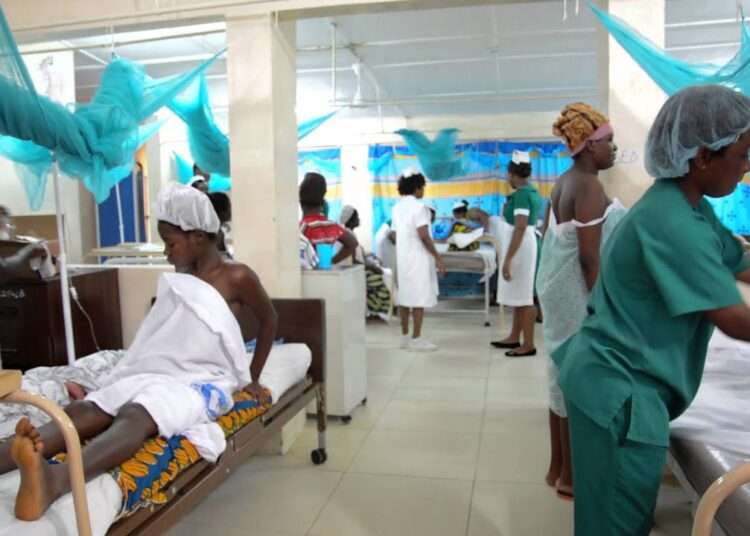
In line with the agenda to achieve gender equality and empower women and girls while reducing health and social inequality to leave no one behind, the World Health Organization (WHO) with the support of the Government of Canada is addressing the capacity and competency needs of stakeholders for more integrated and strong gender responsiveness in health intervention design, implementation, and evaluation in Ghana.  

As part of the project, “Strengthening local and national Primary Health Care (PHC) and Health Systems for the recovery and resilience of countries in the context of COVID-19” supported by the Government of Canada, WHO initiated as a first step, a series of capacity building training to enhance the knowledge, skills and competencies of stakeholders on gender.

59428943ec1d539
Ghana: WHO, Canadian Gov’t Addressing Capacity Needs For Strong Gender Responsiveness In Health Intervention 3

The training sought to leverage evidence-informed approaches to integrate gender in PHC and health systems, undertake health inequality monitoring and development of action plans to advance gender, equity, and rights to improve essential health services.  

“It is often said, gender equality is everyone’s business. To achieve SDG 3, we need to be equipped to support national partners to ensure health programmes and services deliver for everyone, especially, women, girls and vulnerable groups most affected by the COVID-19 pandemic.”

WHO Representative in Ghana, Dr Francis Kasolo

The initiative sought to improve the ability of Ministries of Health and their implementing agencies, including the health workforce to address needs and gaps to ensure the continuation of essential services that are equity-oriented and gender-responsive.

ADVERTISEMENT

Already, the intervention by WHO is yielding some positive results that can be built upon to sustain the collective responsibility of ensuring policies, programmes and interventions are equitable and responsive to people’s needs, interests, health risks and vulnerability.

It has succeeded in enhancing the capacity of over 130 participants from the WHO and government health institutions. They comprised physicians and clinicians, programme and policy planners, health information as well as monitoring and evaluation officers at the national, regional and district levels.

Accountability is critical to closing health inequalities

“Accountability is critical to closing health inequalities”, Mrs Akosua Kwakye, Programme Officer for Social Determinant of Health at WHO Ghana, said.

“That is why we are focused on assisting partners to develop action plans to promote and advocate for gender mainstreaming into health programmes”.

Mrs Akosua Kwakye

For the health workforce in Ghana, this training has been a critical learning opportunity. They underscored the importance of sustained advocacy, engagement, and the power of disaggregated health data to help find context-specific solutions to gender-related differences in health services outcomes.

Reflecting on the workshop, Mrs Maame Esi Amekudzi, a Health Planning Officer from the Ghana Health Service’s Policy, Planning, Monitoring and Evaluation Division (PPME) said: “I have learnt from the training that, improved insights from equity analysis require actions, collaboration and continuous advocacy to address gender-based health inequalities”.

The capacity-building training also fostered transparent dialogues which highlighted the need to nurture enabling environments and collaborations within and outside the health sector to advance equity in health.

“While my knowledge on analysis of gender-relevant issues has improved, I am now mindful of the need to create the right conditions within and outside health institutions to enable us to deliver healthcare for all.”

Mrs Mavis Adobea Botchway, a Planning and Gender Desk Officer at the Ministry of Health

To fully leverage the ongoing capacity-building efforts, WHO is committed to mobilizing additional resources, and leveraging the power of collaboration to promote and support actions to remove barriers to health service access and utilization.

Need to address gender inequality

The WHO noted that Sustainable Development Goals (SDGs), especially SDG 5 on Gender equality and SDG 10 are critically interlinked social determinants that have the potential to reverse health gains or even halt progress towards universal health coverage.

The global COVID-19 response remains a sober reminder to make gender equality an integral aspect of national health preparedness and responses, in order to address deep-rooted barriers that reinforce and exacerbate health inequities.

ADVERTISEMENT

In Ghana, gender equality and equity are important commitments in national health policies, including many other multi-sectoral policies. At the height of COVID-19, Ghana’s Strategic Response Plan emphasized the need to ensure equitable access to health services for all, who will need them.

READ ALSO: Debt Exchange Program: Gov’t Could Have Achieved The Same Outcomes Using Financial Repression – Economist

Sign Up to Our Newsletter

Fresh updates, Straight to your inbox

Tags: CanadaCOVID-19ghanaPrimary Health CareSDG 3WHO
ShareTweetShareSendSend
Please login to join discussion
Previous Post

Ghana’s US$3.5bn Loan Repayment For Next Year Exceeds Its US$3bn IMF Expectation

Next Post

Former FTX CEO Arrested In The Bahamas

Related Posts

Hon. Haruna Iddrisu (L) and Dr Cassiel Ato Forson (R)
General News

Young and Old Voters Back Ato Forson, Haruna Iddrisu – Poll

May 16, 2026
Gary Nimako, Director of Legal Affairs for NPP and Lawyer
General News

Gary Nimako Warns Against Criminalising Free Speech in Ghana

May 16, 2026
Honourable Rockson-Nelson Etse Kwami Dafeamekpor, MP for South Dayi Constituency And Majority Chief Whip
General News

Legal Education Act to Anchor Ghana School Of Law – Majority Whip

May 16, 2026
Honourable Rockson-Nelson Etse Kwami Dafeamekpor, MP for South Dayi Constituency And Majority Chief Whip
General News

Dafeamekpor Flags Due Process Concerns in Arrest of Ghanaian MP

May 16, 2026

Sign Up to Our Newsletter

Fresh updates, Straight to your inbox

Recent News

Vice President Professor Naana Jane Opoku-Agyemang at the 16th Oxford Africa Conference

Vice President Pitches Business-Driven Frameworks At Oxford

May 16, 2026
Mohamed Salah will leave Liverpool at the end of the season

Salah Demands Liverpool Rediscover “Heavy Metal” Identity Ahead of Exit

May 16, 2026
Prof. Godfred Bokpin

Ghana Has Not Benefited Optimally From Its Mineral Resources – Prof. Bokpin

May 16, 2026
Theo Acheampong

Gov’t Spends Close to $1.5bn Annually Covering ECG Losses – Dr. Acheampong

May 16, 2026
Hon. Haruna Iddrisu (L) and Dr Cassiel Ato Forson (R)

Young and Old Voters Back Ato Forson, Haruna Iddrisu – Poll

May 16, 2026
Next Post
Sam Bankman-Fried, former CEO of FTX

Former FTX CEO Arrested In The Bahamas

The Vaultz News

Copyright © 2025 The Vaultz News. All rights reserved.

Navigate Site

  • About
  • Advertise
  • Privacy Policy
  • Contact

Follow Us

Welcome Back!

Login to your account below

Forgotten Password?

Retrieve your password

Please enter your username or email address to reset your password.

Log In
No Result
View All Result
  • Top Stories
  • News
    • General News
    • Education
    • Health
    • Opinions
  • Economics
    • Economy
    • Finance
      • Banking
      • Insurance
      • Pension
    • Securities/Markets
  • Business
    • Agribusiness
    • Vaultz Business
    • Extractives/Energy
    • Real Estate
  • World
    • Africa
    • America
    • Europe
    • UK
    • USA
    • Asia
    • Around the Globe
  • Innovation
    • Technology
    • Wheels
  • Entertainment
  • 20MOBPL2D
  • Jobs & Scholarships
    • Job Vacancies
    • Scholarships

Copyright © 2025 The Vaultz News. All rights reserved.

This website uses cookies. By continuing to use this website you are giving consent to cookies being used. Visit our Privacy and Cookie Policy.

Discover the Details behind the story

Get an in-depth analysis of the news from our top editors

Enter your email address