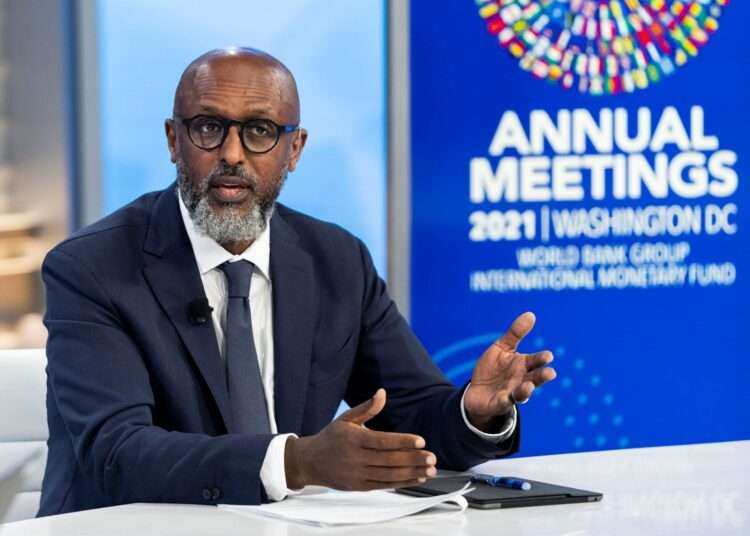
Abebe Aemro Selassie, the Director at the African Department of the International Monetary Fund (IMF) has observed that the economic consequences of the COVID-9 pandemic continue to be felt acutely in most African countries, consequently facing financing squeeze.
The Director at the African Department of the IMF noted that unlike much of the rest of the world, African countries have limited ability to use fiscal and monetary policies to dampen its negative effects on their populations.
“And subsequent efforts to regain lost ground have been frustrated by the adverse external developments. As we gather here, the region is facing a brutal financing squeeze. To be sure, this is not unique to African countries. But this region is the one that can least afford the implications of this squeeze, given Africa’s much-higher level of poverty and remaining development gaps.
“In fact, my worry is that the current financing challenge is one that looks set to endure. And unfortunately, beyond the odd nod of the head here and there, this is not something that is being acted upon with the seriousness and urgency that it needs—either by the international community or the region’s policymakers. Certainly, awareness is not in line with the profound implications for our futures. And I dare say that it is not garnering much attention by the academic community.”
Abebe Aemro Selassie
Abebe Aemro Selassie expanded on the financing challenge and how best it can be navigated. He noted that the funding squeeze is all the more problematic because countries have emerged from the pandemic with elevated levels of fiscal deficits and public debt. He opined that even if a country were to engineer a smooth return to a more normal fiscal position, the higher level of debt and higher borrowing costs are more than double their pre-pandemic level—meaning that there are less resources for primary (non-interest) spending outlays.
“Put simply, the region’s most pressing economic problem right now is the funding squeeze. This reflects several factors: loss of external market access after a brief post-pandemic respite and, indeed, capital flight from some countries; adverse effects of Russia’s invasion of Ukraine (particularly on food prices and fuel-importing countries); continued declines in official development assistance; and much lower flows from China and other new sources of financing. The domestic cost of funding has also gone up, limiting recourse to that alternative.
“This is not just an immediate concern but can have lasting effects with implications for longer-term development. During the recent crisis—unlike major advanced economies—Africa had limited fiscal space, hampering policy makers’ ability to mount an effective response. With insufficient funding, authorities were less able to protect their most vulnerable, and were also forced to divert resources from critical development sectors such as health, education, and infrastructure, curtailing the region’s growth prospects. The crisis has never really passed, and the funding constraint persists.”
Abebe Aemro Selassie
Africa to Hope for the Best
Mr Aemro Selassie noted that the IMF Managing Director, Kristalina Georgieva, has always encourages the African Department team to hope for the best, but plan for the worst. In this vein, he asserted that it is going to be very important for countries to carefully consider their funding mix. “In a world where finance is cheap and easily replaced, the consequences of a particular decision can be contained. But we no longer live in that world”.
“Resources have become scarce and more expensive. In this world, countries have to be more cautious about the type and composition of their financing, and they should be much more deliberate in mobilizing new resources.”
Abebe Aemro Selassie
However, the IMF Director, African Department noted that the most important choice in financing development is whether spending should be undertaken by the public or the private sector. He noted that in practice, most African countries (and indeed elsewhere) tend to fund development largely through public finance.
“On average, some 79 percent of total government spending in sub-Saharan Africa is covered by revenues, a further 19 percent by borrowing, and 2 percent through grants and/or other concessional budget support. Needless to say, averages mask great heterogeneity across countries.
“To be clear, the size of government is a deeply political and very country-specific issue. And given the important externalities involved in public spending in health, education, and much large-scale infrastructure—coupled with limited private sector capacity–government provision of such services is very appropriate.”
Abebe Aemro Selassie
Abebe Aemro Selassie noted that the challenge for governments is that with borrowing space limited and aid flows highly circumscribed, the only way to make more room is through domestic revenue mobilization.