• About
  • Advertise
  • Privacy Policy
  • Contact
Wednesday, May 13, 2026
  • Login
The Vaultz News
  • Top Stories
  • News
    • General News
    • Education
    • Health
    • Opinions
  • Economics
    • Economy
    • Finance
      • Banking
      • Insurance
      • Pension
    • Securities/Markets
  • Business
    • Agribusiness
    • Vaultz Business
    • Extractives/Energy
    • Real Estate
  • World
    • Africa
    • America
    • Europe
    • UK
    • USA
    • Asia
    • Around the Globe
  • Innovation
    • Technology
    • Wheels
  • Entertainment
  • 20MOBPL2DNew
  • Jobs & Scholarships
    • Job Vacancies
    • Scholarships
No Result
View All Result
The Vaultz News
  • Top Stories
  • News
    • General News
    • Education
    • Health
    • Opinions
  • Economics
    • Economy
    • Finance
      • Banking
      • Insurance
      • Pension
    • Securities/Markets
  • Business
    • Agribusiness
    • Vaultz Business
    • Extractives/Energy
    • Real Estate
  • World
    • Africa
    • America
    • Europe
    • UK
    • USA
    • Asia
    • Around the Globe
  • Innovation
    • Technology
    • Wheels
  • Entertainment
  • 20MOBPL2DNew
  • Jobs & Scholarships
    • Job Vacancies
    • Scholarships
No Result
View All Result
The Vaultz News
No Result
View All Result
in Agribusiness

Palm Oil Value Chain: It’s Time To Embrace Global Standards, Choosing Well Mapped Out Strategies To Access International Market- UNIDO

M.Cby M.C
May 5, 2023
Reading Time: 5 mins read
IMG 20230504 WA0033 696x392 1

The United Nations Industrial Development Organization (UNIDO) with funding from the Swiss Government is implementing the Global Quality and Standards Programme (GQSP) in Ghana with the Palm oil value chain actors to assess the quality awareness utilising the UNIDO developed culture tool.

This is to help to improve the culture for quality in the Ghanaian palm oil value chain with the arbitrary pricing system at the mercy of aggregators and millers.

As a follow-up, the programme implementers organized a roundtable conference in Koforidua to discuss with all the main actors the key findings of their assessment and help them establish modalities for improving the quality culture and entrenching the available standards, among others.

The discussion came at a time when actors believe that government must help to address the quality palm oil, arbitrary pricing system faced by aggregators and mills in the local market to protect farmers’ interest and guarantee them sustainable livelihoods.

ADVERTISEMENT

The discussion brought in more than 35 key stakeholders from government agencies, academia, farmers and the private sector, to discuss the culture for quality in the Ghanaian palm oil value chain.

Speaking at the roundtable conference, Chief Technical Advisor, Global Quality and Standards Programme (GQSP), Ama Nyame Mogyabun explained that the programme will help improve the culture for quality in the Ghanaian palm oil value chain in the face of fluctuating prices and other challenges such as export competitiveness and standards compliance of Small Medium Enterprises (SMEs) to facilitate their access to international market.

Ama Nyame Mogyabun emphasised that the programme is aimed at assessing the culture for quality in the selected value chains using a UNIDO developed tool.

“The tool will help address quality and standard issues within the industry as well as the challenges of Small and Medium Sized Enterprises (SMEs).

“UNIDO will then intervene to help address the identified challenges with SMEs in the palm oil, cashew and cocoa value chains; which include: technical competence and sustainability of national quality infrastructure system and selected value chains are enhanced, SMEs compliance with international standards and technical regulations is enhanced and also make sure awareness for quality is enhanced in Ghanaian palm oil value chain.”

Ama Nyame Mogyabun

The Value Chain Areas Requiring the Most Intervention

Ama Nyame Mogyabun indicated that based on the work they did, she realised that the value chain areas requiring the most intervention are quality infrastructure institutions and enterprises within the supply value chain.

“The stakeholders involved at different stages of the oil palm value chain are: small scale producers and processors, large scale producers, processors, distributors, exporters, consumers, government, conformity assessment bodies and support organisations and opinion formers.”

Ama Nyame Mogyabun
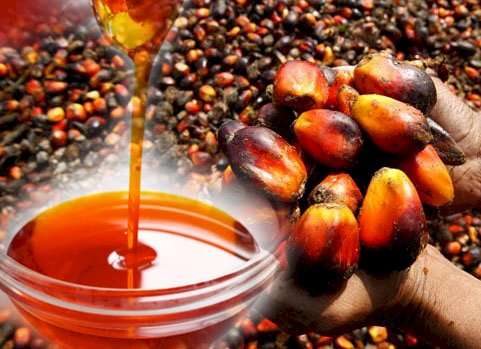
oil palm
Palm Oil Value Chain: It’s Time To Embrace Global Standards, Choosing Well Mapped Out Strategies To Access International Market- UNIDO 4

The Deputy Director, in charge of Operations at the Tree Crops Development Authority (TCDA), Foster Boateng explained that the TCDA was inaugurated in September 2020, as a regulatory body for six tree crops namely Cashew, Shea, Mango, Coconut, Rubber, and Oil palm.

“We are still fine tuning our five-year National Tree Crop Strategy for the various sectors with our industry players within the Palm oil value chain to help develop the potentials of the local Palm oil subsector. We are also developing a digital platform to consolidate all Palm oil farmers and eliminate the problem of geographic boundaries. With this achieved, we can interact with stakeholders consistently while providing them resources to increase productivity and quality.

“Demand for palm oil accounts for more than 20% of global edible oil market and has the potential to rake in $2billion in terms of export according to surveys. From 2019 to 2021 Ghana produced about 850,000 tons locally, exported 600,000 tons and imported 1.17 million tons, additionally the sector employs over 2million people in Ghana only.”

Foster Boateng

The Job of Food and Drugs Authority

Eastern Regional Officer for the Food and Drugs Authority, Anita Owusu-Kuffour also explained that their job is to regulate food, drugs, food supplements, herbal and homeopathic medicines, veterinary medicines, cosmetics, medical devices, household chemical substances, tobacco and tobacco products, blood and blood products as well as the conduct of clinical trials protocols in Ghana.

“The FDA is responsible for ensuring the safety of all foods including palm oil for domestic consumption and export. The FDA, as part of its mandate is to rid the market of adulterated food products, monitors palm oil annually for Sudan dye adulteration.

“One of the interventions being introduced is a simple traceability system to allow for trace back to specific suppliers to facilitate timely regulatory actions and quality. The FDA is discussing with stakeholders on the need to develop rapid detection tools for Sudan dye.”

Anita Owusu-Kuffour

Scientific Officer at the Ghana Standards Authority, Nathaniel Kofi Brakoh mentioned that quality and standard can be achieved “if we develop and improve our infrastructures within the palm oil value chain”.

“Other crops such as cocoa and cashew have standards and regulations, so we thought it wise that we also regulate palm oil to enable the country to reap more benefits from it.”

President, Oil Palm Development Association of Ghana (OPDAG), Samuel Avaala, explained that the Oil Palm Development Association of Ghana (OPDAG), is a private sector industry association with the focus of promoting quality, socially responsible, ecologically and economically sustainable production, value addition and trading of oil palm in Ghana.

ADVERTISEMENT

“Annual production of palm oil by our artisanal group is estimated 165,000 metric tons which forms about 55.6% of the total palm oil produced in Ghana.

“Out of these 165,000 metric tons produced, 99,000 Mt are sold on our local markets for human consumption and also for the production of cosmetic products such as soaps.”

Samuel Avaala

Samuel Avaala noted that the main challenge in achieving quality palm oil is because market women or traders try to conform to the demand and preference of consumers.
sudan iv 500x500 1
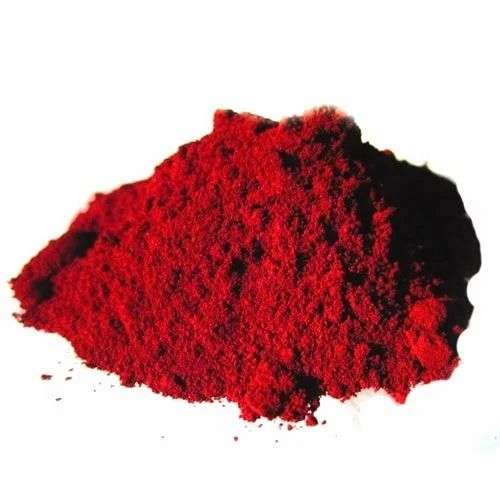
Sudan IV dye

“Consumers prefer red palm oil, but per the biological nature of the new planting materials we use now palm oil is not reddish; so due to the preference traders and market women adulterate palm oil with Sudan IV dye.”

Samuel Avaala

READ ALSO: Itinerary For King Charles’ Coronation Day

Sign Up to Our Newsletter

Fresh updates, Straight to your inbox

Share1Tweet1ShareSendSend
Please login to join discussion
Previous Post

Frimpong-Boateng Stands Firm By Galamsey Report

Next Post

Jill Biden In UK For King Charles’ Coronation

Related Posts

Representatives of the Fisheries Commission and the Korea Maritime Institute, at the Tema Manhean Fish Processing Facility
Agribusiness

Tema Manhean Facility To Halt Fisheries Value Leakage

May 13, 2026
Hon. Elizabeth Ofosu-Adjare, Minister for Trade, Agribusiness, and Industry, with Industry Stakeholders in Rubber Export Ban Meeting
Agribusiness

Trade Ministry Enforces Hardline Raw Rubber Export Ban to Anchor Value Chain

May 12, 2026
Hon. Emelia Arthur, Minister for Fisheries and Aquaculture Development, in the Ashanti Region
Agribusiness

Fisheries Minister Concludes Inland Tour With Lake Bosomtwe Engagement

May 12, 2026
Dr. Andy Osei Okrah, TCDA CEO, with Hon. Eric Opoku, Minister for Food and Agriculture, at Nkoranza in the Bono East
Agribusiness

TCDA Deploys 3M Seedlings For Carbon Restoration Plan in Bono East

May 12, 2026

Sign Up to Our Newsletter

Fresh updates, Straight to your inbox

Recent News

Prof. George Agyei, GSA's Director General

GSA Enforces Mandatory Pattern Approval For Measurement Hardware

May 13, 2026
Mahama 64

No More Blanket Tax Waivers on Medical Imports, President Mahama Declares

May 13, 2026
US Proposal For Temporary Gaza Ceasefire Fails To Hit Hamas’ Mark

Envoy Says Gaza Ceasefire Dependent On Hamas’ Disarmament

May 13, 2026
United Bank for Africa Posts Industry’s Lowest Bad Loan Ratio United Bank for Africa Ghana has delivered one of the most remarkable performances in Ghana’s banking industry, emerging with the lowest non-performing loan ratio in the sector and setting a new benchmark for prudent lending, asset quality, and corporate discipline. At a time when banks across emerging markets continue to battle rising credit risks, economic uncertainty, and pressure on asset quality, UBA Ghana’s latest financial performance has become a standout success story. The bank’s Non-Performing Loan ratio, which stood at 29.40 percent in 2021, has dropped sharply to an impressive 2.11 percent in 2025. This exceptional improvement places the bank well ahead of regulatory expectations and significantly below the target set by the Bank of Ghana, which requires banks to maintain bad loan ratios below 10 percent by June 2026. The numbers tell a powerful story of strategic execution, disciplined lending, and a leadership team committed to sustainable growth. Bad Loans Fall Dramatically The bank’s total non-performing loans have also seen a dramatic reduction over the four-year period. From GH¢334 million recorded in 2021, the figure has now dropped to just GH¢28 million in 2025. Industry analysts say this sharp decline reflects a deliberate and aggressive approach to loan portfolio management, one that prioritizes risk identification, credit discipline, and rapid intervention. For many financial observers, this is not merely a statistical improvement. It is evidence of a bank that has transformed its internal credit systems and strengthened its ability to manage lending risk in a highly competitive market. UBA Ghana’s performance is being viewed as a model for other financial institutions seeking to improve balance sheet quality while still expanding lending activities. Strong Risk Culture Drives Results According to Kenneth Amponsah, the achievement did not happen overnight. He explained that the bank adopted a consistent and structured approach to managing credit risk across every stage of the lending cycle. He noted that the improvement in the bank’s loan quality was the result of stronger lending standards, improved loan screening procedures, tighter monitoring systems, and faster recovery mechanisms. The bank’s risk management strategy focuses on ensuring quality at the point of loan origination while maintaining strict oversight throughout the life of each facility. This includes strategic portfolio planning, efficient approval processes, proper documentation, collateral verification, real-time account monitoring, and proactive loan recovery. Banking experts say such a full-cycle approach is critical in today’s economic environment, where loan defaults can quickly erode capital and investor confidence. Recovery Efforts Yield Strong Returns One of the strongest drivers behind the bank’s improved asset quality has been its recovery operations. UBA Ghana has significantly strengthened its debt recovery framework, resulting in consistent gains over the years. In 2025 alone, loan recoveries reached an impressive GH¢168 million, highlighting the effectiveness of the bank’s recovery teams and internal enforcement systems. This strong recovery performance has helped the bank clean up its balance sheet while improving liquidity and strengthening capital resilience. Analysts believe the recovery figures also demonstrate the bank’s ability to engage customers proactively while maintaining professional relationships and ensuring compliance. Leadership Applauds Team Performance Commenting on the achievement, Bernard Gyebi praised the collective effort of the bank’s staff, management, and board. He said the milestone reflects the dedication and discipline of Relationship Managers, Risk teams, Executive Management, and Board members who have all contributed to building a resilient institution. According to him, UBA Ghana remains focused on balancing business growth with sound risk management practices. He emphasized that the bank is intentional about creating long-term value for shareholders, customers, and regulators while maintaining high standards of governance and accountability. His remarks underline the bank’s broader strategy of building a strong institution capable of supporting businesses and contributing to national economic growth. Setting the Pace for Ghana’s Banking Sector Industry observers believe UBA Ghana’s latest achievement reflects broader improvements within Ghana’s banking sector, which has undergone major reforms in recent years. However, they note that UBA Ghana’s performance stands out because of the speed, consistency, and scale of its transformation. By bringing its bad loan ratio down to just 2.11 percent, the bank has positioned itself as one of the safest and most disciplined lenders in the market. As competition intensifies and regulatory standards become stricter, UBA Ghana’s performance could serve as a benchmark for banks seeking to combine profitability with responsible lending. With strong governance, effective execution, and a clear commitment to excellence, UBA Ghana appears firmly positioned to sustain its leadership in Ghana’s evolving financial sector. READ ALSO: Tema Manhean Facility To Halt Fisheries Value Leakage United Bank for Africa Posts Industry’s Lowest Bad Loan Ratio

United Bank for Africa Posts Industry’s Lowest Bad Loan Ratio

May 13, 2026
Dr. Charles Mensa, Board Chair, IEA

Ghanaian Professionals Have the Technical Expertise to Manage Tarkwa Mine—IEA

May 13, 2026
Next Post
US First Lady Jill Biden waves to the media as she arrives in Downing Street to meet Akshata Murty wife of the British Prime Minister Rishi Sunak in London, Friday, May 5, 2023.

Jill Biden In UK For King Charles’ Coronation

The Vaultz News

Copyright © 2025 The Vaultz News. All rights reserved.

Navigate Site

  • About
  • Advertise
  • Privacy Policy
  • Contact

Follow Us

Welcome Back!

Login to your account below

Forgotten Password?

Retrieve your password

Please enter your username or email address to reset your password.

Log In
No Result
View All Result
  • Top Stories
  • News
    • General News
    • Education
    • Health
    • Opinions
  • Economics
    • Economy
    • Finance
      • Banking
      • Insurance
      • Pension
    • Securities/Markets
  • Business
    • Agribusiness
    • Vaultz Business
    • Extractives/Energy
    • Real Estate
  • World
    • Africa
    • America
    • Europe
    • UK
    • USA
    • Asia
    • Around the Globe
  • Innovation
    • Technology
    • Wheels
  • Entertainment
  • 20MOBPL2D
  • Jobs & Scholarships
    • Job Vacancies
    • Scholarships

Copyright © 2025 The Vaultz News. All rights reserved.

This website uses cookies. By continuing to use this website you are giving consent to cookies being used. Visit our Privacy and Cookie Policy.

Discover the Details behind the story

Get an in-depth analysis of the news from our top editors

Enter your email address