• About
  • Advertise
  • Privacy Policy
  • Contact
Friday, May 15, 2026
  • Login
The Vaultz News
  • Top Stories
  • News
    • General News
    • Education
    • Health
    • Opinions
  • Economics
    • Economy
    • Finance
      • Banking
      • Insurance
      • Pension
    • Securities/Markets
  • Business
    • Agribusiness
    • Vaultz Business
    • Extractives/Energy
    • Real Estate
  • World
    • Africa
    • America
    • Europe
    • UK
    • USA
    • Asia
    • Around the Globe
  • Innovation
    • Technology
    • Wheels
  • Entertainment
  • 20MOBPL2DNew
  • Jobs & Scholarships
    • Job Vacancies
    • Scholarships
No Result
View All Result
The Vaultz News
  • Top Stories
  • News
    • General News
    • Education
    • Health
    • Opinions
  • Economics
    • Economy
    • Finance
      • Banking
      • Insurance
      • Pension
    • Securities/Markets
  • Business
    • Agribusiness
    • Vaultz Business
    • Extractives/Energy
    • Real Estate
  • World
    • Africa
    • America
    • Europe
    • UK
    • USA
    • Asia
    • Around the Globe
  • Innovation
    • Technology
    • Wheels
  • Entertainment
  • 20MOBPL2DNew
  • Jobs & Scholarships
    • Job Vacancies
    • Scholarships
No Result
View All Result
The Vaultz News
No Result
View All Result
in General News

Violent Conflicts in Bawku: A Call for Security Measures and Safety

M.Cby M.C
November 13, 2024
Reading Time: 5 mins read
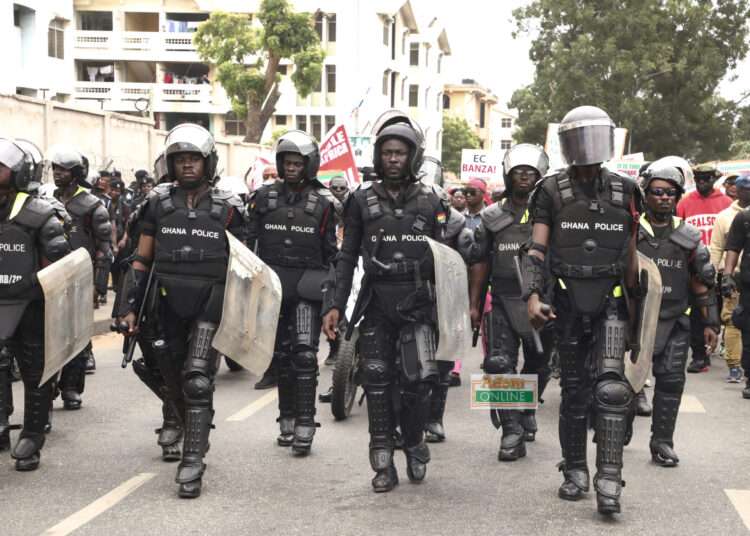
Ghana Police

Ghana Police

The Bawku conflict, an enduring and complex clash in Ghana’s Upper East Region, centers around longstanding ethnic, chieftaincy, and political tensions.

 Rooted in historical grievances between the Mamprusi and Kusasi ethnic groups, the conflict has repeatedly flared up, affecting the peace and development of Bawku and its surrounding areas.

 Disputes over chieftain rights, land ownership, and political representation have deepened divisions, often leading to violence and instability.

 Efforts by the government and local leaders to mediate have occasionally resulted in temporary peace, but underlying issues persist, complicating resolution attempts.

ADVERTISEMENT

This conflict has had widespread socio-economic impacts, disrupting lives, commerce, education, and access to essential services, leaving the region in need of sustained peace-building efforts.

Understanding the historical, cultural, and political dimensions of the Bawku conflict is essential to grasp its ongoing challenges and the pathways toward lasting peace.

The Secretary of the Mamprusi Youth Association in Bawku, Abdul Majeed Bagura has addressed the escalating violence and insecurity affecting communities in the region.

He emphasized that Mamprusi communities are not involved in banditry activities, stressing that attacks are often carried out outside Mamprusi jurisdictions by other groups.

Mamprusi Youth Association’s Stance on Militia Allegations

1 Bagura
Abdul Majeed Bagura Secretary of the Mamprusi Youth Association in Bawku

“As a Mamprusi and as the President of the Mamprusi Youth Association, I can confidently tell you that there’s none, there’s no any militia group associated with Mamprusi’s. But that I cannot speak for our other Kusasi brothers.’’

Abdul Majeed Bagura Secretary of the Mamprusi Youth Association in Bawku

Majeed Bagura clarified that while he cannot speak for other ethnic groups, he is confident that Mamprusi communities are not contributing to the violence in Bawku.

 He also noted that violent incidents occur primarily outside Mamprusi areas, suggesting that Mamprusi communities have not engaged in or initiated the recent attacks.

Targeted Attacks Against Mamprusi Supporters

He pointed to recent incidents where individuals associated with Mamprusi communities have been targeted along certain routes, including the Bolga-Bawku Road and Bawku Prumako Road.

Majeed Bagura cited the case of a local driver who was shot, stating that these incidents have increased fear and insecurity among Mamprusi residents.

“They are the targets, the Mamprusis that are being targeted and killed outside of Bawku. And those that are being maim are either allies of Mamprusi’s or sympathizers of Mamprusi’s or they are those that are leaving with the Mamprusi’s.  Any other person [who] lives in the Mamprusi-dominated area, whether you are a Frafra or you are an Asanti, they consider you as an ally of Mamprusi, and you become a target.”

We are not seeing an end to it because there [are] no any robust security measures that have been put in place to curtail these attacks. We have market women in Bawku [who] want to go out to Bolga to do their businesses. It’s very difficult for them to go because the road is not safe. It’s insecure for them.”

Abdul Majeed Bagura Secretary of the Mamprusi Youth Association in Bawku

Request for Security Escort System

Majeed Bagura stressed that local market women have been particularly affected, as they are unable to travel safely to conduct business.

ADVERTISEMENT

“That is why we decided to write to petition REGSEC asking for a settled security escort system so that these women can go in and out of Bawku safely without being hurt.’’

Abdul Majeed Bagura Secretary of the Mamprusi Youth Association in Bawku

He emphasized the importance of such a system to restore normalcy and ensure the safety of residents.

Majeed Bagura reinforced the strength of the Mamprusi presence in Bawku, asserting that the community is determined to stay despite the ongoing violence and insecurity.

“It is far away from anybody that thinks that Mamprusi [is] being driven out of Bawku. It will never happen, and there’s no day that such a thing can ever happen.’’

Abdul Majeed Bagura Secretary of the Mamprusi Youth Association in Bawku

A Plea for Peace and Security

Majeed Bagura’s statement underscores the urgent need for effective security measures to protect the lives and livelihoods of Bawku’s residents.

His remarks reflect the Mamprusi Youth Association’s commitment to peaceful coexistence and its frustration with the lack of security enforcement in the region.

By calling for a structured security escort system, Majeed Bagura aims to alleviate the fears of market women, traders, and other residents whose livelihoods depend on safe access to roads and markets.

His plea to local authorities highlights the broader challenge of maintaining peace and security in Bawku amid ethnic tensions and violent incidents.

READ ALSO; Kizz Daniel Showers Accolades on Senior Colleagues

Sign Up to Our Newsletter

Fresh updates, Straight to your inbox

Tags: Abdul Majeed BaguraBawku CrisisconflictKusasisMamprusispeaceWomen and Children
Share4Tweet2Share1SendSend
Please login to join discussion
Previous Post

NDC Intensifies Campaign, Opoku-Agyemang Tours North-East, Mahama Takes on Western-North 

Next Post

Alan Promises a ‘New Dawn’ for Cocoa Farmers 

Related Posts

Professor Ernest Kofi Davis, Acting Director-General, Ghana Education Service
General News

GES Assures Placement for All Qualified BECE Candidates

May 15, 2026
Chief Executive of the NHIA, Dr. Victor Asare Bampoe
General News

NHIA Pays Over GHC157 Million in Claims

May 15, 2026
Governance Expert, Dr Frederick Oduro
General News

Governance Expert Says Constitution Must Protect Rights of Citizens

May 15, 2026
Ghana’s Minister for Communications, Digital Technology and Innovation, Hon. Samuel Nartey George
General News

Ghana Targets 70% Nationwide 5G Expansion by 2027

May 15, 2026

Sign Up to Our Newsletter

Fresh updates, Straight to your inbox

Recent News

GettyImages 1855339841

36 Countries, EU Approve Agreement To Establish Special Tribunal For Ukraine

May 15, 2026
Professor Ernest Kofi Davis, Acting Director-General, Ghana Education Service

GES Assures Placement for All Qualified BECE Candidates

May 15, 2026
UK Prime Minister, Keir Starmer

UK Bars Far-Right Agitators as Starmer Vows Zero Tolerance

May 15, 2026
Fidelity Demands Africa Own Its Digital Future At a time when Africa’s digital economy is accelerating at an unprecedented pace, Fidelity Bank Ghana has delivered one of the strongest messages yet on the continent’s technological future. The bank made a bold and urgent case for Africa to stop depending on foreign controlled digital systems and begin building its own infrastructure capable of retaining value, strengthening currencies, and driving long term economic sovereignty. As one of the key sponsors of the 3i Africa summit, Fidelity Bank did not just show up to participate. It arrived with a message that resonated deeply across conference halls and policy discussions. Fidelity Bank emerged as one of the loudest voices championing a future where African nations control the very digital rails that power their economies. Digital Infrastructure Is The New Economic Power One of the defining moments of the summit came during a high level panel discussion on digital public infrastructure, where Adeline Aryee delivered a statement that immediately captured the attention of participants. She declared that if Africa builds its own digital rails, it naturally retains the value created by those systems. Her message was clear and uncompromising. In previous decades, national infrastructure was measured by roads, bridges, ports, and airports. Today, the true engines of economic power are payment platforms, identity systems, financial technology ecosystems, and digital marketplaces. According to Aryee, digital public infrastructure is no longer a luxury. It is now a strategic national asset. Her remarks struck at the heart of one of Africa’s most pressing economic concerns. Despite growing digital adoption, many transactions across the continent still pass through foreign payment systems, resulting in value leakage and continued pressure on local currencies. Ghana’s Success Story Becomes A Continental Blueprint Aryee highlighted Ghana’s progress in financial inclusion, mobile payments, and digital banking, describing the country as an emerging model for other African economies. Over the years, Ghana has invested heavily in domestic payment systems such as GhIPSS and its flagship platform, Gh-link. These systems have significantly expanded access to financial services while promoting digital transactions across urban and rural communities. Yet Aryee argued that inclusion alone is no longer enough. The next chapter for Africa, she insisted, must focus on ownership. She questioned why local transactions continue to depend on foreign rails when domestic infrastructure already exists. According to her, such dependence creates unnecessary external exposure and limits the continent’s ability to fully capture the economic benefits of its growing digital market. Her comments triggered intense debate among summit participants, many of whom acknowledged the urgent need for policy reforms and infrastructure investments. Market Driven Innovation Takes Center Stage Beyond infrastructure, Fidelity Bank also made a strong case for innovation that begins with real market needs. During the Ecosystem Roundtable on platforms, talent, and digital markets, Prince Osei Hyeaman-Addai shared insights from the bank’s years of digital financial innovation. He stressed that successful digital products are not built in boardrooms or based on assumptions. Instead, they are created by listening carefully to the market and understanding customer pain points. According to him, the market itself reveals the problems that need solving, the type of platform required, and the path toward scalable growth. His comments reflected a growing shift in African fintech circles, where customer centered design is becoming essential for product adoption and long term relevance. Trust And Credibility Remain The Real Currency Prince also emphasized that technology alone does not guarantee success. In his view, trust, credibility, and strong operational structures remain the real foundations of successful innovation. He noted that while investor interest in African fintech continues to rise, startups must prove they can deliver sustainable solutions, maintain transparency, and build products that respond to local realities. This perspective reflects Fidelity Bank’s own journey in digital transformation. Over the years, the bank has built strategic collaborations with leading fintech players, including IT Consortium, helping pioneer wallet to bank integrations and mobile financial solutions in Ghana. These partnerships have helped position Fidelity as one of Ghana’s most innovation driven financial institutions. A Defining Moment For Africa’s Digital Future Fidelity Bank’s participation at the 3i Africa Summit 2026 was more than a corporate appearance. It was a strategic declaration. At a time when Africa is racing to build competitive digital economies, the bank’s message was impossible to ignore. Africa cannot simply consume technology created elsewhere. It must own the infrastructure, shape the platforms, and capture the value generated by its digital future. As conversations from the summit continue to ripple across financial and policy circles, one thing is becoming increasingly clear. Africa’s next economic revolution may not be built on oil, gold, or minerals. It may be built on digital rails designed, owned, and powered by Africans. READ ALSO: IMF Ghana Review Ends in Dramatic Cliffhanger Fidelity Demands Africa Own Its Digital Future At a time when Africa’s digital economy is accelerating at an unprecedented pace, Fidelity Bank Ghana has delivered one of the strongest messages yet on the continent’s technological future. The bank made a bold and urgent case for Africa to stop depending on foreign controlled digital systems and begin building its own infrastructure capable of retaining value, strengthening currencies, and driving long term economic sovereignty. As one of the key sponsors of the 3i Africa summit, Fidelity Bank did not just show up to participate. It arrived with a message that resonated deeply across conference halls and policy discussions. Fidelity Bank emerged as one of the loudest voices championing a future where African nations control the very digital rails that power their economies. Digital Infrastructure Is The New Economic Power One of the defining moments of the summit came during a high level panel discussion on digital public infrastructure, where Adeline Aryee delivered a statement that immediately captured the attention of participants. She declared that if Africa builds its own digital rails, it naturally retains the value created by those systems. Her message was clear and uncompromising. In previous decades, national infrastructure was measured by roads, bridges, ports, and airports. Today, the true engines of economic power are payment platforms, identity systems, financial technology ecosystems, and digital marketplaces. According to Aryee, digital public infrastructure is no longer a luxury. It is now a strategic national asset. Her remarks struck at the heart of one of Africa’s most pressing economic concerns. Despite growing digital adoption, many transactions across the continent still pass through foreign payment systems, resulting in value leakage and continued pressure on local currencies. Ghana’s Success Story Becomes A Continental Blueprint Aryee highlighted Ghana’s progress in financial inclusion, mobile payments, and digital banking, describing the country as an emerging model for other African economies. Over the years, Ghana has invested heavily in domestic payment systems such as GhIPSS and its flagship platform, Gh-link. These systems have significantly expanded access to financial services while promoting digital transactions across urban and rural communities. Yet Aryee argued that inclusion alone is no longer enough. The next chapter for Africa, she insisted, must focus on ownership. She questioned why local transactions continue to depend on foreign rails when domestic infrastructure already exists. According to her, such dependence creates unnecessary external exposure and limits the continent’s ability to fully capture the economic benefits of its growing digital market. Her comments triggered intense debate among summit participants, many of whom acknowledged the urgent need for policy reforms and infrastructure investments. Market Driven Innovation Takes Center Stage Beyond infrastructure, Fidelity Bank also made a strong case for innovation that begins with real market needs. During the Ecosystem Roundtable on platforms, talent, and digital markets, Prince Osei Hyeaman-Addai shared insights from the bank’s years of digital financial innovation. He stressed that successful digital products are not built in boardrooms or based on assumptions. Instead, they are created by listening carefully to the market and understanding customer pain points. According to him, the market itself reveals the problems that need solving, the type of platform required, and the path toward scalable growth. His comments reflected a growing shift in African fintech circles, where customer centered design is becoming essential for product adoption and long term relevance. Trust And Credibility Remain The Real Currency Prince also emphasized that technology alone does not guarantee success. In his view, trust, credibility, and strong operational structures remain the real foundations of successful innovation. He noted that while investor interest in African fintech continues to rise, startups must prove they can deliver sustainable solutions, maintain transparency, and build products that respond to local realities. This perspective reflects Fidelity Bank’s own journey in digital transformation. Over the years, the bank has built strategic collaborations with leading fintech players, including IT Consortium, helping pioneer wallet to bank integrations and mobile financial solutions in Ghana. These partnerships have helped position Fidelity as one of Ghana’s most innovation driven financial institutions. A Defining Moment For Africa’s Digital Future Fidelity Bank’s participation at the 3i Africa Summit 2026 was more than a corporate appearance. It was a strategic declaration. At a time when Africa is racing to build competitive digital economies, the bank’s message was impossible to ignore. Africa cannot simply consume technology created elsewhere. It must own the infrastructure, shape the platforms, and capture the value generated by its digital future. As conversations from the summit continue to ripple across financial and policy circles, one thing is becoming increasingly clear. Africa’s next economic revolution may not be built on oil, gold, or minerals. It may be built on digital rails designed, owned, and powered by Africans. READ ALSO: IMF Ghana Review Ends in Dramatic Cliffhanger Fidelity Demands Africa Own Its Digital Future

Fidelity Demands Africa Own Its Digital Future

May 15, 2026
Bruno Fernandes has won Manchester United's Player of the Year award twice in succession

Fernandes Crowned Manchester United Player of the Year Again After Remarkable Season

May 15, 2026
Next Post
Alan Kyerematen, Presidential candidate for Movement for Change

Alan Promises a ‘New Dawn’ for Cocoa Farmers 

The Vaultz News

Copyright © 2025 The Vaultz News. All rights reserved.

Navigate Site

  • About
  • Advertise
  • Privacy Policy
  • Contact

Follow Us

Welcome Back!

Login to your account below

Forgotten Password?

Retrieve your password

Please enter your username or email address to reset your password.

Log In
No Result
View All Result
  • Top Stories
  • News
    • General News
    • Education
    • Health
    • Opinions
  • Economics
    • Economy
    • Finance
      • Banking
      • Insurance
      • Pension
    • Securities/Markets
  • Business
    • Agribusiness
    • Vaultz Business
    • Extractives/Energy
    • Real Estate
  • World
    • Africa
    • America
    • Europe
    • UK
    • USA
    • Asia
    • Around the Globe
  • Innovation
    • Technology
    • Wheels
  • Entertainment
  • 20MOBPL2D
  • Jobs & Scholarships
    • Job Vacancies
    • Scholarships

Copyright © 2025 The Vaultz News. All rights reserved.

This website uses cookies. By continuing to use this website you are giving consent to cookies being used. Visit our Privacy and Cookie Policy.

Discover the Details behind the story

Get an in-depth analysis of the news from our top editors

Enter your email address