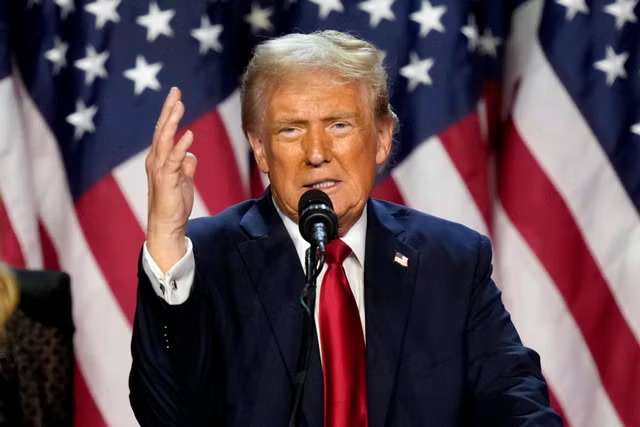
Lesotho has been granted a reduced tariff rate of 15% by President Donald Trump’s administration, softening the blow of previously looming penalties that had threatened to cripple the country’s vital textile exports. The relief came via an executive order that adjusted reciprocal tariffs for multiple nations, including the small Southern African kingdom.
Initially, Lesotho faced a punitive 50% tariff, the highest rate announced for any U.S. trading partner under the White House’s new reciprocal trade measures introduced in April. While implementation was temporarily paused to allow time for negotiation, the uncertainty triggered significant disruption in Lesotho’s economy—particularly its textile and apparel sector, which is heavily dependent on access to U.S. markets.
The Trump administration defended the high rates by arguing that Lesotho imposed 99% tariffs on U.S. products, a claim the Lesotho government said it could not verify. With U.S. officials pressing for parity in trade relations, countries with significant trade surpluses like Lesotho were at particular risk.
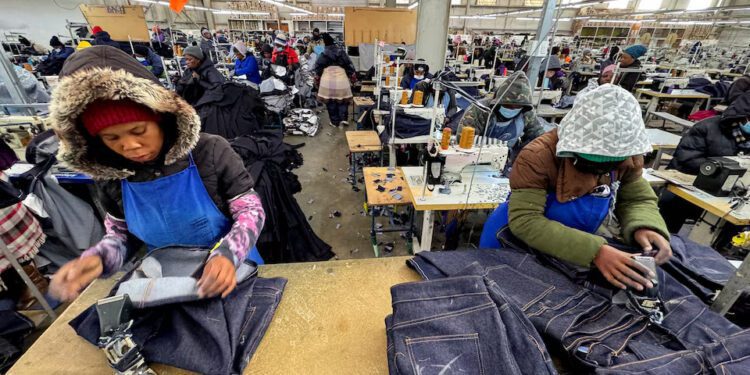
Following the initial announcement of tariffs, many U.S. companies canceled orders from Lesotho’s textile factories, leading to factory shutdowns and widespread layoffs. “If we still have these high tariffs, it means we must forget about producing for the U.S. and go as fast as we can … (looking for) other available markets,” said Teboho Kobeli, the owner of Afri-Expo, which produces denim garments for export.
Lesotho’s Trade With US Remains Vital
Lesotho, a mountainous landlocked nation entirely encircled by South Africa, has built much of its modern economy around a few critical sectors: agriculture, water exports, mining, and most notably, garment manufacturing. The country’s apparel industry has long benefited from the U.S. African Growth and Opportunity Act (AGOA), which has allowed duty-free exports of textiles to the American market since 2000.
At its peak, the garment sector employed around 50,000 Basotho, becoming one of the few reliable sources of employment in a nation grappling with severe poverty and high youth unemployment. For Lesotho, AGOA did not just boost trade; it transformed lives and reduced dependency on subsistence farming.
By 2024, bilateral trade between Lesotho and the United States reached $240 million, with Lesotho exporting mainly textiles and diamonds and maintaining a rare trade surplus. Roughly 30% of the country’s total exports were bound for the U.S., making American consumers a linchpin of Lesotho’s economic health.
That stability has been upended by the Trump administration’s aggressive shift toward so-called “reciprocal tariffs.” While Lesotho’s new 15% rate is far less severe than the initially proposed 50%, the damage inflicted by the months of trade uncertainty has already taken a toll. Many factories have shut down or downsized their operations, leaving thousands of workers without paychecks and communities without their primary economic engine.
The reduction in tariff rates offers some breathing room, but concerns remain over the long-term outlook. Lesotho’s government has expressed concerns about social instability as economic pressures intensify. Delegations have been dispatched to Washington repeatedly over the past several months, pleading for relief and clarification on U.S. trade policy. The move to lower tariffs appears to be a response to those efforts, but the road to recovery may still be long.
For Lesotho, even a modest shift in U.S. trade policy has a seismic impact. The recent tariff modification may slow the economic slide, but without a permanent solution or exemption, Lesotho’s textile industry, and the thousands of livelihoods it supports, will continue to hang in the balance.
READ ALSO: Landed Property Bail Faces Legal Scrutiny Amid Issues of Fairness, Accountability