Nepal’s Prime Minister, Khadga Prasad Sharma Oli resigned today, Tuesday, September 9, 2025, following violent protests against a ban on social media platforms and government corruption.
In a letter to the President, Oli noted that he is resigning as Prime Minister with “effect from today.” He stated that he is stepping aside so Nepal can “take further steps towards a political solution and resolution of the problems.”
His resignation comes a day after deadly anti-government protests against the ban on social media platforms when police opened fire and killed 19 people.
Despite the lifting of the social media ban early on Tuesday, protesters defied an indefinite curfew, storming the office of the country’s largest party, Nepali Congress, and residences of several prominent politicians, a day after 19 people were killed by security forces.

The protesters burned tyres and shouted slogans, demanding accountability for the killings of 19 demonstrators during Monday’s actions.
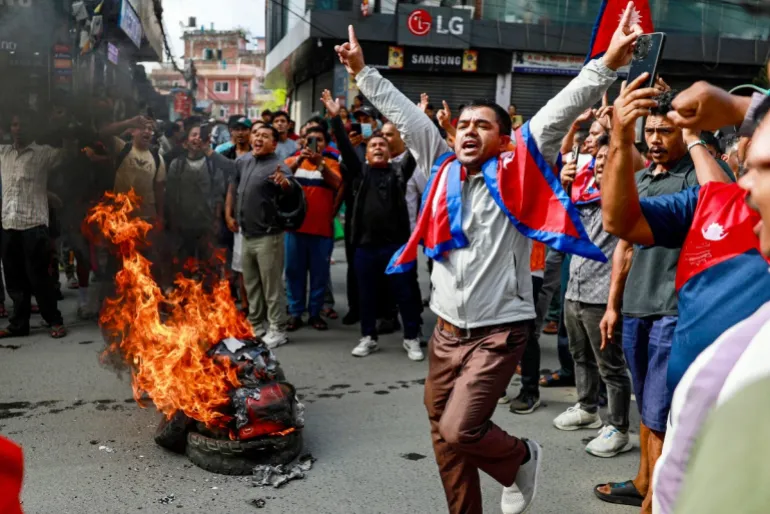
The houses set on fire included those of Sher Bahadur Deuba, leader of the largest party Nepali Congress, President Ram Chandra Poudel, Home Minister Ramesh Lekhak and leader of the Communist party of Nepal Maoist Pushpa Kamal Dahal. A private school owned by Deuba’s wife Arzu Deuba Rana, who is the current Foreign Minister, was also set on fire.
The mass protest and attack on parliament on Monday, September 8, 2025, began as opposition to the ban on social media platforms but were fueled by growing frustration and dissatisfaction against the political parties among the people who blame them for corruption.
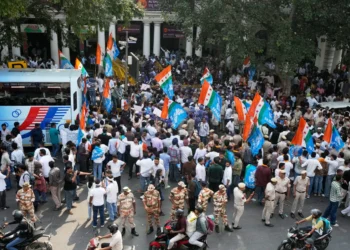
Monday’s rallies against the ban swelled to tens of thousands of people in Kathmandu and crowds surrounded the Parliament building before police opened fire on the demonstrators. Nineteen people were killed.
Monday’s rally was called the protest of Gen Z, which generally refers to people born between 1995 and 2010.
The violence unfolded as Nepal’s government pursues a broader attempt to regulate social media with a bill aimed at ensuring the platforms are “properly managed, responsible and accountable.” The proposal has been widely criticized as a tool for censorship and for punishing government opponents who voice their protests online.
The bill includes asking the companies to appoint a liaison office or a point of contact in the country. Rights groups have called it an attempt by the government to curb freedom of expression and fundamental rights.
The registration requirement applied to about two dozen social networks widely used in Nepal.
TikTok, Viber and three other platforms have registered and operated without interruption.
Several widely used social networks, including Facebook, X and YouTube were blocked in the Himalayan nation last week after failing to comply with a new requirement to register and submit to government oversight.
Seven of those killed and scores of the wounded were received at the
In a statement late on Monday night, Prime Minister Oli ordered an investigation into the protests and said he was “deeply saddened” by the deaths of the protesters. He said, “The government was not in favour of stopping the use of social media and will ensure an environment for its use.”
Oli added that an “investigation committee will be formed to investigate and analyse” the demonstrations.
Three Other Ministers Resign
Three other Ministers also resigned. Water Supply Minister, Pradeep Yadav submitted his resignation, citing the government’s violent response to the protests that killed 19 people.
In his statement, Yadav said that he was resigning in support of the Gen Z protests and “opposing the repression” by the government.
“Dear young brothers and sisters, you are my first companions and the source of my energy. I appeal to everyone to remain calm and to guide and support the youth in the right direction.”
Pradeep Yadav
Home Minister Ramesh Lekhak and Agriculture Minister Ramnath Adhikari also stepped down due to the government’s actions.
READ ALSO: Gyamfi’s Reassignment Sparks Debate Over National Service Posting System