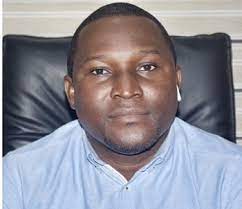
Deputy Director of A Rocha Ghana, Daryl Bosu, has called for bold and decisive leadership in Ghana’s fight against illegal mining, warning that excuses and half-measures will only worsen the environmental crisis facing the nation.
His remarks followed President John Dramani Mahama’s September 10, 2025, media encounter, where the President resisted calls for a state of emergency, insisting that existing laws were sufficient to address galamsey.
“All the options or strategies have been given. What is missing in all of this is leadership. We need a much more decisive leadership,” Bosu said.
He added that civil society has already proposed interventions, including the repeal of LI 2462 and stronger protections for rivers and forest reserves, but progress has stalled due to weak political will. “We are at a crisis point, and we cannot deal with these excuses the president is giving,” he stressed.
The Ghana Coalition Against Galamsey (GCAG) also criticised the President’s comments, accusing him of showing insufficient urgency in tackling the crisis. While President Mahama acknowledged public pressure to adopt drastic measures, he argued that declaring a state of emergency was premature.
The coalition, however, described his posture as dangerously dismissive of the scale of the problem.

“The President’s statement did not convey the urgency required in the fight to rid this country of unprecedented environmental terrorism,” the coalition maintained. According to the group, illegal mining has polluted over 60 percent of Ghana’s water bodies, displaced farmers, and destroyed forest reserves critical to the nation’s ecological balance.
The coalition rejected the President’s claim that police officers struggle to distinguish legal miners from illegal ones, defending the efforts of the Inspector General of Police’s men.
“The IGP’s men, though not perfect, were fearless and had brought the situation under control. We challenge the Presidency to name a single licenced small-scale mining entity that is mining responsibly on the ground”
Ghana Coalition Against Galamsey
NAELP and Leadership Concerns
While welcoming the launch of the National Alternative Employment and Livelihood Programme for Small-Scale Miners (NAELP), also known as NAIMOS, the coalition questioned whether it was sufficiently resourced to deliver impact at the scale required.
They warned that the President’s insistence on providing alternatives before cracking down on galamsey could embolden illegal operators. “This is not the leadership expected for a country facing environmental suicide, contaminated cocoa exports, and rising health crises – now and for our newborns,” the coalition stated.

The group also accused President Mahama of contradicting his past advocacy, recalling his support for a state of emergency on galamsey before he assumed office.
The group explained that the circumstances that prevailed when the President joined civil society to demand a state of emergency before his election as President have not improved; “in fact, some of the indices have worsened,” the coalition said.
Galamsey Forces Water Plant Shutdown
The crisis is no longer abstract, as its effects continue to disrupt essential services.
Ghana Water Limited (GWL) has shut down its Kwanyako Headworks in the Central Region due to the heavy silting of the Ayensu River, caused by illegal mining upstream in the Eastern Region.
According to officials, the intake pumps at both the old and new treatment plants have malfunctioned from excessive silt deposits. The shutdown has halted production of over 25,000 cubic meters of water per day, creating an acute water shortage in the region.
Divers hired to assess the pumps recommended desilting and dredging the river, though officials warned these measures would be futile if illegal mining persists.
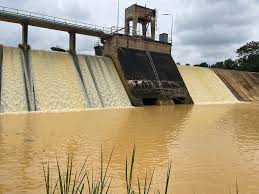
The Kwanyako Headworks, with facilities dating back to 1964 and later expanded in 2007, previously served thousands of residents. Communities that depended on the plant are now relying on unsafe water sources for domestic and commercial purposes, heightening the risk of health crises.
The Ghana Coalition Against Galamsey announced that it will hold a comprehensive media briefing on September 15, 2025, at the International Press Center to expand on its concerns and propose concrete steps for tackling the crisis.
For both Bosu and the coalition, the message remains clear: Ghana’s survival depends on treating galamsey as an urgent national emergency rather than postponing decisive action.
The longer bold leadership is delayed, they argue, the greater the damage to water, forests, farms, and public health.
READ ALSO: GIPC CEO Unveils Plans to Anchor Ghana’s Investment Boom