Ghana has successfully passed the fifth review of its three-year programme under the International Monetary Fund’s (IMF) Extended Credit Facility (ECF), paving the way for a fresh disbursement of about SDR 267.5 million, equivalent to $385 million.
The approval, announced after a two-week mission in Accra, marks another major milestone in Ghana’s ongoing economic recovery efforts.
This latest review brings the total disbursement to Ghana since May 2023 to approximately $2.8 billion, reinforcing the country’s steady progress under the $3.2 billion IMF-supported programme aimed at restoring macroeconomic stability, strengthening fiscal discipline, and fostering sustainable growth.
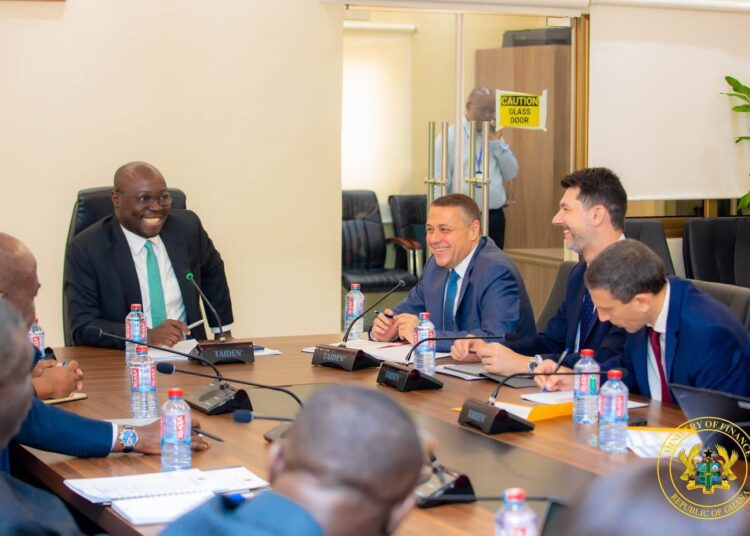
Led by Ruben Atoyan, the IMF mission held discussions from September 29 to October 10, 2025, to evaluate Ghana’s performance and reforms under the programme. Mr. Atoyan commended the government for its “strong commitment to economic reforms” and its achievements in stabilising the economy amid lingering global and domestic challenges.
Macroeconomic Stability Taking Root
According to the IMF’s assessment, Ghana’s macroeconomic stabilisation is taking firm root. The economy recorded stronger-than-expected growth in the first half of 2025, driven primarily by robust performance in the services and agricultural sectors.
The cedi’s remarkable appreciation and the accumulation of foreign exchange reserves were noted as signs of strengthening investor confidence and sound monetary policy coordination. The external sector also benefited from robust gold and cocoa exports, which helped improve the balance of payments and sustain the currency’s gains.

Mr. Atoyan added that growth is expected to continue into 2026, with projections around 4.8%, while inflation is forecasted to stay within the Bank of Ghana’s target band of 8 ± 2 percent. “The outlook is encouraging, supported by a stronger fiscal position and improving investor sentiment,” he said.
Fiscal Reforms Delivering Tangible Results
The IMF lauded Ghana’s fiscal performance, highlighting a primary surplus of 1.1 percent of GDP recorded in the first eight months of 2025. The government remains on track to achieve its 1.5 percent surplus target by the end of the year — a remarkable turnaround from previous years of large fiscal deficits.
The fiscal gains have been underpinned by tighter expenditure controls, improved tax administration, and reforms in public financial management. Discussions between the IMF and the government also focused on structural fiscal reforms to deepen domestic revenue mobilisation, enhance transparency, and enforce fiscal responsibility.
Mr. Atoyan revealed that Ghana’s 2026 budget will maintain this prudent stance, keeping the fiscal balance in line with the country’s Fiscal Responsibility Framework. He emphasized that the continued implementation of these measures is crucial for consolidating macroeconomic gains and reducing debt vulnerabilities.
Debt Restructuring and Energy Sector Reforms Paying Off
Ghana’s comprehensive debt restructuring exercise has also advanced significantly. The IMF confirmed that bilateral agreements have been concluded with five countries, following the signing of a Memorandum of Understanding (MoU) with the Official Creditor Committee under the G20 Common Framework. Negotiations with remaining commercial creditors are ongoing and are expected to conclude soon.
“The debt trajectory has improved markedly,” Atoyan noted, attributing the progress to Ghana’s strengthened macroeconomic outlook and sustained fiscal discipline.
In addition, Ghana’s energy sector — once a key source of fiscal pressure — is showing encouraging signs of reform. The IMF commended the government’s success in renegotiating legacy arrears and power purchase agreements with independent power producers, alongside the introduction of tariff adjustments that reflect cost realities. These efforts, the Fund observed, are helping restore efficiency and financial sustainability within the sector.

Monetary Policy and Financial Sector Stability
The Bank of Ghana’s decision to reduce its policy rate by 650 basis points to 21.5 percent was described as a reflection of the central bank’s confidence in the disinflation process. The IMF noted that inflation is trending steadily toward the target range, supported by a stronger currency and improved supply conditions.
To manage exchange rate volatility and preserve external buffers, the Bank of Ghana, in collaboration with the IMF, has developed a new framework to manage foreign exchange flows and build reserves.
Meanwhile, efforts to strengthen the financial sector are ongoing. The recapitalisation of state-owned banks is expected to be completed by the end of 2025, as authorities work to enhance crisis management frameworks, reduce non-performing loans, and promote financial stability.
Beyond fiscal and monetary reforms, Ghana has also completed a governance diagnostic assessment, which the IMF says will be published soon. The assessment aims to guide ongoing efforts to strengthen transparency and oversight, particularly in key sectors such as gold, cocoa, and energy.
Mr. Atoyan emphasized that improving governance remains central to sustaining economic recovery. “Enhanced transparency and accountability will not only build investor confidence but also ensure that the benefits of economic reforms are felt widely,” he stated.

With the fifth review concluded successfully, Ghana is well-positioned to continue its economic rebound. The IMF projected that continued fiscal prudence, combined with stronger exports and private sector growth, will help sustain the momentum through 2026 and beyond.
The mission expressed appreciation to Finance Minister Dr. Ato Forson, Bank of Ghana Governor Dr. Johnson Asiama, and other government officials for their cooperation and commitment throughout the review process.
READ ALSO: Ghana Not Accepting Non-West Africans – Foreign Minister Dismisses Misleading Reportage