Kwabena Boateng, the Deputy Managing Director at Fidelity Bank, has pushed for productivity to be increased in the three main sectors of the Ghanaian economy, especially in the agriculture sector, as a means to support the stability of the Ghanaian Cedi.
He therefore called on the government to make productivity a priority in this period of macroeconomic stability. He added that the best anchor to the impressive performing Ghana Cedi does not rest entirely on the reserves at the Bank of Ghana, but in how productive the industries and people of Ghana can be.
He made this known while discussing “Currency Value Addition – A Reset for Sustainable Economic Growth,” in Accra. According to him, all stakeholders in Ghana’s development, including the government, financial institutions, and the private sector, should “move from gatekeeping to gardening.” This, he added, will create a path where Ghana moves from distant oversight to being an active partner, to increase the country’s productive capacity.
He further discounted the notion that the numbers written on the paper notes are what give the currency its real value. He said that not even the reserves of the Central Bank serve as the power behind Ghana’s currency stability, though a necessary component. The true upholder of the currency is intentional productivity.
“What gives a currency its real value is not the paper it’s printed on, or the reserves behind it, but the productivity that sustains it.”
Kwabena Boateng, Deputy Managing Director at Fidelity Bank
Sectoral Productivity
The stability and resilience that the Ghana Cedi displays are promoted by the continuous and innovative investment increase in crucial sectors that support economic growth and development.
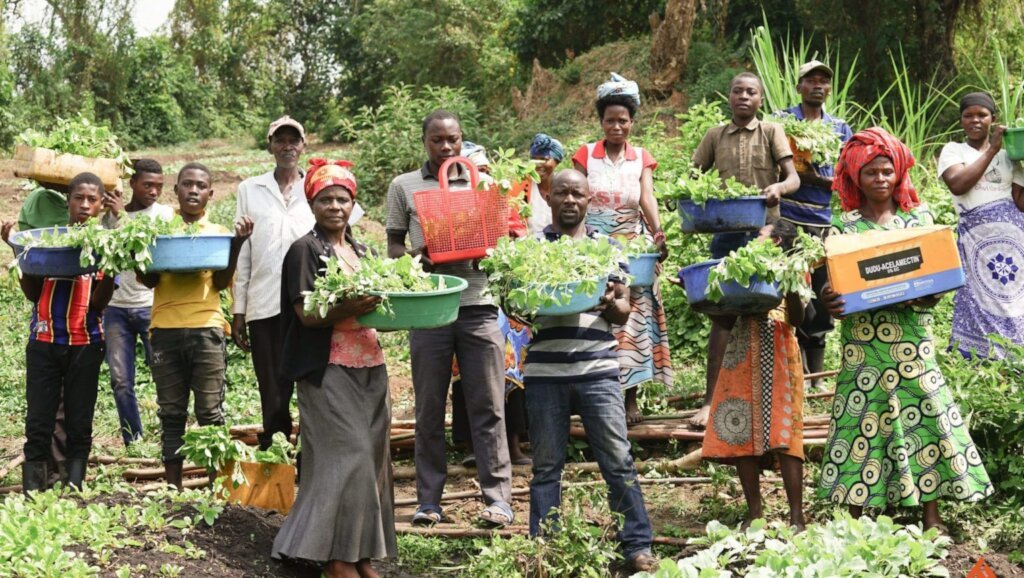
These value-creating sectors, such as agriculture, manufacturing, and exports, have long been deprived of investment and expansion. A shakeup in the orientation of the populace towards these development hubs will spark the right conversation in the sectors to boost productivity.
“The more we invest in sectors that create value, agriculture, manufacturing, and exports, the more stable and resilient our [Ghana’s] currency becomes.”
Kwabena Boateng, Deputy Managing Director at Fidelity Bank
Mr. Boateng observed that financing form and shape still expose an imbalance in sectoral distribution amid the growing trajectory of the Ghanaian economy. In Q2 of 2025, the economy grew by 6.3% while in September, a single-digit inflation of 9.4% was recorded.
Among the three main sectors of the Ghanaian economy, the service sector remains the most expanded, contributing most to Ghana’s Gross Domestic Product (GDP) and receiving relatively more loans than the others, with agriculture trailing behind with its potential, Mr. Boateng explained.
“The service sector continues to expand rapidly, accounting for over 42% of GDP and receiving 36.8% of all bank credit, while manufacturing attracts just 12.4% and agriculture, despite its vast potential, receives a fraction of that.”
Kwabena Boateng, Deputy Managing Director at Fidelity Bank
According to him, Ghana has a “powerful economic vehicle, but the power isn’t distributed evenly to all its wheels.” He warns that the dangers of this disability could create vulnerabilities. Hence, he calls on the government and financial sector stakeholders to address the challenge in the financial sector that serves as a disincentive to investment in productive sectors.
Challenges of Productivity
He pointed out that the perception of risk is the main challenge in the agriculture sector, as the sector recorded a high Non-Performing Loan ratio of 54.2%. As a result, investment in the sector declined as less credit is given to sector actors.
“This creates a cycle of caution: high risk leads to less lending, which leads to underinvestment, which in turn perpetuates the very risks we fear. To achieve a true economic reset, we must break this cycle.”
Kwabena Boateng, Deputy Managing Director at Fidelity Bank
Mr. Boateng believes that “a systematic reset” is needed where finance, policy, innovation, and partnerships are fused to move all the wheels of the sector in the same progressive direction. He referred to the initiatives of his bank, claiming they show a pattern of capital purposefulness to impact the agriculture sector and enhance growth.

He revealed that Fidelity Bank, through the BRIDGE-in-Agriculture Program, partnered with Mastercard Foundation, has disbursed credit to the tune of “GHȻ 94 million to SMEs and smallholder farmers focusing on youth and women entrepreneurs.” He added that this year alone, his bank has lent GHȻ 220 million, bringing their total support in the agriculture sector to GHȻ 314 million.
The bank has also invested GHȻ 2 million in the Greentech Innovation Challenge to help young innovators solve challenges in the agriculture sector. He argued that when these initiatives combine “patient capital with innovation and technical support,” the high-risk agriculture sector transforms into a high-impact sector.

He, therefore, called for public-private partnerships to be strengthened, export-link financing, accessibility of green-inclusive financing, and accountability instruments to impact value creation, exports, and employment creation.
READ ALSO: Health Minister Commends CHAG’s Compassion and Ethics in Healthcare