
IMANI Africa has issued a stern warning to Ghana’s Parliament, urging lawmakers not to ratify the revised lithium mining agreement between the government and Atlantic Lithium Limited without addressing what the think tank describes as deep structural flaws.
The policy institute argues that the deal, centered on the Ewoyaa Lithium Project in the Central Region, risks repeating past mistakes in the management of the country’s mineral wealth if approved in its current form.
“Two years on, with the project still stalled and a revised agreement now set to be tabled before Parliament, the question is not whether Ghana should ratify quickly, but whether it should ratify wisely.
“To do otherwise would be to repeat history’s mistakes with eyes wide open.”
IMANI Africa
When the government first announced the Ewoyaa lithium lease, it was hailed as a transformative step toward positioning Ghana as a player in the global green energy transition.
Officials touted the agreement as “unprecedented” and “transformational,” promising it would unlock a new era of resource-driven prosperity. But according to IMANI Africa’s latest review, the fine print tells a different story.
Pricing Risks and Revenue Fragility

Central to IMANI’s critique is what it calls the “pricing and offtake risk” embedded in the agreement.
The group noted that the Definitive Feasibility Study (DFS) for the Ewoyaa project pegged the long-term lithium concentrate price at US$1,500 per tonne, a figure that appeared conservative when global spot prices exceeded US$2,800 per tonne in 2023.
However, the global lithium market has since shifted dramatically, with prices plunging to around US$900 per tonne by late 2025.
“This dramatic swing exposes the fragility of Ghana’s fiscal take when royalties are tied to the operator’s ‘realized sales price’ without independent benchmarks.”
IMANI Africa
IMANI cautioned that if Parliament approves a new deal without indexed pricing safeguards, Ghana could be locked into a revenue model that collapses when markets turn downward.
IMANI added, “Ghana risks locking itself into a revenue model that evaporates whenever markets turn, leaving the nation poorer while related party offtakers quietly profit,” referencing Atlantic Lithium’s close relationship with its offtake partners, Piedmont and Elevra Lithium.
IMANI also raised concerns about the government’s promise of local value addition, particularly regarding plans for lithium refining.
The group noted that the feasibility study itself concluded that a refinery or processing plant would not be economically viable unless multiple mines of similar scale were developed or unless the government provided substantial incentives. IMANI stated, “In other words, the promise of local refining was never realistic under current conditions.”
The think tank urged Parliament to seek clarity on whether additional mines would be developed or incentives introduced to make refining viable. “To ratify another aspirational clause is to ratify a mirage,” it added.
Operator Fragility and Sovereign Exposure
Beyond the contract terms, IMANI pointed to concerns about Atlantic Lithium’s operational and financial strength.
Describing the company as “a junior miner with limited cash reserves and a volatile share price,” the think tank warned that Ghana’s reliance on such a small operator, especially amid volatile global markets, exposes the nation to significant execution risk.
“The two-year delay in breaking ground is not simply bureaucratic; it reflects the fragility of a small operator navigating volatile markets.”
IMANI Africa
It urged Parliament to demand performance covenants, clear financial close deadlines, and step-in rights that would allow Ghana to intervene if key milestones are missed. “Ratifying without such safeguards would be to gamble national resources on a partner ill-equipped for the scale of the task,” the report stated.
The Minerals Income Investment Fund (MIIF)’s entry into the project has been presented by the government as a patriotic investment.
However, IMANI cautioned that sovereign funds like MIIF must be protected against dilution, inconsistent valuations, and premature declarations of capital gains.
“Parliament should demand anti-dilution clauses, board rights, and staged capital commitments tied to clear project milestones.”
IMANI Africa
Without these measures, it warned, MIIF could end up as “a passive investor in a speculative venture rather than a strategic guardian of Ghana’s mineral wealth.”
IMANI further emphasized the rapidly changing nature of the lithium industry, pointing out that battery technologies are evolving and recycling is advancing. Locking Ghana into rigid contract terms, it argued, could leave the country stranded as the global market shifts.
“Parliament must therefore insist on adaptive clauses, royalty bands that adjust with market conditions, renegotiation triggers tied to technological pivots, and rights of first refusal for downstream refining and recycling.
“To ratify without such real options is to mortgage the future for short-term applause.”
IMANI Africa
Call for Strategic Prudence
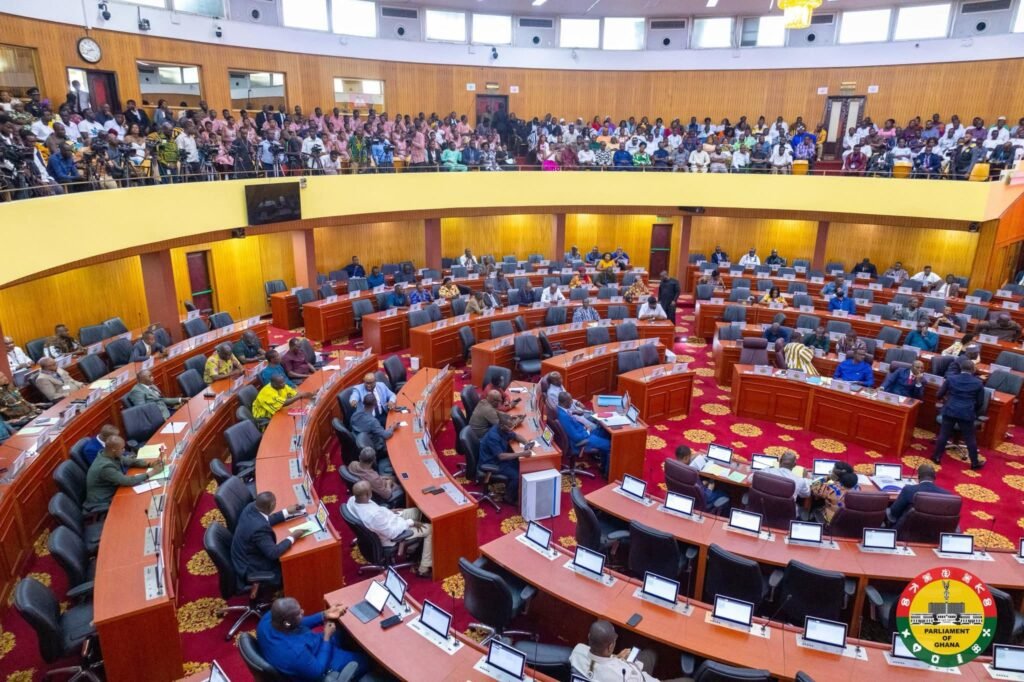
IMANI Africa maintained that the past two years have validated many of its earlier warnings. The Ewoyaa project remains unimplemented, pricing vulnerabilities persist, beneficiation promises appear unachievable, and the operator’s weaknesses have become clearer.
“Parliament now faces a historic choice: to rubber-stamp a revised agreement that repeats the flaws of the past, or to demand a contract that secures Ghana’s rightful share of value across the lithium supply chain.
“The delay has given Ghana leverage. To squander it would be unforgivable.”
IMANI Africa
As the revised Atlantic Lithium agreement comes before Parliament, IMANI’s message is unambiguous: Ghana must ratify not hastily but wisely anchoring national interest above political expediency.
READ ALSO: IC Research Predicts a Further Decline in Inflation to 6.5% for November